Tag Archives: customer experience

Lean CX Score – Someone Can Always Make A Better Burger

Lean CX ScoreThis is an excerpt from "The Lean CX Score."  Get your copy now and start creating disruptors that completely annihilate your competition.

Oh and good news!  You'll be improving the speed, morale and engagement of your teams at the same time.  Get the Lean CX Score now.

Someone Can Always Make a Better Burger

Let me ask you a question.  Can you make a better hamburger than McDonalds?

If you’re anything like me, I’m hearing a resounding “Yes!”  You might be a master of the barbeque, or a culinary queen.  You know all the pieces – choice of patty, lettuce, tomato, maybe onions, sundried tomatoes or vintage cheese – and you can put them all together and create a masterpiece to outdo the creations of even the best teenagers working under the golden arches.

You see, most people can make a better burger than McDonalds.  But here’s the kicker.  Can you SELL a burger, better than McDonalds?

For most people when I tell this story, the penny starts to drop.  And it doesn’t hit the floor completely until they finish the last step of the Lean CX Score, when they have an exact formula for “selling a burger better”, and continuing to give a better experience every time they interact with a customer.  But by that time they are out the door in a rush to put it to use, with barely even a goodbye.

It is all those parts that go into “selling the burger” that make the difference between success and failure.  After all, iPhones and Apple products make up 43% of the mobile market in the U.S *4.  Yet a factory in China could easily make a phone that looks very similar to an Apple iPhone, for a fraction of the cost.  So why don’t they, and what’s the real difference?  Hmmm… it might have something to do with our burger example above.  Their patented software, their app store, their Genius Bars and ease of use all contribute to the Customer Experience, and you will see exactly why they work by the time you reach the end of this book.

Could you drive a car, better than some Uber drivers out there?  Considering 85% of American drivers on the road today believe they are a better driver than others *5 (we’ve all thought this at some point, haven’t we?) I’m again imagining that the answer is yes.

You, or someone like you, could do all these things.  Of course you can.  But can you scale a business and sell a car ride better?  Can you deliver the same complete customer experience that keeps people coming back?  Not without the right framework, and that’s where the Lean CX Score comes in.

Simply being able to do something isn’t enough to bring you success, because the world is on the verge of the greatest time in history.  Global trade has opened up like never before, and someone in England or any other country can sell someone in America exactly what they want and have it shipped there in record time.  Many of the old-world businesses are becoming crowded as new people enter the market, and it seems that no one is safe.

Yet there are always a small few businesses, teams and individuals that make it – the ones that buck the trend and not only survive, but thrive in the face of competition.  The unique pastry shop with lines around the block.  The outstanding painters with a high demand for their work.  The latest phone or gadget people have to have, the ice cream store, the energy provider, the bank.  All of them fit the Lean CX model and are examples we will see.

What is it that makes them succeed where others fail?

Let’s start with a simple view of it.  In many cases you have two choices:

  1. Compete on Price (and put yourself out of business)

– Or –

  1. Compete on Customer Experience (and stand out and become world-class)

What happens when you compete on Price?

Well, this is where most people start.  And it’s most often the easiest thing to do – after all, if you drop your price, maybe more people will buy your product.  The only problem is, your competition can drop their price too, and so the outcome of this scenario usually looks like this:

Lean CX Score Competing on price

Competing on price is often done because a business doesn’t have the imagination or the know-how to create a remarkable Customer Experience.  Luckily with the Lean CX Score, that’s simple to remedy, but it can also just be a mistake made by people who would usually know better.

Driving service Uber did a lot of things right when creating its business – so much so that it was able to scale and grow with lightning speed around the world.  When it entered the Chinese market, it was able to do so with hundreds of millions of dollars behind it, and it went into China in a large way competing on price where ride subsidies, cheap promotions and more the order of the day.

Uber lasted three years before having to retreat completely after losing close to one billion dollars a year, selling their market share to local driving app Didi Chuxing *6.  Understanding the customers you serve, whether it’s an individual, a society, government or country, matters.  When you compete on price, no-one wins.  The customer may get a better price, but at what cost?  A sub-par product, an average customer experience and a company that won’t be around long enough to make a difference.

If products can be copied, price wars aren’t the answer and the world of trade is coming closer together, where does that leave us?  It leaves us with a future where the only thing separating the bad from the good, the good from the great and the great from the remarkable is Customer Experience, otherwise known as CX.  CX is the next and last great frontier, where the real battles will be fought and won.  This is great news, as creating an amazing Customer Experience can be comparatively cheap to do (as opposed to developing a new smart phone from scratch, for example).  And the steps in this book will show you how to keep it simple, and how to know when you’re winning.  They lead the way to taking an ordinary product and creating an industry disruptor – something that is truly world-class.

More chapters from The Lean CX Score book:

Lean CX ScoreThis is an excerpt from "The Lean CX Score."  Get your copy now and start creating disruptors that completely annihilate your competition.

Oh and good news!  You'll be improving the speed, morale and engagement of your teams at the same time.  Get the Lean CX Score now.
Lean CX Score – Good Customer Experience Is Worth More Than 140%

Lean CX ScoreThis is an excerpt from "The Lean CX Score."  Get your copy now and start creating disruptors that completely annihilate your competition.

Oh and good news!  You'll be improving the speed, morale and engagement of your teams at the same time.  Get the Lean CX Score now.
Good Customer Experience is Worth More Than 140%

If getting more approval from your customers isn’t enough, a study in the Harvard Business Review also found that customers who had the best customer experiences spent up to 140% more than those who received a poor customer experience *8.  This means that Customer Experience has a significant effect on your profit as a company, and your success as a team.

The same Harvard research found that customers who gave the poorest ratings for customer service had a much lower chance of staying as customers in the following year.  Fewer than half of customers who rated a company poorly stayed with that company, and overall they only stayed for a year on average *9.

On the other hand, customers who rated their experience the highest were way more likely to remain as customers the following year (31% more, to be exact), and on average had a likelihood of staying for six years *10.

A customer staying for one year, or six years.  Which would you prefer?

It’s not just about customers staying with you a long time.  Keeping customers can also significantly improve your bottom line and profit.  Research done by Frederick Reichheld (the inventor of the Net Promoter Score) found that increasing customer retention by just five percent, increased profit to the company by over 25% *11.

Isn’t that amazing?  Keep an extra five percent of your customers instead of letting them leave, and your profit could go up by 25%.  Most companies would be ecstatic with a 25% jump in profit.  Why was there such a difference?

Well, existing customers of a company tend to spend more over time.  The trust is already there – there is less of a need for the “hard sell”.  And the cost to acquire them as a customer has already been spent, a figure that for brand new customers can be quite large when adding up the cost of marketing, advertising, sales teams, service teams and more to get them on board.

Keeping your customers is even more powerful than you think, and good Customer Experience is the key that unlocks that power for you.

More chapters from The Lean CX Score book:

Lean CX ScoreThis is an excerpt from "The Lean CX Score."  Get your copy now and start creating disruptors that completely annihilate your competition.

Oh and good news!  You'll be improving the speed, morale and engagement of your teams at the same time.  Get the Lean CX Score now.

Lean CX Score – A New Way To Tell If What You’re Doing Works

Lean CX ScoreThis is an excerpt from "The Lean CX Score."  Get your copy now and start creating disruptors that completely annihilate your competition.

Oh and good news!  You'll be improving the speed, morale and engagement of your teams at the same time.  Get the Lean CX Score now.

A New Way to Tell If What You’re Doing Works

By now I hope you’re coming on this journey and you’re keen to improve your Customer Experience.  But how do we tell if what we’re doing works?  Well, let’s break it down.

What works?  You could say that if your product is selling, it works.  If customers are not complaining, it works.  If customers are coming back time and time again with a smile on their face, it works (that’s true for old bricks-and-mortar businesses and disruptive new products – they all need customers).  And, if your team is happy and productive, it works.  That sounds fair, right?

But how do we get there?  That place where customers are lining up to buy from us?  Let’s break it down further.

A Bad Customer Experience – Ever Had One?

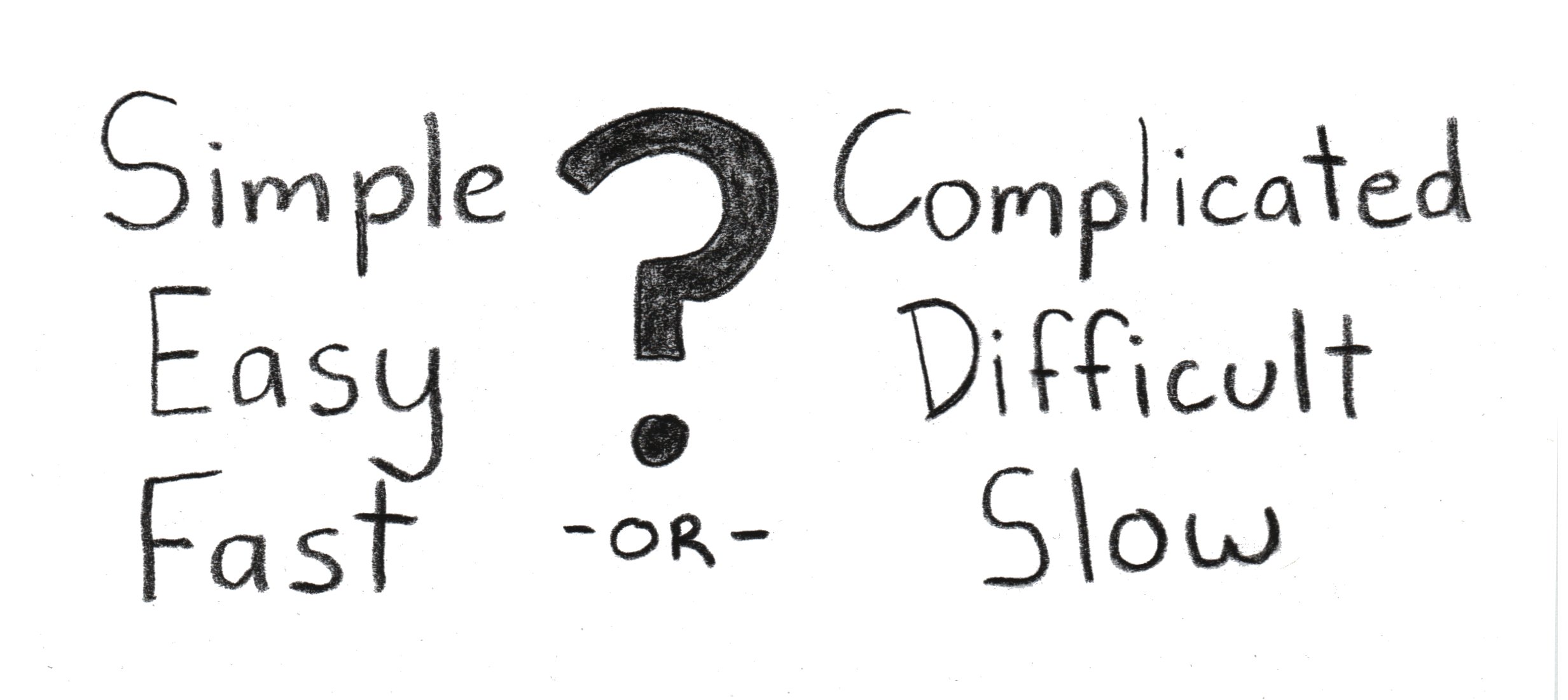
Businesses that fail at Customer Experience make it complicated, slow, or difficult.  Which means that logically, good CX is exactly the opposite.

After all, have you ever had a bad customer experience?  Silly question, I know.  Of course you have.  Like that time you tried buying something, but the experience was so bad it just ended up being too much hassle?  These days it can seem as though many interactions we have are like this.  Maybe the store clerk was bored, or just didn’t care.  Maybe the call centre operator was particularly rude.  Maybe the website didn’t have enough information, or the wait time to be served was 10 times longer than you wanted.

So in our imaginary example, if you did manage to buy it, the experience was tainted and you would be unlikely to return.  Most people simply give up and go somewhere else (i.e. to the competition).

Now if you had a choice between these, which would you choose?

Simple, Faster, and Easy to Do

We’ve seen what good CX isn’t.  So let’s flip it around and look at what it is.

If something is simple and easy to do, then the natural path is for people to do it.  If your work process is easy to do, you’ll probably get it done.  After all, why wouldn’t you do something that’s easy?

If a product is easy to use, then people will use it.  If it’s easy to buy, then they are more likely to buy it.  In other words, if “slow and complicated” are a good reasons to leave a business, then “Simple, Fast and Easy to do” are good reasons to stay.

So that becomes our aim in creating an incredible CX.

We’ve already looked at simple, but why should it be fast?  Time is quickly becoming one of the most precious commodities on earth, with people used to getting instant gratification for the things they want.  In fact, time is so precious that people will pay other people to walk their dogs for them, go shopping for them, and would rather jump online to order something and have it delivered if it means they can save the time and effort of getting dressed and going out.

Another way of saying this is: If your product or service takes a long time, your customer will be looking at their watch and heading for the door (i.e. to your competition again.  Getting the picture?).  Simple, Fast and Easy to do are all equally important.

Sure, “Simple and Easy” Sounds Good, But How Can I Actually Put It Into Practice?

That’s a good question.  Like any of these new terms, the idea of “Simple, Fast and Easy to Do” can easily lose its meaning.

That’s why the Lean CX Score was created.

The Lean CX Score is a single score for your business or team, taken from the absolute best parts of the most customer-centric improvement system discovered in the past century.  It’s easy to do, and it’s fast.  You can quickly see if you’re winning or failing, and you can also see exactly what to do about it.

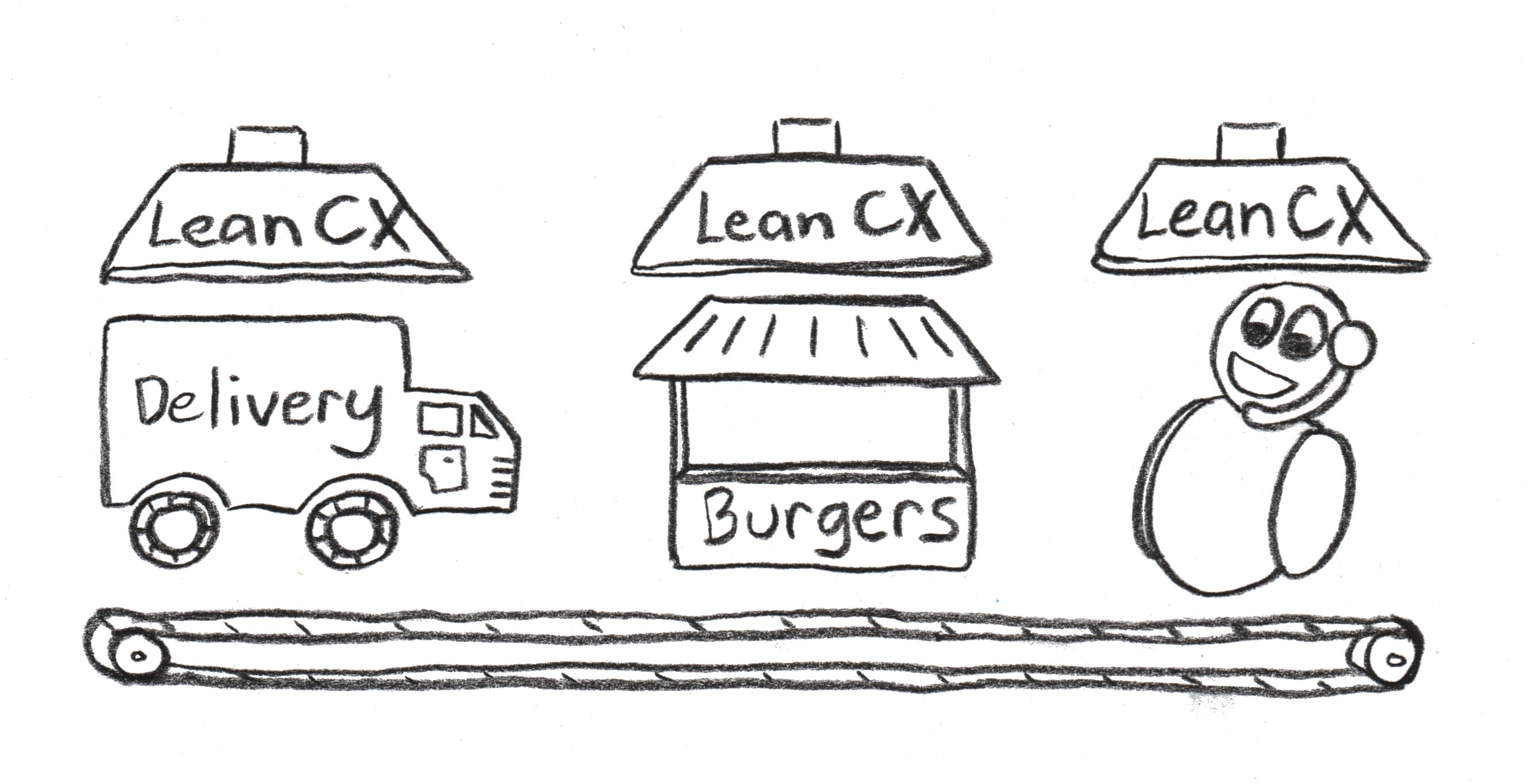
Because every business has customers, and you need them to keep coming back so you can stay in business, the Lean CX Score fits seamlessly over any company you can think of.

The Lean CX Score fits in any business

As we go through this book and you learn more about the Lean CX Score, you’ll see that by putting the steps into practice you will be making things easy for your customer to do, and easy for them to buy.

In fact, removing anything that is wasteful – that doesn’t add value to a customer experience – is our true aim.  As you will see in the coming examples and stories, by doing this we automatically compel our customers to work with us.

More chapters from The Lean CX Score book:

Lean CX ScoreThis is an excerpt from "The Lean CX Score."  Get your copy now and start creating disruptors that completely annihilate your competition.

Oh and good news!  You'll be improving the speed, morale and engagement of your teams at the same time.  Get the Lean CX Score now.