Someone recently passed their PMP in four weeks and shared exactly how they did it, including what they studied each week and what helped most during the exam itself. Here is the full breakdown.
The Four-Week Study Plan
 Week one was mostly procrastination dressed up as preparation. They made a study schedule, compiled resources and watched two videos: my complete PMBOK summary video on YouTube and Ricardo Vargas’ popular breakdown of the PMBOK Sixth Edition processes. Not a bad start, but mostly avoidance of the real work.
Week two was where the heavy lifting happened. The entire week was spent on one resource: my 150 PMBOK 7 scenario-based PMP exam questions and answers video on YouTube. The format mirrors the real exam closely, with two seemingly correct answers per question and a clear explanation of how to arrive at the right one. They skipped the 200 agile questions and 100 waterfall questions, feeling the PMBOK 7 set was comprehensive enough on its own.
Week three was a rest week. They acknowledged it was probably a mistake but took it anyway.
Week four was focused and practical. One day was spent speed-reading Third Rock’s study guide, which comes up frequently in PMP success stories. The rest of the week was dedicated to PMI Study Hall practice questions, reading the guide each morning and working through questions for the remainder of the day.
Four Study Tips
Start practice questions as soon as possible. This was the clearest theme across the entire four weeks. There is a scientific reason it works: retrieving information from memory strengthens the neural connections that hold it. Reading embeds information passively. Practice questions force active recall and that is what makes it stick.
Do not read the PMBOK Guide cover to cover if that is not how you learn. Watch a good summary video instead and move to practice questions quickly. The goal is not to memorize the book. It is to develop the right exam mindset.
Do not over-invest in the 35-hour education course. You need it to apply but do not treat it as your primary study tool. Use it to fulfill the requirement and then shift your focus to practice questions.
Do not stress about memorizing every framework, formula and diagram. Ishikawa diagrams, Tuckman’s ladder, earned value formulas: most of what you need to know will surface naturally once you start working through practice questions regularly.
Four Tips for the Exam Itself
1. Look before you leap.
Almost every PMP question presents multiple answers that appear equally valid at first glance. Slow down, follow the project management process (initiate, plan, execute, monitor and control, close) and talk to the relevant stakeholder before taking action. Gather information before making a move.
2. Stop making assumptions.
Even experienced project managers fall into this trap. Ten years in one organization can create blind spots. If something is not explicitly stated in the question, do not assume it is true. Ask yourself whether you are reading it in the question or bringing it from your own experience.
3. Know your role.
The project manager is not the sponsor, the product owner or the engineering team. The sponsor funds the project and handles escalations. The product owner prioritizes the backlog. The engineers do the engineering work and provide estimates. Do not answer questions by doing other people’s jobs for them.
4. Avoid the snaky answer.
If an option involves going around someone, ignoring a request or doing something that feels slightly underhanded, skip it. The right answer is almost always direct and collaborative. Go straight to the source, work with people and tackle problems head on.
Four weeks, one rest week included, and a pass. The formula was simpler than most people expect: get the mindset right, do the practice questions and trust the process.
– David McLachlan
You can see what people are saying about David McLachlan here: REVIEWS
Navigate to Free Project Management and Leadership Articles through the links on the right (or at the bottom if on Mobile)







Also available are my Project Management Templates – these don’t have a coupon code but they’re a great way to save 100s of hours when you’re first starting out:
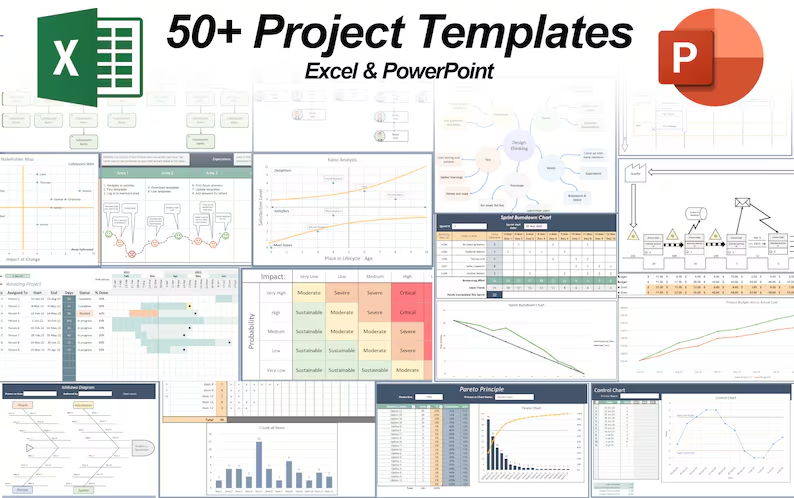 50+ Project Management Templates in Excel and PowerPoint (Gantt Chart, Risk Matrix and more!) 50+ Project Management Templates in Excel and PowerPoint (Gantt Chart, Risk Matrix and more!) |
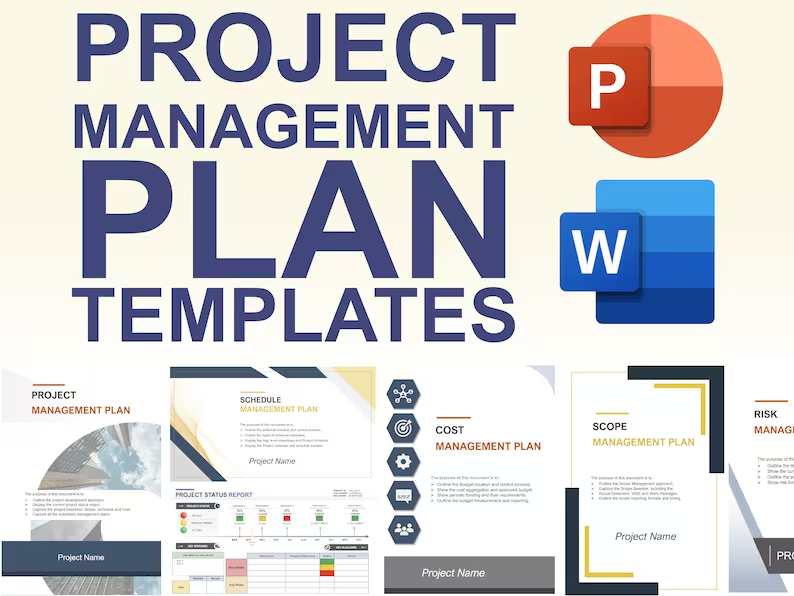 Pre-made Project Management Plan Templates: Save 100 HOURS! Pre-made Project Management Plan Templates: Save 100 HOURS! |