Category Archives: PMP

What to Put in Your Project Plan: Agile vs. Waterfall

Waterfall vs Agile project plansAgile vs. Waterfall Project Plans

The debate between Agile and Waterfall project management methodologies is a common one, with some individuals favoring Waterfall and others preferring Agile. However, the ultimate goal remains the same: successfully completing a project.

Let’s check out the differences and similarities between Agile and Waterfall project plans, focusing on the tools used in each methodology. It’s important to note that neither approach offers a “free pass”—both require diligent management of scope, stakeholders, schedule, cost, and quality.

Starting a Project: Waterfall

In a Waterfall project, the process begins with creating a business case to weigh the pros and cons of starting or delivering a new product. This is followed by the development of a project charter, which officially kicks off the project with resources and funding from the project sponsor. Early planning documents in Waterfall projects include a change control plan, configuration management plan for version control, benefits management plan, and a comprehensive project management plan covering scope, schedule, cost, and quality.

Starting a Project: Agile

Agile projects, on the other hand, kick off with a team charter and a high-level model of the system, such as a sequence or architecture diagram. Agile methodologies can also use a walking skeleton, a basic version of the system to which features are gradually added. Other planning tools in Agile include the business model canvas or lean canvas, which outline customer problems, proposed solutions, value delivery methods, and competitive advantages.

Gathering Stakeholders: Waterfall

Waterfall projects involve extensive stakeholder planning. A stakeholder register is created to list all stakeholders, classify them by influence and impact, and outline engagement strategies. This detailed planning helps ensure effective communication and stakeholder management throughout the project.

Gathering Stakeholders: Agile

Agile projects also require stakeholder engagement but typically involve less documentation. A team charter outlines the project’s vision, mission, background, team roles, stakeholders, values, and communication and decision-making processes. Agile projects often feature small, co-located teams, typically around nine members, to facilitate quick communication and collaboration.

Gathering Requirements: Waterfall and Agile

Requirement gathering in Waterfall projects involves creating detailed documentation and a requirements traceability matrix to track requirements through to completion.

Agile projects, being more customer-focused, offer various methods for gathering requirements, such as the business model canvas, lean canvas, prototypes, mockups, storyboards, test cases, and acceptance criteria. Agile emphasizes iterative feedback and adaptation to meet customer needs.

Scope and Deliverables

In Waterfall projects, scope and deliverables are defined by a high-level scope description, prioritized features, a work breakdown structure (WBS), and a WBS dictionary detailing resources, costs, dependencies, and durations. The goal is to plan everything upfront, ensuring all work packages are defined before execution.

Agile projects use a product backlog, consisting of high-level epics and detailed user stories. Similar to a WBS, user stories are broken down into manageable tasks for each Sprint. Agile scope management includes mockups, storyboards, user story mapping, and prioritization methods like cost-benefit analysis. Scope is accepted through Sprint reviews, providing regular customer feedback.

Project Schedules

Waterfall schedules involve breaking down the scope into an activity list, sequencing activities, estimating durations, and creating a detailed schedule, often visualized in a Gantt chart.

Agile projects utilize a product roadmap, which can resemble a Gantt chart, to outline feature delivery timelines. Sprint planning determines the work for each Sprint based on team velocity and capacity. Progress is tracked using burn-up and burn-down charts.

Cost Management

Waterfall projects estimate costs for each work package, including contingencies for risks and management reserves for unforeseen scope changes, resulting in an approved baseline budget.

Agile projects typically operate on a fixed-cost model, with a stable, small team working within a set budget and timeframe. The product backlog is prioritized to deliver the highest value items within the fixed budget.

Quality Management

Quality in Waterfall projects is managed through a test and inspection plan, usually conducted at the end of the project.

Agile projects integrate testing throughout development, using techniques like test-driven development (TDD), code inspections, unit testing, and continuous delivery. Quality is verified through Sprint reviews and ongoing customer feedback.

Resource Management

Both methodologies require resource management. Waterfall projects estimate resource needs, create a resource breakdown structure, and assign roles and responsibilities using a responsibility assignment matrix (RAM).

Agile projects emphasize a whole-team approach, with co-located teams of T-shaped individuals possessing a broad skill set and deep expertise in one area. Agile teams use visual management tools and pair programming to enhance collaboration.

Procurement Management

Waterfall projects involve detailed procurement processes, including make-or-buy analysis, source selection criteria, and vendor management.

Agile projects prefer integrating necessary skills within the team but may use fixed-cost, variable-scope contracts to accommodate changing requirements.

Communication Management

Waterfall projects use communication management plans and communication styles assessments to tailor communication methods to stakeholder preferences.

Agile projects prioritize open communication with daily standups, Sprint planning, Sprint reviews, and retrospectives. Visual management tools and open team areas facilitate ongoing communication and collaboration.

Different, But the Same

While Agile and Waterfall project management methodologies differ in their approach, both aim to deliver successful projects. Waterfall focuses on extensive upfront planning and documentation, while Agile emphasizes flexibility, customer feedback, and iterative development. Understanding the strengths and weaknesses of each methodology helps project managers choose the best approach for their specific project needs.

See more PMP Articles and Tips for Passing your Exam: 

You can see what people are saying about David McLachlan here: REVIEWS

Navigate to Free Project Management and Leadership Articles through the links on the right (or at the bottom if on Mobile) 
PMI PMP 35 PDUs CourseThe Ultimate PMP Project Management Prep Course (35 PDUs)
Agile Certified Practitioner (PMI-ACP 21 PDUs)The Complete Agile Course: PMI-ACP (21 PDUs), Coaching, Jira and MORE! 
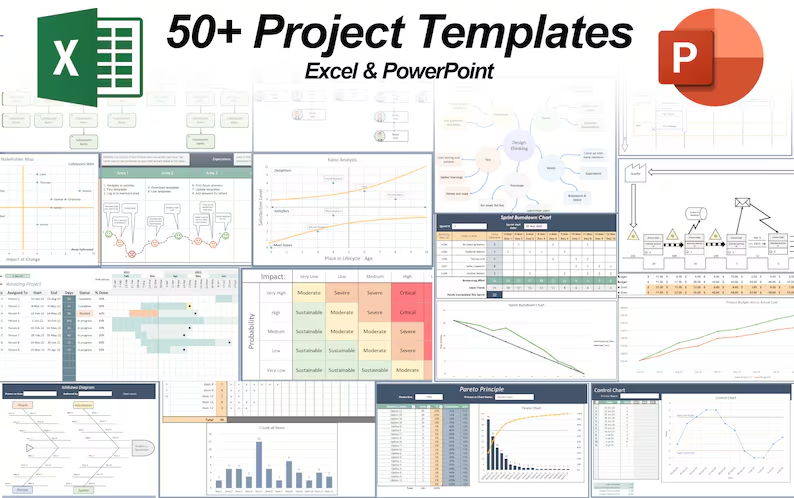
50 Project Management Templates Gantt Chart Risk Matrix and more Excel50+ Project Management Templates in Excel and PowerPoint (Gantt Chart, Risk Matrix and more!)
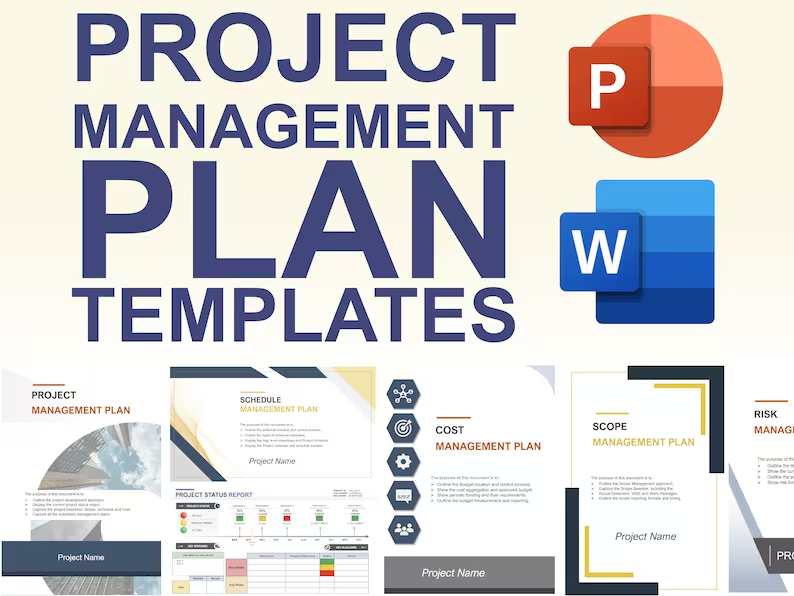
Project Management Plan TemplatesPre-made Project Management Plan Template: Save 100 HOURS!


How To Learn and Study FAST

Hand drawn boy learning at computerFour Game-Changing Learning Techniques

Have you ever struggled with school or learning something new? Whether you’re studying for a degree, a certification like the PMP, or just trying to grasp a new concept, learning can be challenging. However, everything changed for me when I discovered effective learning techniques. Here are four strategies that revolutionized my approach to learning. These methods complement each other and are incredibly easy to implement. Let’s dive in!

Technique 1: Mind Mapping and Work Breakdown Structure (WBS)

The first technique is mind mapping. Popularized by Tony Buzan in the 1970s, mind mapping is a powerful memory technique. It helps set the scene for your entire learning journey by visually organizing information. Here’s how it works:

Start with the Core Idea:

Place your main topic at the center. For instance, if you’re studying project management, this would be your central idea.

Branch Out:

From the central idea, create branches for subtopics like scope, schedule, and cost. Each of these subtopics can further branch out into more detailed topics, such as turning schedules into activities and then into project timelines.

This method gives you a high-level overview and helps you understand how different concepts interconnect.

In a similar vein, the Work Breakdown Structure (WBS) breaks down a project into smaller, more manageable parts. For example, if you’re preparing for a marathon, your core components might include shoes, training, and stretching. Each of these can be broken down further (e.g., different types of training or stretches).

Technique 2: Practice Exams

Once you have a high-level overview with mind maps, it’s time to delve deeper using practice exams. Practice exams are beneficial because they force your brain to store and recall information. By actively searching for it in your memory, you are embedding it more effectively. Here’s why they work:

  • Recall and Apply: Practice exams make you search for and apply information in various scenarios, reinforcing your knowledge.
  • Real-World Application: They simulate real-world conditions, helping you prepare for actual exams or practical situations.

Regardless of your field—be it project management, mathematics, or any other subject—practice exams are a proven method to deepen your understanding and retention.

Technique 3: The Feynman Method

Named after renowned scientist Richard Feynman, the Feynman Method involves teaching what you’ve learned to others. This technique takes your learning to the next level for a few reasons:

  • Understanding the material enough to speak about it: To teach something effectively, you need to understand it enough to talk about it.
  • Answering others’ questions: Teaching others means fielding their questions, which helps clarify and reinforce your knowledge.

You can practice this method with study friends by giving short lessons or presentations. The process of explaining and discussing topics with others solidifies your understanding and uncovers any gaps in your knowledge.

Technique 4: Focus Techniques (Pomodoro, Peer Pressure, White Noise)

Even with all the right techniques, learning can be challenging if you lack focus. Here are some strategies to improve your concentration:

  • Pomodoro Technique: Break your study time into 20-minute intervals using a timer. After each interval, take a 5-minute break. This method helps overcome procrastination by making study sessions more manageable.
  • Positive Peer Pressure: Study in quiet places like libraries where the focused environment encourages you to concentrate.
  • White Noise: Use background sounds like rain or crickets, which can help drown out distractions and enhance focus. You can find 10-hour loops of these sounds on YouTube.

As you practice these techniques, your ability to focus will improve over time.

You Can Do It!

By using these simple techniques of mind mapping, practice exams, the Feynman Method, and effective focus techniques, you can transform your learning experience and take it to the next level. These strategies will help you retain information, understand complex concepts, and ultimately succeed in your studies. Start implementing them today and become a learning superstar. You can do it!

See more PMP Articles and Tips for Passing your Exam: 

You can see what people are saying about David McLachlan here: REVIEWS

Navigate to Free Project Management and Leadership Articles through the links on the right (or at the bottom if on Mobile) 
PMI PMP 35 PDUs CourseThe Ultimate PMP Project Management Prep Course (35 PDUs)
Agile Certified Practitioner (PMI-ACP 21 PDUs)The Complete Agile Course: PMI-ACP (21 PDUs), Coaching, Jira and MORE! 
50 Project Management Templates Gantt Chart Risk Matrix and more Excel50+ Project Management Templates in Excel and PowerPoint (Gantt Chart, Risk Matrix and more!)
Project Management Plan TemplatesPre-made Project Management Plan Template: Save 100 HOURS!


Insights from the 2023 Project Manager Salaries Report

Maximizing Your Earning Potential

The latest 2023 Earning Power Report from the Project Management Institute (PMI) gives a few clues for the benefits of holding a Project Management Professional (PMP) certification. For those considering whether to get their PMP, this might just be what you need to see, with some pretty compelling data on how a PMP can influence your salary across different regions and roles.

PMP Certification and Salary Impact

PMP Versus no PMP - Salaries

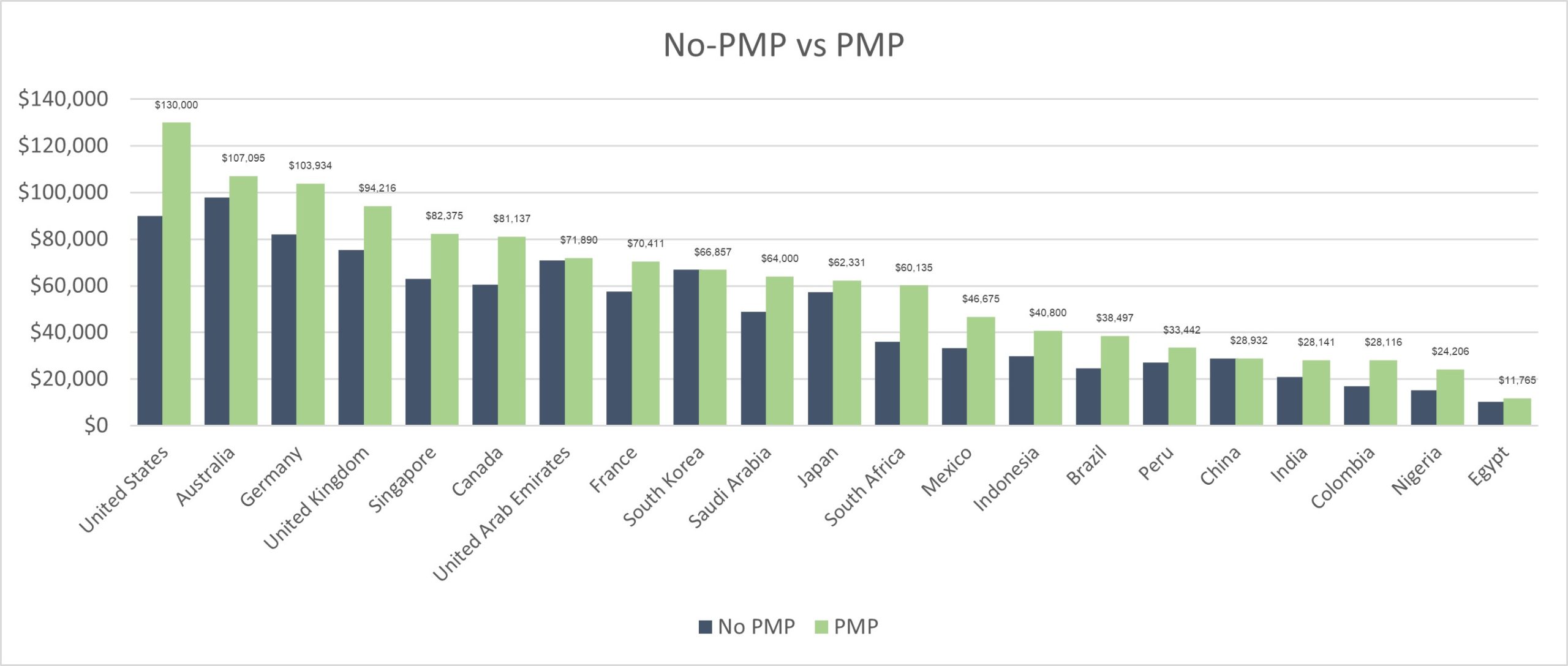
The report actually shows there is a decent salary boost for project managers who hold a PMP certification compared to those who do not. Here’s a quick overview of how PMP holders fare around the globe:

  • United States: Project managers with a PMP certification earn an average of $130,000, significantly higher than their non-certified peers.
  • Australia: PMP-certified project managers earn about $108,000, showing a strong return on investment.
  • Germany: With an average salary of $113,000, Germany also reflects the value of a PMP certification.
  • United Kingdom: Certified project managers earn around $94,000.
  • Singapore: The average salary stands at $82,000 for PMP holders.

Salary Increases by Country With a PMP

Percentage increase in salary with PMP - Project Management

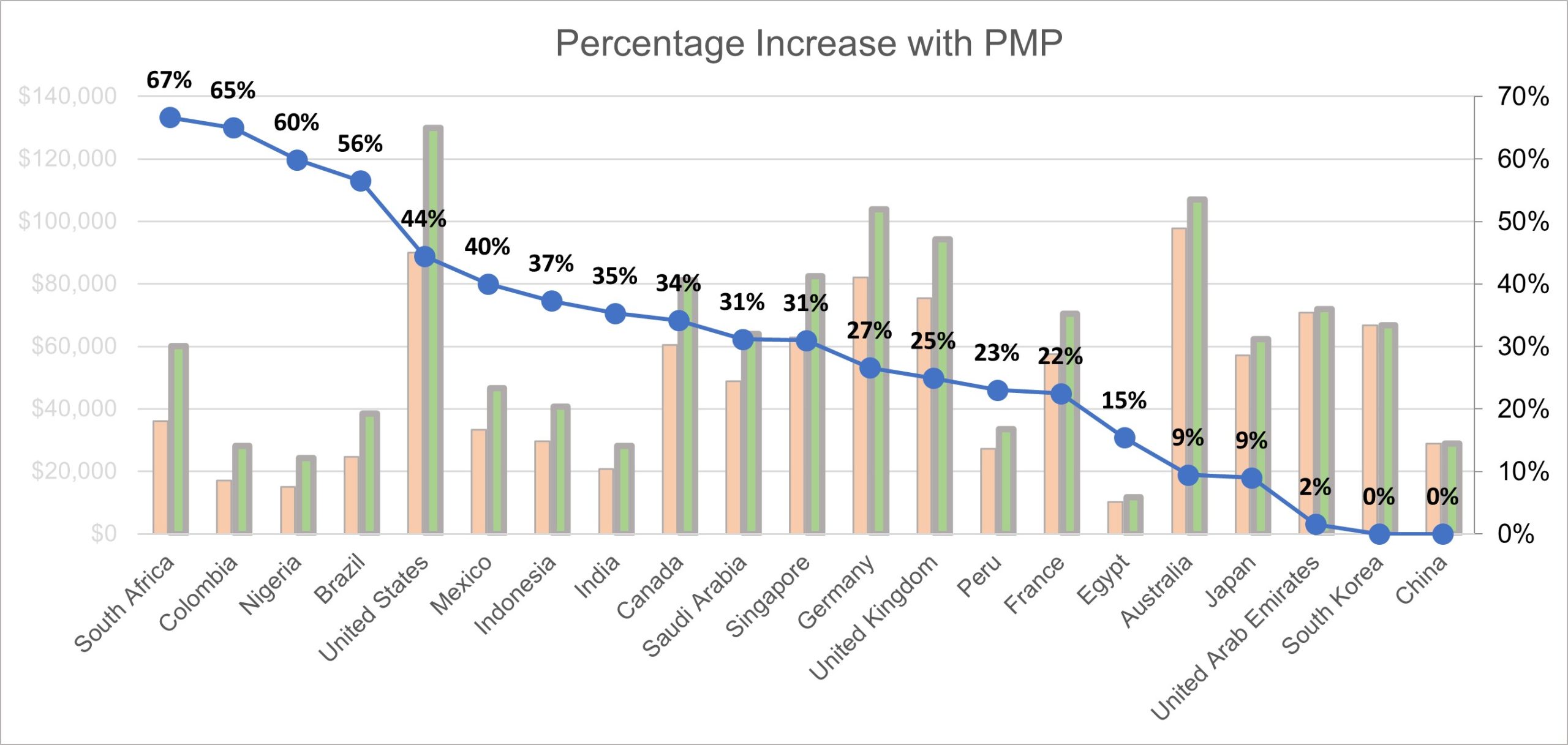
The percentage increase in salary from obtaining a PMP varies by country, but here are the ones that stand out:

  • South Africa: A remarkable 67% increase, translating to a jump from $38,000 to $60,000.
  • Colombia: PMP holders see a 65% increase in their earnings.
  • Nigeria: With a 60% increase, PMP certification proves highly beneficial.
  • Brazil and the United States: Both countries experience a 40-50% rise in salary.
  • Germany: Offers a 27% increase.
  • United Kingdom: Gives a 25% increase.
  • Australia: Provides a 10% increase.

In dollar terms, these increases can be substantial:

  • United States: An average increase of $40,000.
  • South Africa: Around $25,000.
  • Germany: Approximately $21,000.
  • Canada: $20,000.
  • Singapore: $9,000.

Advancing to Program Management

Project Manager salary increase with larger teams

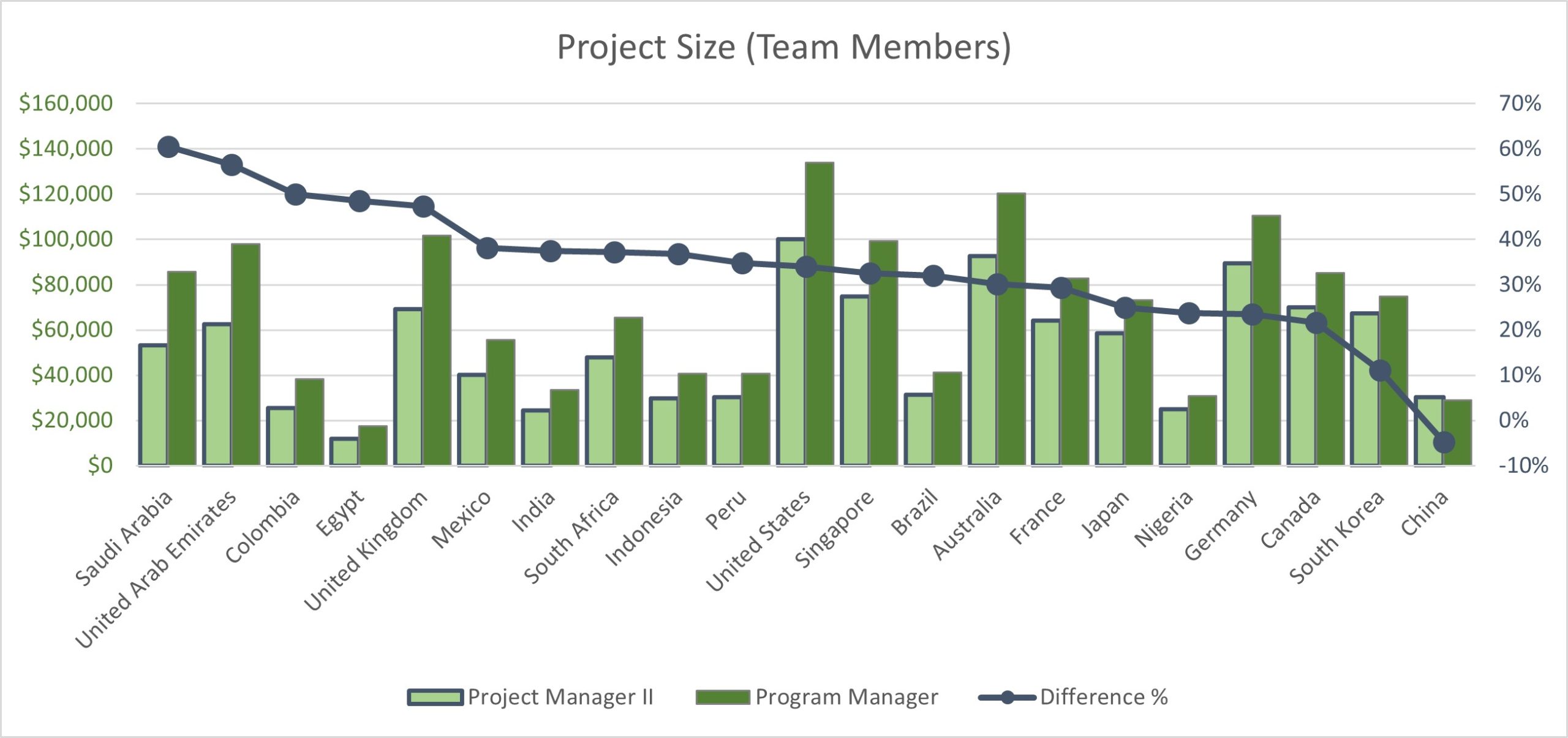
The report also highlights the financial benefits of transitioning from a project manager to a program manager. Program managers, who oversee multiple projects, typically see a 35% average salary increase. Countries like Saudi Arabia and Colombia report even higher jumps, making this career advancement a lucrative opportunity.

Managing Larger Projects

Project Manager Salary Increase when Program Manager - PMP

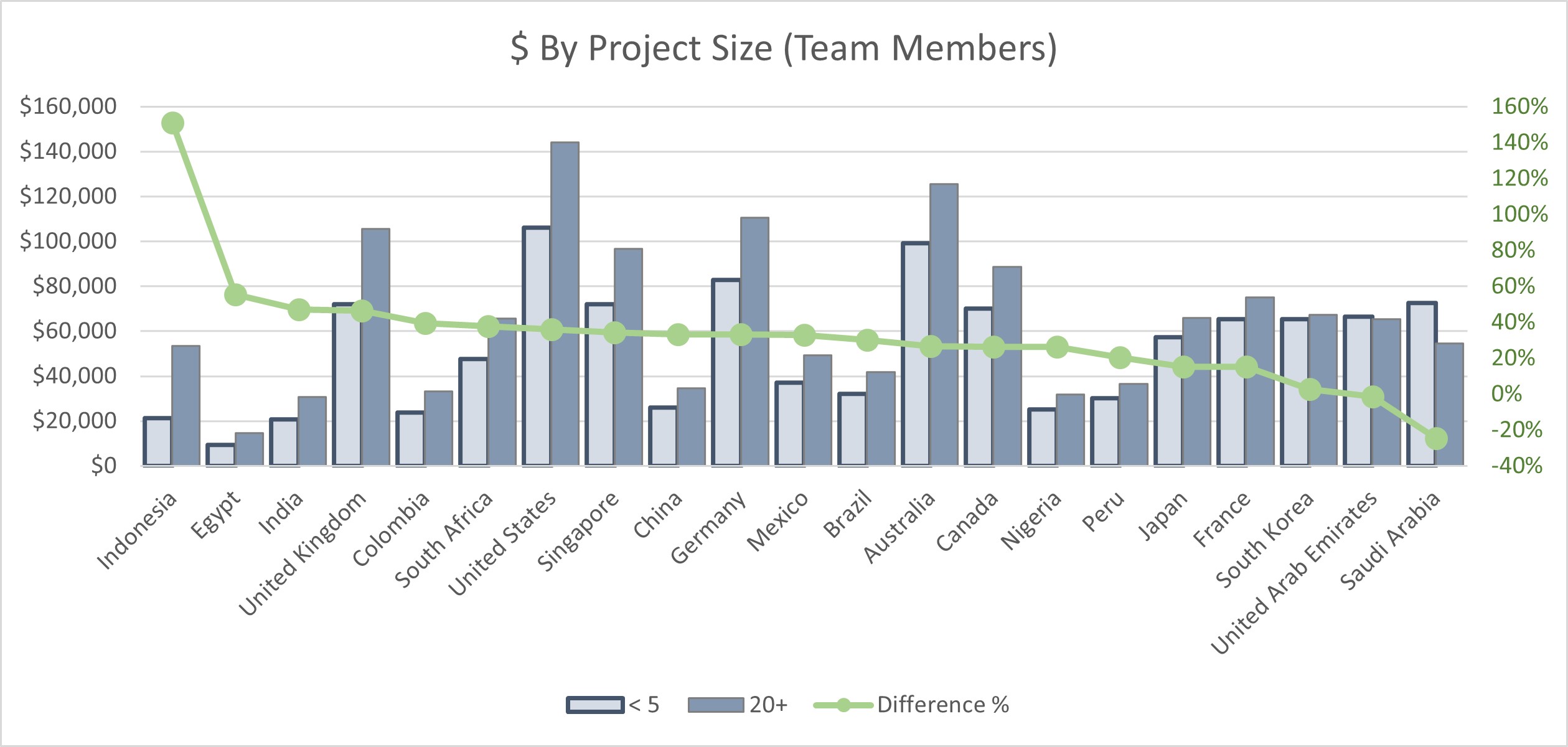
Managing larger projects with 20 or more team members instead of smaller teams can also enhance your earning potential. The report notes an average salary increase of 30% for those managing larger projects.

You Can Do It

Getting your PMP certification, advancing to program management, and managing larger projects can all make a big difference to your salary.

  • PMP Certification: Provides a 33% average salary increase.
  • Program Management: Offers a 35-40% increase.
  • Larger Projects: Results in a 30% increase.

For project managers aiming to increase their earning power, the evidence is clear: pursuing a PMP certification, advancing to program management roles, and managing larger projects are effective strategies. With determination and effort, you can leverage these insights to enhance your career and financial prospects.

See more PMP Articles and Tips for Passing your Exam: 

You can see what people are saying about David McLachlan here: REVIEWS

Navigate to Free Project Management and Leadership Articles through the links on the right (or at the bottom if on Mobile) 
PMI PMP 35 PDUs CourseThe Ultimate PMP Project Management Prep Course (35 PDUs)
Agile Certified Practitioner (PMI-ACP 21 PDUs)The Complete Agile Course: PMI-ACP (21 PDUs), Coaching, Jira and MORE! 
50 Project Management Templates Gantt Chart Risk Matrix and more Excel50+ Project Management Templates in Excel and PowerPoint (Gantt Chart, Risk Matrix and more!)
Project Management Plan TemplatesPre-made Project Management Plan Template: Save 100 HOURS!


Is This The Only Thing You Need To Pass The PMP Exam?

The Secret To Passing The PMP Exam – The Exam Content Outline

If you’re gearing up to take the Project Management Professional (PMP) exam this year, you may have come across various study materials and guides, each claiming to hold the key to passing the test. However, there is definitely one document you should prioritize: the PMP Exam Content Outline (ECO). While it isn’t a textbook or practice guide, it IS a detailed outline of the exam provided directly by the Project Management Institute (PMI).

The PMP Exam Content Outline is crucial because it goes into exactly what the exam will cover. You can get is for free on the PMI website, and it breaks down the exam into key domains: People, Process, and Business Environment. By understanding these areas in detail, you can focus your study efforts on exactly what is required to pass the exam.

Why the PMP Exam Content Outline Matters

The ECO provides a comprehensive breakdown of the domains and their respective weightings in the exam. For instance, it highlights that the:

  • People” domain constitutes 42% of the exam,
  • Process” makes up 50%, and;
  • Business Environment” accounts for 8%.

This can help guide your study and help you allocate your time effectively.

Focus on What PMI Considers Important

Since the ECO is published by PMI, it reflects the specific areas of knowledge and skills that the institute deems essential for the PMP exam. Studying this document ensures that you align your preparation with the actual content of the test.

The ECO is also free and accessible – readily available for download from the PMI website. Simply search for “PMI ECO PMP” to find the document and use it as a foundation for your study plan.

Using the ECO Effectively

While the ECO provides a detailed outline, it does not delve into the specific techniques or methodologies required for each task. So personally I would pair this with some comprehensive project management education, including the 35 contact hours or professional development units required for the exam. Here’s a quick overview of what you need to know for each domain:

People:

Focus on managing conflict, leading teams, supporting performance, and building a cohesive team. It also covers skills in negotiation, collaboration, and virtual team management.

Process:

Encompasses the execution of projects from start to finish, including managing communications, risks, budgets, schedules, quality, and changes. It also involves determining the appropriate project methodology and governance structure.

Business Environment:

This is where we ensure compliance, evaluating and delivering project benefits and value, addressing external business changes, and supporting organizational change.

You Can Do It

The PMP Exam Content Outline is an indispensable tool for your exam preparation. By thoroughly understanding and using it alongside other study resources, you can enhance your chances of success. Dive into the ECO, combine it with solid project management education, and you’ll be well on your way to passing the PMP exam with confidence.

I believe in you, and I know you can do it! Remember – “Hard work beats talent, when talent doesn’t work hard.” You can do this!

See more PMP Articles and Tips for Passing your Exam: 

You can see what people are saying about David McLachlan here: REVIEWS

Navigate to Free Project Management and Leadership Articles through the links on the right (or at the bottom if on Mobile) 
PMI PMP 35 PDUs CourseThe Ultimate PMP Project Management Prep Course (35 PDUs)
Agile Certified Practitioner (PMI-ACP 21 PDUs)The Complete Agile Course: PMI-ACP (21 PDUs), Coaching, Jira and MORE! 
50 Project Management Templates Gantt Chart Risk Matrix and more Excel50+ Project Management Templates in Excel and PowerPoint (Gantt Chart, Risk Matrix and more!)
Project Management Plan TemplatesPre-made Project Management Plan Template: Save 100 HOURS!


Is the PMP Still Worth it in 2024?

PMP – Overpriced or Valuable Certification?

If you’re investing in your education this year, the Project Management Professional (PMP) certification is still a hot topic. Many people have heard that the exam may not be well-regarded enough, and that it requires ongoing maintenance through Professional Development Units (PDUs). Despite that, the PMP certification still offers significant benefits in 2024.

Benefit 1: It Makes It Easy To Hire You

Firstly, the PMP is valuable because it makes it easier to hire you. Recruiters frequently use “PMP” as a key search term to quickly identify qualified candidates, making it easier for job seekers with this certification to get noticed and shortlisted. This shortcut can be a significant advantage in a competitive job market.

Having the PMP itself shows recruiters that you have at least three years of experience leading projects, and have put many hours into your own education on Project Management – something many managers NEVER do. This sets you apart from the competition.

Benefit 2 – New Tools To Help Your Current Projects

Secondly, the process of studying for the PMP can help your current projects. Many professionals report gaining new insights and tools that enhance their project management skills. The certification covers essential areas such as project management processes, the business environment, and soft skills like leadership and communication, which can lead to practical improvements in your career.

I know it has personally helped me in my career, in starting new projects, getting the right support, helping stakeholders support the project, and ensuring the right value is delivered on time and on budget.

Benefit 3 – The PMP Is Still The Most Recognized PM Certification

Thirdly, the PMP is the most recognized project management certification globally, far surpassing alternatives like PRINCE2 or Scrum Master certifications. Its widespread recognition, with over 200,000 searches each month, just shows how valuable it can be, and its relevance across every industry where projects are managed.

Disadvantage – PDUs Too Hard and Expensive?

Many people say that having to maintain the certification every 3 years with ongoing “Professional Development Units” (PDUs) and more money to keep the certification current is too much.

This step is optional, however. You don’t have to maintain the certification. Simply gaining it in the first place is valuable, and shows you have put in the work. Often, your job experience would take over from there after a few years.

But a CPA in Accounting has a similar deal where they maintain their education and the CPA to show they are still current in the industry. It really is your choice.

Benefit 4 – It won’t make you less marketable

Lastly, earning a PMP certification will not diminish your marketability. Even if the certification does not lead to immediate job opportunities, it provides a strong foundation of knowledge and demonstrates a commitment to professional growth.

In summary, the PMP certification continues to offer valuable benefits, including improved job prospects, enhanced skills, and global recognition. For those willing to invest the effort, it remains a worthwhile endeavor in 2024.

Never Forget – You Can Do It

With a little hard work and persistence, you can gain this certification and improve your job prospects, improve your current projects with the things you will learn, and improve your options for your future career.

It can be hard, but I know you can do it. Keep going. Do something every day, no matter how small. In one years’ time you will have grown and changed, and you will not recognize the amazing person you have become.

See more PMP Articles and Tips for Passing your Exam: 

You can see what people are saying about David McLachlan here: REVIEWS

Navigate to Free Project Management and Leadership Articles through the links on the right (or at the bottom if on Mobile) 

PMI PMP 35 PDUs CourseThe Ultimate PMP Project Management Prep Course (35 PDUs)
Agile Certified Practitioner (PMI-ACP 21 PDUs)The Complete Agile Course: PMI-ACP (21 PDUs), Coaching, Jira and MORE! 
50 Project Management Templates Gantt Chart Risk Matrix and more Excel50+ Project Management Templates in Excel and PowerPoint (Gantt Chart, Risk Matrix and more!)
Project Management Plan TemplatesPre-made Project Management Plan Template: Save 100 HOURS!