Not sure if you are ready to sit the PMP? This cheat sheet covers everything on the exam across the three domains: people, process and business environment. If you know all of this, you are ready.
People (33%)
Roles and responsibilities are the starting point. The project sponsor initiates the project, approves the charter and provides access to funding and resources. The project manager leads the team to deliver value. Business analysts elicit requirements. The project team and vendors do the work.
 Stakeholder management runs throughout the project. Identify stakeholders and record them in the stakeholder register. Analyze them using a stakeholder map or engagement assessment matrix to understand their influence, impact and current level of engagement. Assign responsibilities using a RACI chart and bring the team together with a team charter that captures ways of working, values and shared vision.
Leadership and management are both required. Know the difference between servant leadership (focused on the team’s growth and autonomy), distributed leadership (democratic decision-making) and autocratic decision-making. Understand the different types of power: informational, personal, relational, reward and coercive.
For conflict, know the five approaches: withdraw, smooth, compromise, force and collaborate. Collaborating and problem solving is the preferred approach as it aims for a win-win outcome. Compromising is actually a lose-lose because both parties give something up.
Other key people topics include Tuckman’s ladder (forming, storming, norming, performing, adjourning), Maslow’s hierarchy of needs, Herzberg’s motivation theory, student syndrome, Parkinson’s law, emotional intelligence and communication types (push versus pull).
Process (41%)
Know both the predictive (waterfall) and agile approaches and when to use each. Waterfall fixes scope with variable time and cost. Agile fixes time and cost with variable scope, always delivering the next highest-value item.
For predictive projects, key knowledge areas include scope (scope baseline, work breakdown structure, work packages), schedule (three-point estimating, leads and lags, fast-tracking, schedule crashing), cost (contingency reserves, management reserves, earned value management), risk (risk register, likelihood and impact, response strategies) and procurement (contract types, sourcing strategy, claims).
For agile, know the roles (product owner, scrum master, team), the ceremonies (sprint planning, daily standup, sprint review, retrospective) and the artifacts (product backlog, sprint backlog, user stories, acceptance criteria, velocity and the Kanban board). The three amigos (customer, developer and tester) come together during backlog refinement to add acceptance criteria and estimates.
Business Environment (26%)
This domain is about delivering value, managing change and being a good steward of the project and its resources. The right answer on the exam is almost always the ethical one.
The business case assesses whether the project is worth doing through a cost-benefit analysis. The project charter officially initiates the project. Value measures to know include net present value, internal rate of return, return on investment, payback period and benefit-cost ratio. For most of these, choose the highest value. For payback period, choose the lowest.
Change control follows a consistent process: raise a change request, log it, assess the impact on baselines, take it to the change control board for approval or rejection, communicate the outcome and update the change log.
Risk management runs from initiation to closing. Risks are future events logged in the risk register with likelihood and impact ratings. Issues have already occurred and are managed in the issue log. Risk identification tools include SWOT analysis, PESTEL and risk breakdown structures. Response strategies for threats are escalate, avoid, transfer, mitigate and accept.
Organizational change management helps the delivered product stick in the business. Frameworks to be aware of include ADKAR, the Eight Steps to Change and the Bridges Transition Model.
Work through this list and identify any gaps. Go back to your study materials for anything that does not feel solid yet. If you know all of this, you are ready.
– David McLachlan
You can see what people are saying about David McLachlan here: REVIEWS
Navigate to Free Project Management and Leadership Articles through the links on the right (or at the bottom if on Mobile)




Also available are my Project Management Templates – they’re a great way to save 100s of hours when you’re first starting out:
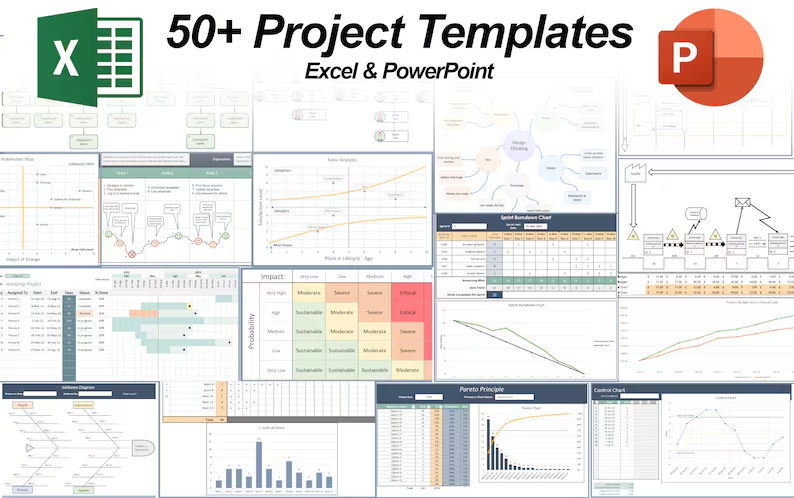 50+ Project Management Templates in Excel and PowerPoint (Gantt Chart, Risk Matrix and more!) 50+ Project Management Templates in Excel and PowerPoint (Gantt Chart, Risk Matrix and more!) |
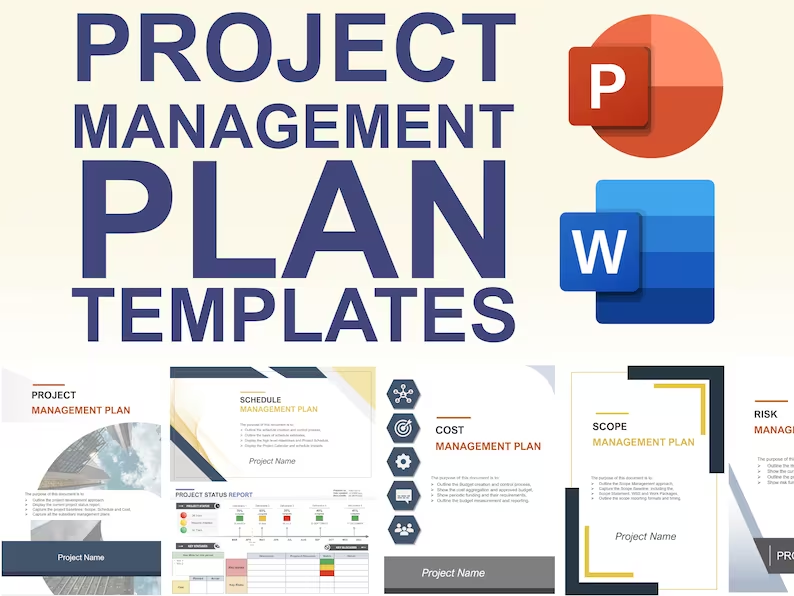 Pre-made Project Management Plan Templates: Save 100 HOURS! Pre-made Project Management Plan Templates: Save 100 HOURS! |