Category Archives: PMP

PMP to Pay Rise – 6 Steps to Getting a New Job and Pay Rise With Your PMP

A professional person getting_a_pay_rise_comicFor those who have recently earned their PMP certification, the next step often involves leveraging this achievement to secure a substantial pay rise. A recent study showed that PMP holders earned 40% more than Project Managers without a PMP certification – equating to an average of $130,000 a year in the US (versus $90,000 without).

Whether you’re negotiating a raise at your current job or exploring new opportunities, applying a strategic approach can make a significant difference. Here are some essential tips to help you maximize your earning potential and advance your career.

1. Benchmark Your Salary

The first step in securing a pay rise is understanding the current market rates for your role. Use reputable salary and recruitment websites such as Glassdoor, Indeed, or salary.com to gather data on salary ranges for project managers in your area. For those in project management, the Project Management Institute (PMI) publishes an annual salary report that provides detailed insights into earnings for PMP-certified professionals globally.

By comparing your current salary with market data, you can present a strong case to your employer if you’re being underpaid. This benchmarked data will serve as a solid foundation for negotiating a raise, demonstrating that your current compensation doesn’t align with industry standards.

2. Showcase Your Value

When negotiating a pay rise or applying for a new job, quantifying your contributions can significantly strengthen your position. Highlight how your projects have added financial value to your organization—whether through cost savings, revenue generation, or efficiency improvements. Provide specific examples and metrics to illustrate your impact.

If you haven’t yet achieved measurable financial results, consider volunteering for high-visibility projects or initiatives within your current role. This not only demonstrates your willingness to take on additional responsibilities but also provides tangible evidence of your contributions that can support your case during negotiations.

3. Enhance Your Network

Networking plays a crucial role in career advancement. Studies show that a substantial percentage of job vacancies are filled through referrals or internal recommendations rather than public advertisements. Strengthening your professional network can open doors to opportunities that are not widely known.

Engage with industry groups, attend PMI chapter meetings, and connect with peers in your field. A robust network can offer valuable support, provide insights into job openings, and help you gain referrals or endorsements from industry professionals. Leveraging these connections can be a powerful tool in your job search and salary negotiations.

4. Consider a Job Switch

If your current employer is unable to meet your salary expectations, it may be time to explore new opportunities. Even if a job switch doesn’t immediately lead to a promotion, it can offer better prospects for future salary increases and career growth. Look for roles in companies or industries that offer more competitive compensation and opportunities for advancement.

A lateral move to a different organization might also present more upward mobility or a more supportive work environment, which can contribute to long-term career satisfaction and increased earning potential.

5. Target Hot Industries

Identifying and targeting high-growth industries can be a strategic way to increase your salary. Industries experiencing rapid growth, such as technology, healthcare, or renewable energy, often offer higher compensation due to increased demand for skilled professionals.

Research industries that are currently thriving and align with your skills. By positioning yourself in a booming sector, you can benefit from the increased salaries and bonuses that come with high-demand roles.

6. Optimize Your Job Application

When applying for new positions, tailoring your resume and cover letter to match the job description is crucial. Use keywords from the job ad to ensure your application passes through automated applicant tracking systems (ATS). Highlight relevant skills and experiences that align with the job requirements.

One effective tool is ChatGPT or other AI-driven platforms that can assist in crafting well-written resumes and cover letters. These tools can help you present your qualifications in a professional manner and match your skills with the keywords from job ads. However, be cautious of potential text watermarks that may indicate AI-generated content – always review and personalize the output to ensure it reflects your authentic voice.

Conclusion

Securing a pay rise or advancing your career as a PMP-certified professional involves a combination of market research, strategic negotiation, and effective job searching. By benchmarking your salary, showcasing your value, enhancing your network, exploring new opportunities, targeting growing industries, and optimizing your job application, you can significantly improve your chances of achieving the salary increase you deserve.

With these strategies, you’re well-equipped to navigate your career development and secure the compensation that reflects your skills and contributions. Good luck, and here’s to your success in reaching new career milestones and financial goals.

David McLachlan on LinkedIn

See more PMP articles: 

You can see what people are saying about David McLachlan here: REVIEWS

Navigate to Free Project Management and Leadership Articles through the links on the right (or at the bottom if on Mobile) 
PMI PMP 35 PDUs CourseThe Ultimate PMP Project Management Prep Course (35 PDUs)
Agile Certified Practitioner (PMI-ACP 21 PDUs)The Complete Agile Course: PMI-ACP (21 PDUs), Coaching, Jira and MORE! 
50 Project Management Templates Gantt Chart Risk Matrix and more Excel50+ Project Management Templates in Excel and PowerPoint (Gantt Chart, Risk Matrix and more!)
Project Management Plan TemplatesPre-made Project Management Plan Template: Save 100 HOURS!


This Course Is Really All You Need To Pass the PMP

Udemy_PMP_David Mclachlan

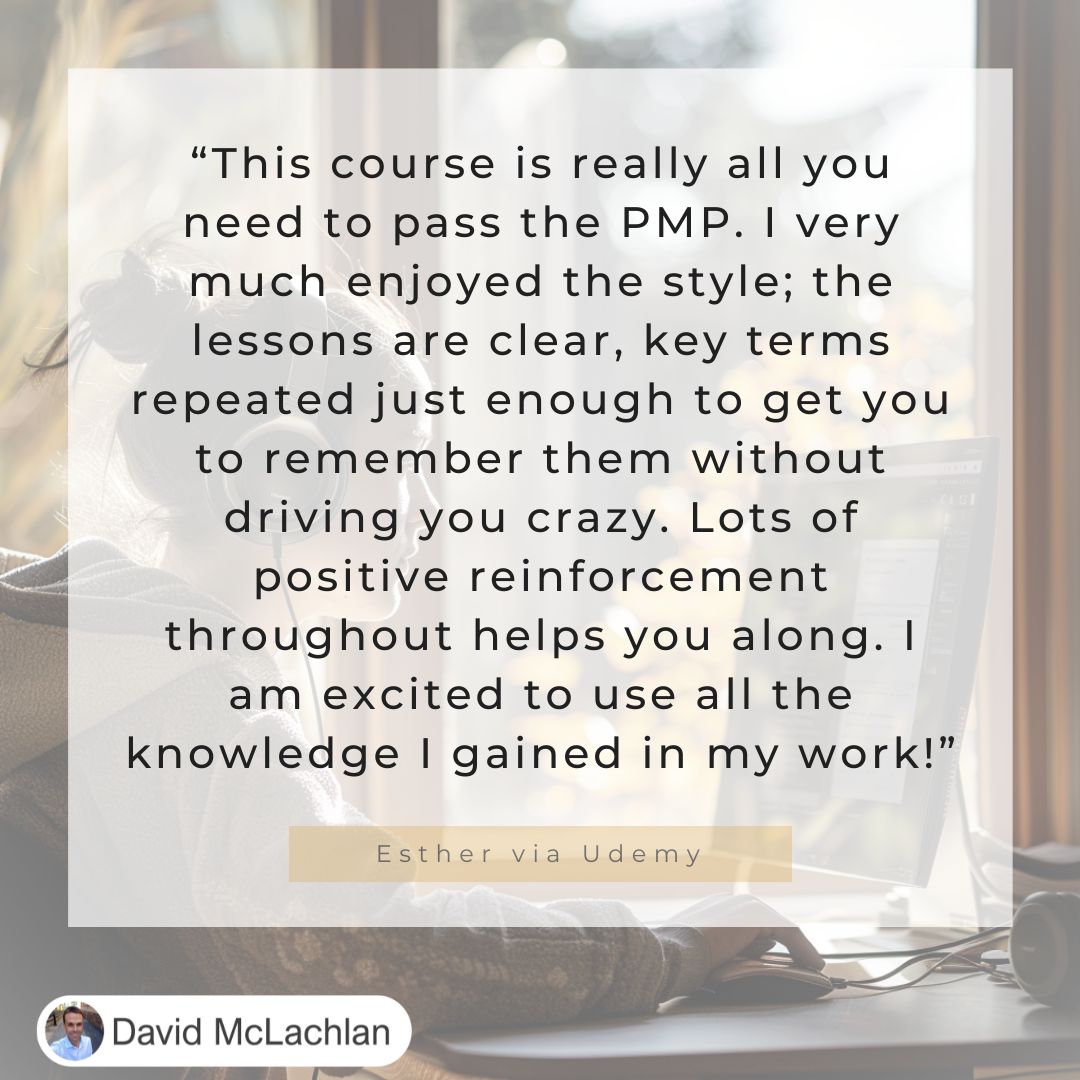
“This course is really all you need to pass the PMP. I very much enjoyed the style; the lessons are clear, key terms repeated just enough to get you to remember them without driving your crazy. Lots of positive reinforcement throughout helps you along. I am excited to use all the knowledge I gained in my work!” – Esther, on Udemy.

See hundreds of 5 star reviews for David McLachlan.

This is the course: The Ultimate PMP Project Management Prep Course (35 PDUs)

See more PMP articles: 

You can see what people are saying about David McLachlan here: REVIEWS

Navigate to Free Project Management and Leadership Articles through the links on the right (or at the bottom if on Mobile) 

PMI PMP 35 PDUs CourseThe Ultimate PMP Project Management Prep Course (35 PDUs)
Agile Certified Practitioner (PMI-ACP 21 PDUs)The Complete Agile Course: PMI-ACP (21 PDUs), Coaching, Jira and MORE! 
50 Project Management Templates Gantt Chart Risk Matrix and more Excel50+ Project Management Templates in Excel and PowerPoint (Gantt Chart, Risk Matrix and more!)
Project Management Plan TemplatesPre-made Project Management Plan Template: Save 100 HOURS!


How to Pass the PMP Audit: Tips for Meeting Eligibility

Note: Click on the video above to watch.

Pass your PMP Audit With These Tips

If you’re afraid of receiving a notification from PMI that you failed your PMP audit because your eligibility wasn’t met, you’re not alone. The audit process can be tricky, but with some adjustments, you can improve your application. Here’s a guide to help you meet the PMP requirements and increase your chances of success.

Don’t get Rejected

PMI may reject your application if your project descriptions don’t clearly show that you led a project and fulfilled the duties of a project manager. Even if you didn’t hold the title of Project Manager, you must demonstrate that you led cross-functional teams and managed the project effectively to deliver a change.

Tips for Meeting Eligibility

Detail Your Project Experience:

Length and Detail: Each project description should be around 200 to 500 words. Include key details such as team size, project budget, methodology (waterfall or agile), and the timeline.

Overlapping Time Doesn’t Count: PMI only counts the total of your non-overlapping project time. For example, if you worked on multiple projects that overlapped, you can’t add up their durations. Only count the actual time worked.

Showcase Your Leadership:

Project Description: Clearly state your role in leading the project or change. Even if your title wasn’t “Project Manager,” emphasize how you led teams and managed project delivery across the project phases of Initiation, Planning, Execution, Controlling and Closing.

Project Definition: Ensure your projects are temporary efforts aimed at delivering change or business value, not just routine tasks or operations.

Describe Your Responsibilities:

Project Phases: Break down your responsibilities across different project phases—initiating, planning, executing, monitoring, and closing. Use PMBOK language, tools and techniques to align with PMI’s standards.

Tools and Techniques: Mention any project management tools and techniques you used, such as stakeholder registers, risk management, quality inspections, and work breakdown structures.

Highlight Outcomes:

Success Metrics: Describe the outcomes and benefits of the project. Even if a project wasn’t fully successful, outline what was achieved and how you managed any challenges.

Final Thoughts

Applying for the PMP exam can be daunting, but with the right approach, you can meet the requirements. Focus on detailing your leadership roles, project outcomes, and use PMI’s language to describe your experience. Remember, persistence and attention to detail are key. You’ve got this!

Good luck, and if you have anything you want to add, leave a comment below.

See more PMP articles: 

You can see what people are saying about David McLachlan here: REVIEWS

Navigate to Free Project Management and Leadership Articles through the links on the right (or at the bottom if on Mobile) 
PMI PMP 35 PDUs CourseThe Ultimate PMP Project Management Prep Course (35 PDUs)
Agile Certified Practitioner (PMI-ACP 21 PDUs)The Complete Agile Course: PMI-ACP (21 PDUs), Coaching, Jira and MORE! 
50 Project Management Templates Gantt Chart Risk Matrix and more Excel50+ Project Management Templates in Excel and PowerPoint (Gantt Chart, Risk Matrix and more!)
Project Management Plan TemplatesPre-made Project Management Plan Template: Save 100 HOURS!


PMP versus MBA – Which One Wins?

Note: Click on the video above to watch.

PMP versus MBA cartoonPMP Certification vs. MBA Degree: What’s the Difference?

Many people have asked about the differences between a PMP (Project Management Professional) certification and an MBA (Master of Business Administration) degree. While both focus on business improvement, leadership and value, they have distinct features, costs, and benefits. Let’s break it down!

Overview

PMP Certification: This is a professional certification designed to showcase your Project Management skills. To earn it, you need at least three years of project management experience and 35 hours of project management education. It’s recognized globally, so you can often use it anywhere.

MBA Degree: An MBA is a graduate-level degree that covers a broad range of business topics, including leadership, finance, and marketing. It’s often required for top-level management positions and is also internationally recognized.

Popularity

PMP: There are about 1.2 million PMP certification holders worldwide.

MBA: Approximately 2 to 3 million people hold an MBA, making it one of the most popular graduate degrees. The exact number can vary based on university records and different definitions of MBA completion.

What You Learn

PMP: Focuses on project management processes, frameworks, and delivering business value. You’ll learn about managing scope, schedule, cost, quality, and risk, as well as team leadership and resource management.

MBA: Covers a wide range of topics, including marketing, ethics, organizational behavior, finance and accounting, strategy, and leadership. It provides a broad business education, preparing you for various managerial roles.

Salary Expectations

PMP: The average salary for a PMP holder in the U.S. is around $130,000 per year according to PMI’s latest Salary Survey.

MBA: The average salary for MBA graduates is about $128,129, but graduates from top MBA programs can earn between $205,000 and $231,000. Consultants with an MBA can earn up to $251,000 annually.

Time and Cost

PMP: Costs $655 (or $544 for PMI members) and requires 35 hours of education plus three years of project management experience. It’s relatively quick and affordable compared to an MBA, but is still sufficiently difficult to pass and obtain.

MBA: On average an MBA costs around $56,000 and requires about two years of full-time study or approximately 600 classroom hours. The cost and time commitment are significantly higher than those for a PMP.

Networking Opportunities

PMP: Networking is limited compared to an MBA. While you can connect with other professionals through PMI, the scope is narrower. Some people have mentioned the benefits, as a PMI member, of joining your local PMI Chapter. These can give some networking opportunities to help your career.

MBA: Networking is a major benefit of an MBA. MBA programs often provide opportunities to connect with high level executives, alumni, and mentors through events and alumni networks, which can be invaluable for future career opportunities.

Prerequisites

PMP: Requires three years of project management experience and 35 hours of education.

MBA: Generally requires a bachelor’s degree with a minimum GPA, and some managerial work experience. Depending on the program, you might also need a GMAT score and/or IELTS scores.

Conclusion

Choosing between a PMP certification and an MBA depends on your career goals. The PMP is ideal if you want to specialize in project management and need a slightly faster, more cost-effective credential. An MBA offers a broader business education and more networking opportunities, but at a higher cost and time commitment.

I hope this helps you decide which path is right for you! If you have anything to add, leave a comment below.

See more PMP articles: 

You can see what people are saying about David McLachlan here: REVIEWS

Navigate to Free Project Management and Leadership Articles through the links on the right (or at the bottom if on Mobile) 
PMI PMP 35 PDUs CourseThe Ultimate PMP Project Management Prep Course (35 PDUs)
Agile Certified Practitioner (PMI-ACP 21 PDUs)The Complete Agile Course: PMI-ACP (21 PDUs), Coaching, Jira and MORE! 
50 Project Management Templates Gantt Chart Risk Matrix and more Excel50+ Project Management Templates in Excel and PowerPoint (Gantt Chart, Risk Matrix and more!)
Project Management Plan TemplatesPre-made Project Management Plan Template: Save 100 HOURS!


Getting the Mindset for the PMP

Note: Click on the video above to watch.

PMP MindsetNailing the PMP Exam: Your Mindset Guide

Many people have asked how to get into the right mindset for the PMP (Project Management Professional) exam, so let’s dive in. Here’s a quick overview (from the video above) of how to approach the exam with the right mindset. We’ll cover general tips, predictive approaches, and Agile strategies to help you succeed.

General Exam Mindset

The mindset idea is the general approach to a project, leadership and the exam questions that are asked on these things to help you get them right the majority of the time.

Here are some general exam mindset ideas from the video above to help you.

  1. Work with What You’ve Got: Assume that all the info you need is in the question. Sometimes, several answers might seem correct. Rank them from best to worst and pick the best one based on the details given.
  2. Avoid Extremes: Try not to go for extreme actions like closing the project or escalating issues immediately. Instead, aim for answers that focus on problem-solving and collaboration.
  3. Be Collaborative: Project managers don’t have all the answers but can get them. Consult your team for their expertise and always involve the project customer for feedback on deliverables.
  4. Stay Simple and Inclusive: Use simple, inclusive tools and methods. For estimating, bottom-up is more accurate but time-consuming, while top-down is quicker but less precise.
  5. Know Your Framework: Identify whether the project is waterfall, agile, or a hybrid. Look for keywords in questions to determine which approach is being tested.

Predictive Exam Mindset

Here are some Predictive exam mindset ideas from the video above to help you.

  1. Your Project Plan: Always create a plan and follow it. If changes are needed, know the change management process: log the change, assess its impact, get approval from the Change Control Board, and communicate the outcome to stakeholders.
  2. Distinguish Risks from Issues: Risks are future uncertainties; issues are problems that have already happened. Use a risk register for risks and an issue log for issues.
  3. Consult Your Team: For solutions, and for estimations, always get input from your team. Their expertise is crucial.
  4. Closing a Project: Follow proper closing steps, including confirming acceptance with the sponsor, finalizing claims for Procurement, transitioning to operations, documenting lessons learned and archiving project information.
  5. Know Stakeholder Communication Needs: Don’t assume; ask your stakeholders what communication they need and how often. Engage them regularly and update as needed.

Agile Exam Mindset

Here are some Agile exam mindset ideas from the video above to help you.

  1. Be a Servant Leader: Remove obstacles for your team, shield them from external issues, and help them grow. Focus on motivating and supporting your team.
  2. Coach the Product Owner: The product owner prioritizes the backlog. If they don’t know how we must coach them and help them improve. They represent the customer and make decisions on what features to prioritize.
  3. Communicate the Vision Often: Clearly outline the project vision, goals, and communication preferences in the project charter.
  4. Co-locate the Team: Whenever possible, have the team work together in the same space. This improves communication and information flow.
  5. Use Face-to-Face Communication: It’s more effective than emails, allowing you to pick up on non-verbal cues.
  6. Visual Management: Use a Kanban board to track work and identify bottlenecks. This helps the team manage work and solve constraints.
  7. Encourage Safe Disagreements: Create an environment where team members can voice disagreements without fear. This fosters a culture of psychological safety.
  8. Review and Improve: Hold retrospectives to review what’s working and what’s not. Use these insights to continuously improve.
  9. Sprint Reviews: Demonstrate completed items to show real progress, not just reports or showcases.

Final Thoughts

Passing the PMP exam is within your reach! It takes effort and self-belief, but with the right mindset and strategies, you can do it. Keep studying, stay confident, and remember: you can do this.

See more PMP articles: 

You can see what people are saying about David McLachlan here: REVIEWS

Navigate to Free Project Management and Leadership Articles through the links on the right (or at the bottom if on Mobile) 
PMI PMP 35 PDUs CourseThe Ultimate PMP Project Management Prep Course (35 PDUs)
Agile Certified Practitioner (PMI-ACP 21 PDUs)The Complete Agile Course: PMI-ACP (21 PDUs), Coaching, Jira and MORE! 
50 Project Management Templates Gantt Chart Risk Matrix and more Excel50+ Project Management Templates in Excel and PowerPoint (Gantt Chart, Risk Matrix and more!)
Project Management Plan TemplatesPre-made Project Management Plan Template: Save 100 HOURS!


CAPM versus PMP – What Are They and Which Should You Choose?

Note: Click on the video above to watch.

CAPM versus PMP: Different Certificates for Different Times

If you’ve been considering diving into project management certifications, you’ve probably heard about the CAPM (Certified Associate in Project Management) and the PMP (Project Management Professional) from PMI (Project Management Institute). Both certifications can boost your career, but they cater to different needs and levels of experience. Let’s break down the key differences between them to help you figure out which one might be right for you.

Which Certification is Right for You?

CAPM:

If you’re new to project management or looking to switch careers, the CAPM is a great starting point. It’s designed for those who might not have a lot of project management experience but want to demonstrate their understanding of the basics. You don’t need years of experience to qualify for the CAPM, but you do need education and a willingness to learn.

PMP:

On the other hand, the PMP is for seasoned professionals who want to showcase their project management expertise. It’s ideal if you’ve already been leading projects and want to prove your advanced skills and experience. The PMP is recognized globally and can be a powerful credential if you’re aiming to advance in your career or work internationally.

Requirements to Apply

CAPM:

To apply for the CAPM, you need a secondary degree (like a high school diploma or GED) and 23 hours of project management education. The CAPM doesn’t require project management experience, making it accessible for those just starting out.

PMP:

For the PMP, you need more than just education. You need either a secondary degree or GED plus 5 years of professional project management experience, or 3 years of experience leading projects if you have a four-year degree. Additionally, you’ll need 35 contact hours of project management education. If you already hold a CAPM, those education hours count completely towards your PMP application instead.

Exam Differences

CAPM:

The CAPM exam consists of 150 questions to be completed in 3 hours. Of these, 135 are scored, and 15 are “seeded” questions used to test future exam content. The CAPM exam covers project management fundamentals, predictive methodologies (waterfall), Agile frameworks, and business analysis. The breakdown is roughly 36% fundamentals, 17% predictive, 20% Agile, and 27% business analysis in the CAPM Exam Content Outline.

PMP:

The PMP exam is a bit more involved, with 180 questions to be answered in 3 hours and 50 minutes (230 minutes). Out of these, 175 are scored, and 5 are seeded. The PMP exam focuses on people and soft skills (42%), project management processes (50%), and the business environment (8%). This reflects the advanced nature of the PMP and the comprehensive knowledge required.

What to Study for CAPM versus the PMP

CAPM:

To prepare for the CAPM, focus on the exam content outline, the PMBOK (Project Management Body of Knowledge) Guide, and PMI’s guides on process groups and Agile practices. The CAPM requires a solid understanding of project management fundamentals and methodologies.

PMP:

For the PMP, you’ll want to study the same resources as for the CAPM but in greater depth. The PMP also includes additional recommended readings and a more detailed examination of project management processes, leadership skills, and business environment. The PMBOK 7th Edition and the Agile Practice Guide are essential resources for this.

Final Thoughts

Both the CAPM and PMP certifications offer significant value depending on where you are in your project management career. The CAPM is a fantastic entry-level certification that can open doors to new opportunities, while the PMP is a prestigious credential for those with substantial project management experience looking to advance their careers.

Whichever certification you choose, both will enhance your project management skills and add value to your career. With dedication and the right preparation, you can successfully achieve either certification and stand out in the ever-evolving field of project management.

See more PMP Articles and Tips for Passing your Exam: 

You can see what people are saying about David McLachlan here: REVIEWS

Navigate to Free Project Management and Leadership Articles through the links on the right (or at the bottom if on Mobile) 

PMI PMP 35 PDUs CourseThe Ultimate PMP Project Management Prep Course (35 PDUs)
Agile Certified Practitioner (PMI-ACP 21 PDUs)The Complete Agile Course: PMI-ACP (21 PDUs), Coaching, Jira and MORE! 
50 Project Management Templates Gantt Chart Risk Matrix and more Excel50+ Project Management Templates in Excel and PowerPoint (Gantt Chart, Risk Matrix and more!)
Project Management Plan TemplatesPre-made Project Management Plan Template: Save 100 HOURS!


The Secret History of Agile: From Japan to America

Note: Click on the video above to watch.

hand drawn comic software and car manufacturer working togetherThe Secret History of Agile: Unveiling the Roots of a Revolutionary Methodology

The Agile methodology, a transformative approach in software development, is often mistakenly attributed solely to the Agile Manifesto of 2001. However, the roots of Agile stretch much deeper into history, with influences from manufacturing and even early industrial practices. Let’s check out the lesser-known origins of Agile, and see how it has really evolved from the 19th century to today.

The Waterfall Model: A Misunderstood Beginning

The story of Agile cannot be told without mentioning the Waterfall model, traditionally seen as the “enemy” of Agile. Interestingly, Winston Royce, who formalized the Waterfall model, came up with a more iterative and feedback-driven approach in his final notes. Royce emphasized the importance of integrating feedback from testing into design and requirements, advocating for an iterative process and customer involvement.

This philosophy, remarkably similar to Agile, shows that even the origins of the Waterfall model came from principles that Agile later embraced.

Early Industrial Influences: Toyota’s Innovations

Agile’s principles can be traced back to early industrial practices, particularly those pioneered by Toyota. In 1896, Sakichi Toyoda introduced the “Stop and Notify” concept, also known as Jidoka or autonomation. His invention of an automatic loom that halted production if a needle broke was revolutionary, combining human oversight with machine efficiency. This concept of built-in quality control is a cornerstone of Lean manufacturing and, subsequently, Agile.

Post-War Innovation: The Birth of Lean and Kanban

The real transformation began in 1948 when Toyota faced severe resource constraints post-World War II. This led to the creation of the Toyota Production System, the precursor to Lean manufacturing. Lean emphasizes waste reduction and Kaizen, or continuous improvement. From Lean, Kanban emerged, a method of visualizing the work to optimize flow. This later became integral to Agile software development.

The Agile Manifesto: A Culmination of Decades of Ideas

Agile as formally recognized today was crystallized in 2001 with the Agile Manifesto, but its foundations were laid much earlier. The Manifesto was influenced by various methodologies, including Lean, Kanban, Extreme Programming, Feature Driven Development and Scrum. These frameworks collectively contributed to Agile’s emphasis on flexibility, customer collaboration, and iterative development.

Scrum: A Revolutionary Approach

Scrum, often synonymous with Agile, has its roots in a 1986 white paper titled “The New New Product Development Game” by Japanese researchers Hirotaka Takeuchi and Ikujiro Nonaka. They proposed a holistic, team-based approach to product development, likening it to a rugby team working together to move the ball down the field. This approach emphasized overlapping development phases, self-organizing teams, and continuous learning—key principles that underpin Scrum and Agile.

The Six Secrets of The New New Product Development Game

Takeuchi and Nonaka identified six characteristics of successful product development teams, which resonate strongly with Agile principles:

  • Built-in Instability: Assigning broad goals to capable teams, granting them autonomy and flexibility to meet that goal.
  • Self-organizing Teams: Teams acting like startups, from ideation to implementation, fostering autonomy, self-transcendence, and cross-functional collaboration (the Product Owner idea in Scrum today).
  • Overlapping Development Phases: Continuous interaction between research and development and production to ensure constant progress and iteration.
  • Multi-learning: Encouraging team members to pursue ongoing learning, both within and outside their areas of expertise.
  • Subtle Control: Implementing visual management and maintaining open workspaces to facilitate communication and collaboration.
  • Organizational Transfer of Learning: Converting project activities into standard practices to spread knowledge throughout the organization.

As you can see there are many similarities between Scrum as we know it today, and The New New Product Development Game introduced in 1986, even if some of the names are different.

Conclusion: The Ever-Evolving Journey of Agile

The history of Agile is rich and multifaceted, drawing from various disciplines and evolving over decades. From Royce’s iterative vision for Waterfall to Toyota’s Lean principles and the collaborative ethos of Scrum, Agile embodies a continuous pursuit of improvement and adaptability. Understanding this deep and varied history not only enriches our appreciation of Agile but also underscores its enduring relevance in today’s fast-paced, ever-changing technological landscape.

For those eager to dive deeper into Agile’s principles and practices, comprehensive courses and coaching can offer valuable insights and practical skills. Embracing Agile is not just about adopting a methodology; it’s about joining a long-standing tradition of innovation and excellence in product development.

See more PMP Articles and Tips for Passing your Exam: 

You can see what people are saying about David McLachlan here: REVIEWS

Navigate to Free Project Management and Leadership Articles through the links on the right (or at the bottom if on Mobile) 

PMI PMP 35 PDUs CourseThe Ultimate PMP Project Management Prep Course (35 PDUs)
Agile Certified Practitioner (PMI-ACP 21 PDUs)The Complete Agile Course: PMI-ACP (21 PDUs), Coaching, Jira and MORE! 
50 Project Management Templates Gantt Chart Risk Matrix and more Excel50+ Project Management Templates in Excel and PowerPoint (Gantt Chart, Risk Matrix and more!)
Project Management Plan TemplatesPre-made Project Management Plan Template: Save 100 HOURS!


What to Put in Your Project Plan: Agile vs. Waterfall

Waterfall vs Agile project plansAgile vs. Waterfall Project Plans

The debate between Agile and Waterfall project management methodologies is a common one, with some individuals favoring Waterfall and others preferring Agile. However, the ultimate goal remains the same: successfully completing a project.

Let’s check out the differences and similarities between Agile and Waterfall project plans, focusing on the tools used in each methodology. It’s important to note that neither approach offers a “free pass”—both require diligent management of scope, stakeholders, schedule, cost, and quality.

Starting a Project: Waterfall

In a Waterfall project, the process begins with creating a business case to weigh the pros and cons of starting or delivering a new product. This is followed by the development of a project charter, which officially kicks off the project with resources and funding from the project sponsor. Early planning documents in Waterfall projects include a change control plan, configuration management plan for version control, benefits management plan, and a comprehensive project management plan covering scope, schedule, cost, and quality.

Starting a Project: Agile

Agile projects, on the other hand, kick off with a team charter and a high-level model of the system, such as a sequence or architecture diagram. Agile methodologies can also use a walking skeleton, a basic version of the system to which features are gradually added. Other planning tools in Agile include the business model canvas or lean canvas, which outline customer problems, proposed solutions, value delivery methods, and competitive advantages.

Gathering Stakeholders: Waterfall

Waterfall projects involve extensive stakeholder planning. A stakeholder register is created to list all stakeholders, classify them by influence and impact, and outline engagement strategies. This detailed planning helps ensure effective communication and stakeholder management throughout the project.

Gathering Stakeholders: Agile

Agile projects also require stakeholder engagement but typically involve less documentation. A team charter outlines the project’s vision, mission, background, team roles, stakeholders, values, and communication and decision-making processes. Agile projects often feature small, co-located teams, typically around nine members, to facilitate quick communication and collaboration.

Gathering Requirements: Waterfall and Agile

Requirement gathering in Waterfall projects involves creating detailed documentation and a requirements traceability matrix to track requirements through to completion.

Agile projects, being more customer-focused, offer various methods for gathering requirements, such as the business model canvas, lean canvas, prototypes, mockups, storyboards, test cases, and acceptance criteria. Agile emphasizes iterative feedback and adaptation to meet customer needs.

Scope and Deliverables

In Waterfall projects, scope and deliverables are defined by a high-level scope description, prioritized features, a work breakdown structure (WBS), and a WBS dictionary detailing resources, costs, dependencies, and durations. The goal is to plan everything upfront, ensuring all work packages are defined before execution.

Agile projects use a product backlog, consisting of high-level epics and detailed user stories. Similar to a WBS, user stories are broken down into manageable tasks for each Sprint. Agile scope management includes mockups, storyboards, user story mapping, and prioritization methods like cost-benefit analysis. Scope is accepted through Sprint reviews, providing regular customer feedback.

Project Schedules

Waterfall schedules involve breaking down the scope into an activity list, sequencing activities, estimating durations, and creating a detailed schedule, often visualized in a Gantt chart.

Agile projects utilize a product roadmap, which can resemble a Gantt chart, to outline feature delivery timelines. Sprint planning determines the work for each Sprint based on team velocity and capacity. Progress is tracked using burn-up and burn-down charts.

Cost Management

Waterfall projects estimate costs for each work package, including contingencies for risks and management reserves for unforeseen scope changes, resulting in an approved baseline budget.

Agile projects typically operate on a fixed-cost model, with a stable, small team working within a set budget and timeframe. The product backlog is prioritized to deliver the highest value items within the fixed budget.

Quality Management

Quality in Waterfall projects is managed through a test and inspection plan, usually conducted at the end of the project.

Agile projects integrate testing throughout development, using techniques like test-driven development (TDD), code inspections, unit testing, and continuous delivery. Quality is verified through Sprint reviews and ongoing customer feedback.

Resource Management

Both methodologies require resource management. Waterfall projects estimate resource needs, create a resource breakdown structure, and assign roles and responsibilities using a responsibility assignment matrix (RAM).

Agile projects emphasize a whole-team approach, with co-located teams of T-shaped individuals possessing a broad skill set and deep expertise in one area. Agile teams use visual management tools and pair programming to enhance collaboration.

Procurement Management

Waterfall projects involve detailed procurement processes, including make-or-buy analysis, source selection criteria, and vendor management.

Agile projects prefer integrating necessary skills within the team but may use fixed-cost, variable-scope contracts to accommodate changing requirements.

Communication Management

Waterfall projects use communication management plans and communication styles assessments to tailor communication methods to stakeholder preferences.

Agile projects prioritize open communication with daily standups, Sprint planning, Sprint reviews, and retrospectives. Visual management tools and open team areas facilitate ongoing communication and collaboration.

Different, But the Same

While Agile and Waterfall project management methodologies differ in their approach, both aim to deliver successful projects. Waterfall focuses on extensive upfront planning and documentation, while Agile emphasizes flexibility, customer feedback, and iterative development. Understanding the strengths and weaknesses of each methodology helps project managers choose the best approach for their specific project needs.

See more PMP Articles and Tips for Passing your Exam: 

You can see what people are saying about David McLachlan here: REVIEWS

Navigate to Free Project Management and Leadership Articles through the links on the right (or at the bottom if on Mobile) 

PMI PMP 35 PDUs CourseThe Ultimate PMP Project Management Prep Course (35 PDUs)
Agile Certified Practitioner (PMI-ACP 21 PDUs)The Complete Agile Course: PMI-ACP (21 PDUs), Coaching, Jira and MORE! 
50 Project Management Templates Gantt Chart Risk Matrix and more Excel50+ Project Management Templates in Excel and PowerPoint (Gantt Chart, Risk Matrix and more!)
Project Management Plan TemplatesPre-made Project Management Plan Template: Save 100 HOURS!


How To Learn and Study FAST

Hand drawn boy learning at computerFour Game-Changing Learning Techniques
Have you ever struggled with school or learning something new? Whether you’re studying for a degree, a certification like the PMP, or just trying to grasp a new concept, learning can be challenging. However, everything changed for me when I discovered effective learning techniques. Here are four strategies that revolutionized my approach to learning. These methods complement each other and are incredibly easy to implement. Let’s dive in!

Technique 1: Mind Mapping and Work Breakdown Structure (WBS)

The first technique is mind mapping. Popularized by Tony Buzan in the 1970s, mind mapping is a powerful memory technique. It helps set the scene for your entire learning journey by visually organizing information. Here’s how it works:

Start with the Core Idea:

Place your main topic at the center. For instance, if you’re studying project management, this would be your central idea.

Branch Out:

From the central idea, create branches for subtopics like scope, schedule, and cost. Each of these subtopics can further branch out into more detailed topics, such as turning schedules into activities and then into project timelines.

This method gives you a high-level overview and helps you understand how different concepts interconnect.

In a similar vein, the Work Breakdown Structure (WBS) breaks down a project into smaller, more manageable parts. For example, if you’re preparing for a marathon, your core components might include shoes, training, and stretching. Each of these can be broken down further (e.g., different types of training or stretches).

Technique 2: Practice Exams

Once you have a high-level overview with mind maps, it’s time to delve deeper using practice exams. Practice exams are beneficial because they force your brain to store and recall information. By actively searching for it in your memory, you are embedding it more effectively. Here’s why they work:

  • Recall and Apply: Practice exams make you search for and apply information in various scenarios, reinforcing your knowledge.
  • Real-World Application: They simulate real-world conditions, helping you prepare for actual exams or practical situations.

Regardless of your field—be it project management, mathematics, or any other subject—practice exams are a proven method to deepen your understanding and retention.

Technique 3: The Feynman Method

Named after renowned scientist Richard Feynman, the Feynman Method involves teaching what you’ve learned to others. This technique takes your learning to the next level for a few reasons:

  • Understanding the material enough to speak about it: To teach something effectively, you need to understand it enough to talk about it.
  • Answering others’ questions: Teaching others means fielding their questions, which helps clarify and reinforce your knowledge.

You can practice this method with study friends by giving short lessons or presentations. The process of explaining and discussing topics with others solidifies your understanding and uncovers any gaps in your knowledge.

Technique 4: Focus Techniques (Pomodoro, Peer Pressure, White Noise)

Even with all the right techniques, learning can be challenging if you lack focus. Here are some strategies to improve your concentration:

  • Pomodoro Technique: Break your study time into 20-minute intervals using a timer. After each interval, take a 5-minute break. This method helps overcome procrastination by making study sessions more manageable.
  • Positive Peer Pressure: Study in quiet places like libraries where the focused environment encourages you to concentrate.
  • White Noise: Use background sounds like rain or crickets, which can help drown out distractions and enhance focus. You can find 10-hour loops of these sounds on YouTube.

As you practice these techniques, your ability to focus will improve over time.

You Can Do It!

By using these simple techniques of mind mapping, practice exams, the Feynman Method, and effective focus techniques, you can transform your learning experience and take it to the next level. These strategies will help you retain information, understand complex concepts, and ultimately succeed in your studies. Start implementing them today and become a learning superstar. You can do it!

See more PMP Articles and Tips for Passing your Exam: 

You can see what people are saying about David McLachlan here: REVIEWS

Navigate to Free Project Management and Leadership Articles through the links on the right (or at the bottom if on Mobile) 

PMI PMP 35 PDUs CourseThe Ultimate PMP Project Management Prep Course (35 PDUs)
Agile Certified Practitioner (PMI-ACP 21 PDUs)The Complete Agile Course: PMI-ACP (21 PDUs), Coaching, Jira and MORE! 
50 Project Management Templates Gantt Chart Risk Matrix and more Excel50+ Project Management Templates in Excel and PowerPoint (Gantt Chart, Risk Matrix and more!)
Project Management Plan TemplatesPre-made Project Management Plan Template: Save 100 HOURS!


Insights from the 2023 Project Manager Salaries Report

Maximizing Your Earning Potential

The latest 2023 Earning Power Report from the Project Management Institute (PMI) gives a few clues for the benefits of holding a Project Management Professional (PMP) certification. For those considering whether to get their PMP, this might just be what you need to see, with some pretty compelling data on how a PMP can influence your salary across different regions and roles.

PMP Certification and Salary Impact

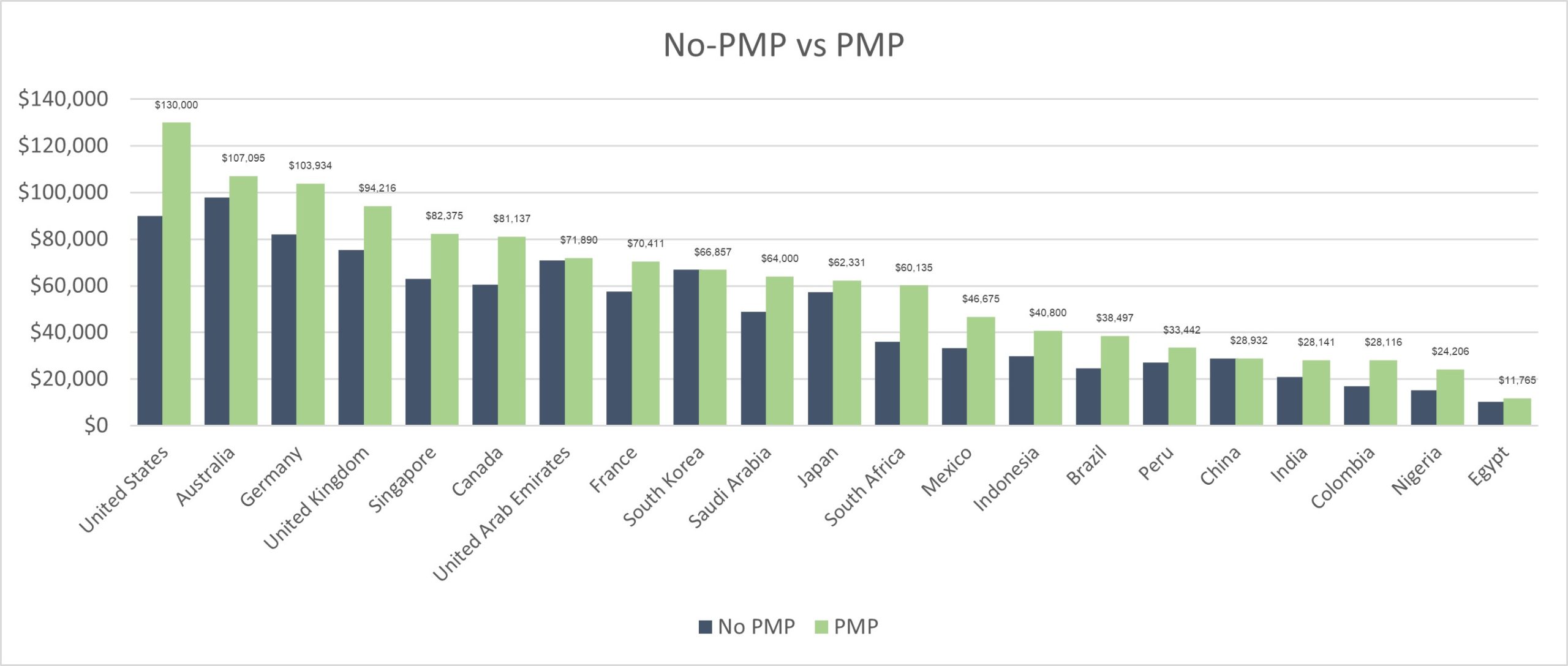
PMP Versus no PMP - Salaries

The report actually shows there is a decent salary boost for project managers who hold a PMP certification compared to those who do not. Here’s a quick overview of how PMP holders fare around the globe:

  • United States: Project managers with a PMP certification earn an average of $130,000, significantly higher than their non-certified peers.
  • Australia: PMP-certified project managers earn about $108,000, showing a strong return on investment.
  • Germany: With an average salary of $113,000, Germany also reflects the value of a PMP certification.
  • United Kingdom: Certified project managers earn around $94,000.
  • Singapore: The average salary stands at $82,000 for PMP holders.

Salary Increases by Country With a PMP

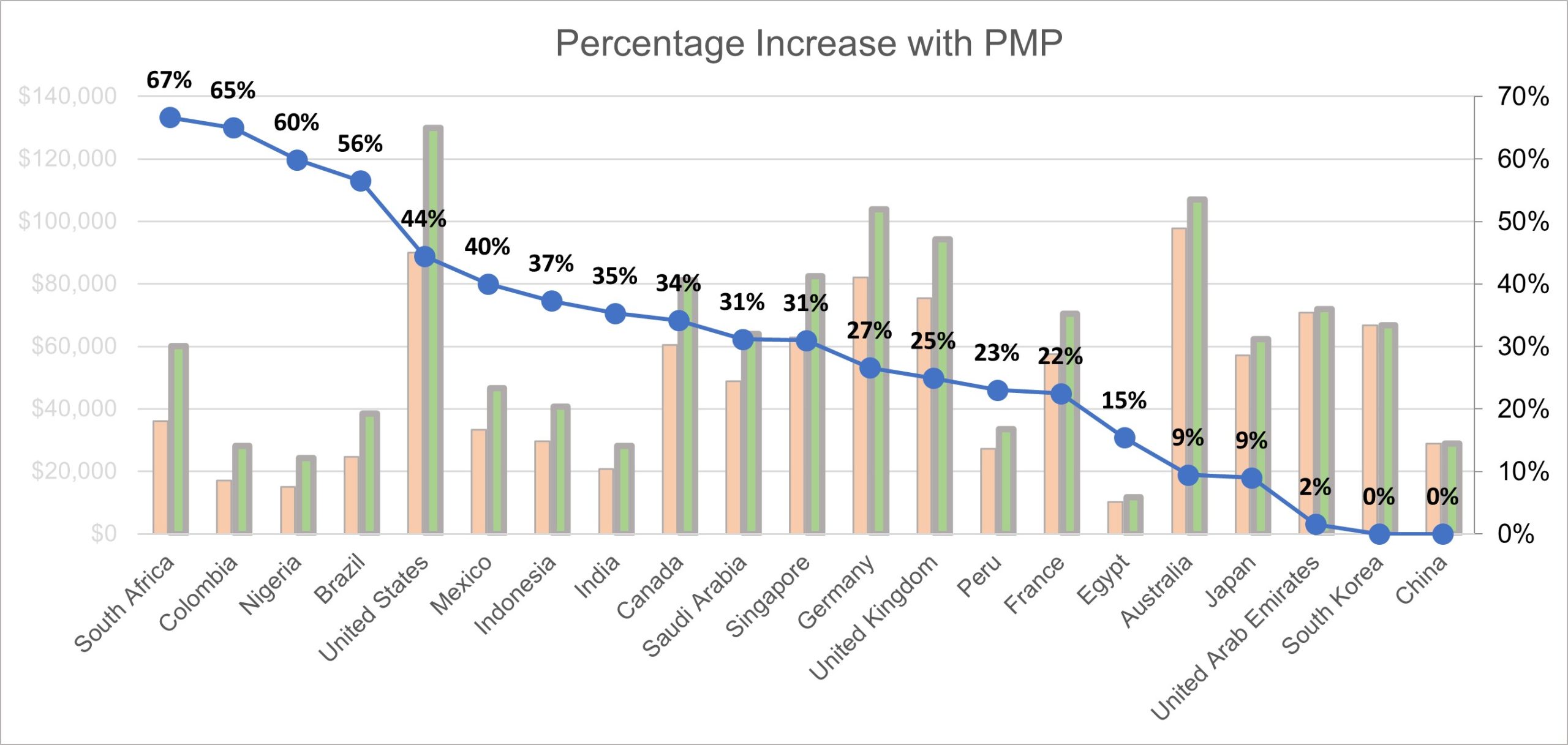
Percentage increase in salary with PMP - Project Management

The percentage increase in salary from obtaining a PMP varies by country, but here are the ones that stand out:

  • South Africa: A remarkable 67% increase, translating to a jump from $38,000 to $60,000.
  • Colombia: PMP holders see a 65% increase in their earnings.
  • Nigeria: With a 60% increase, PMP certification proves highly beneficial.
  • Brazil and the United States: Both countries experience a 40-50% rise in salary.
  • Germany: Offers a 27% increase.
  • United Kingdom: Gives a 25% increase.
  • Australia: Provides a 10% increase.

In dollar terms, these increases can be substantial:

  • United States: An average increase of $40,000.
  • South Africa: Around $25,000.
  • Germany: Approximately $21,000.
  • Canada: $20,000.
  • Singapore: $9,000.

Advancing to Program Management

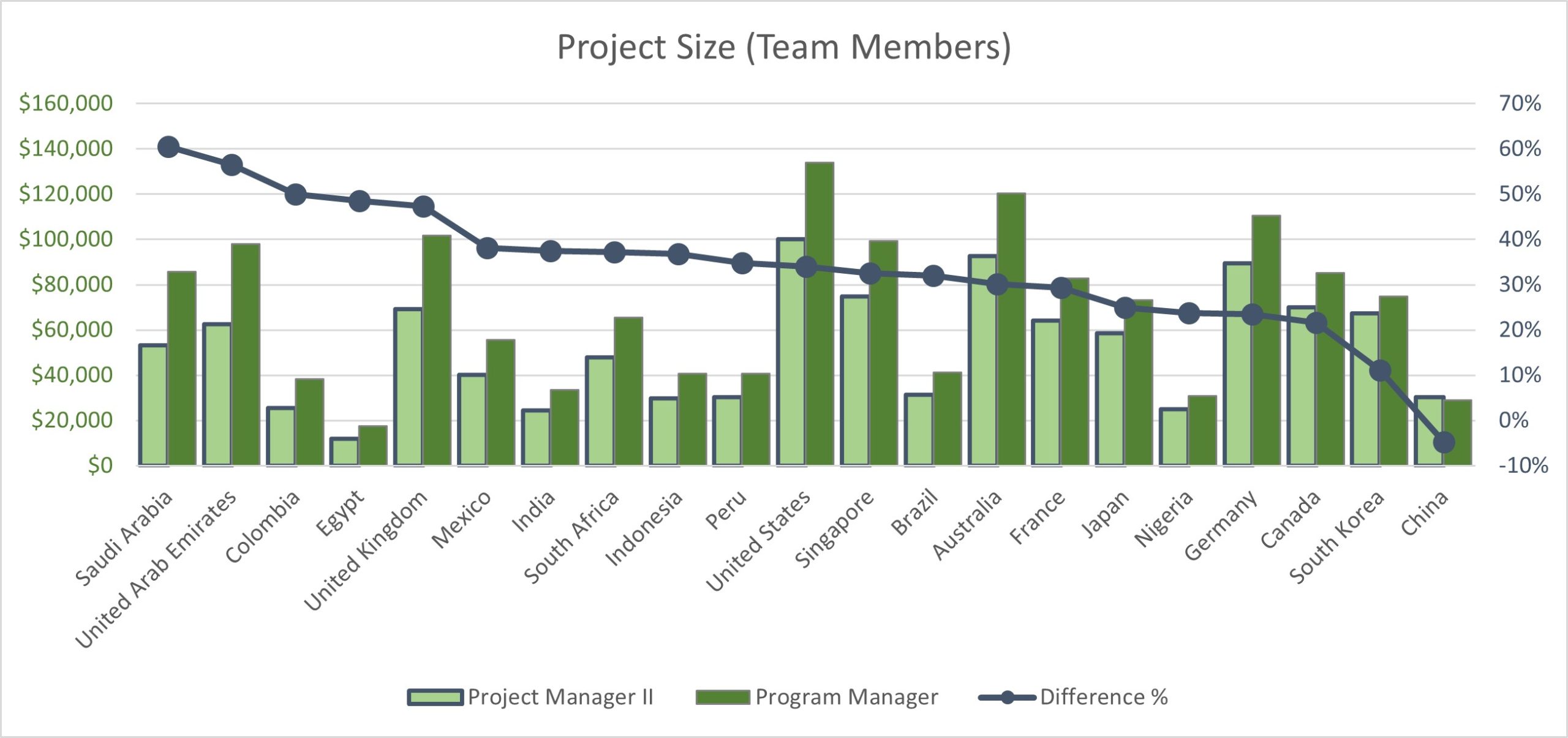
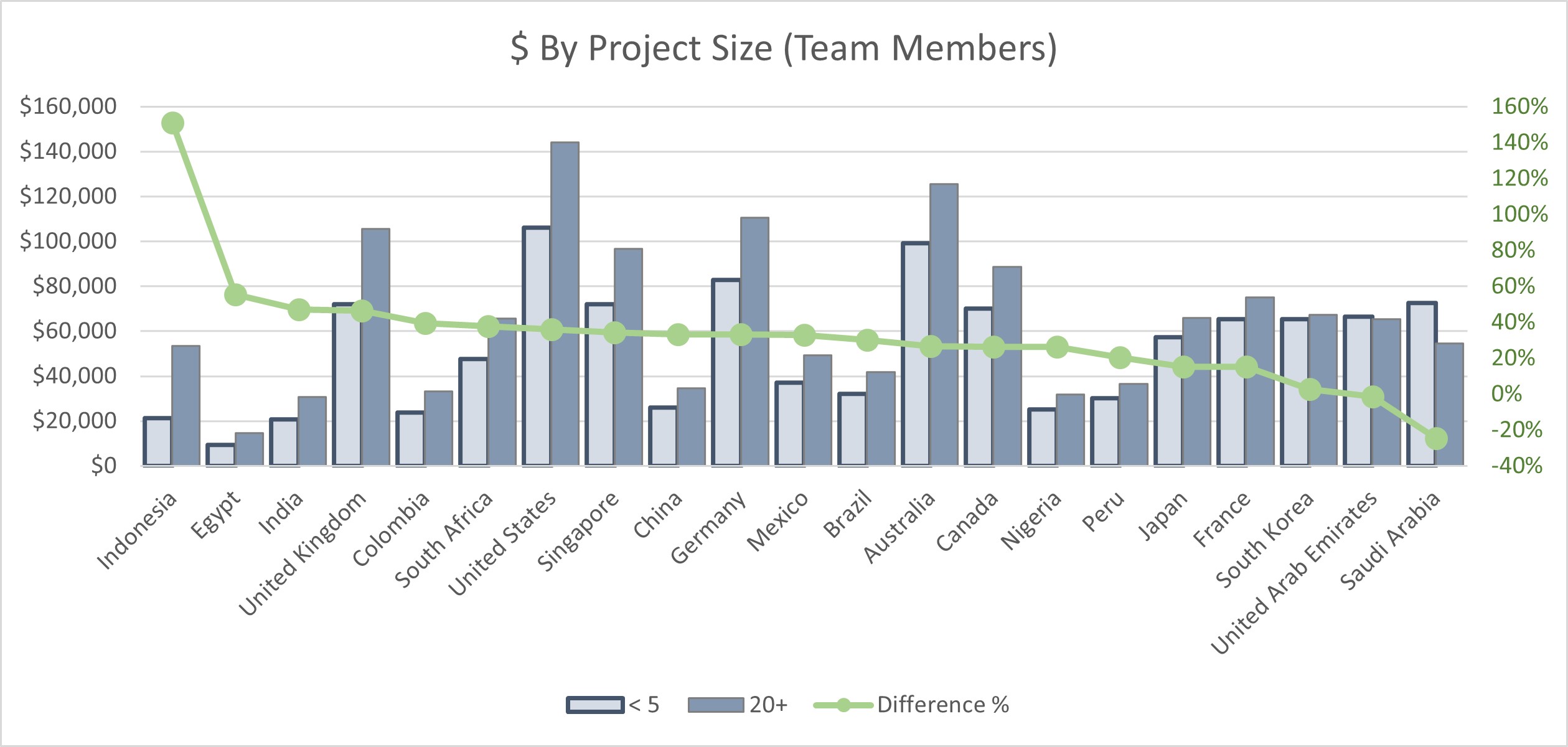
Project Manager salary increase with larger teams

The report also highlights the financial benefits of transitioning from a project manager to a program manager. Program managers, who oversee multiple projects, typically see a 35% average salary increase. Countries like Saudi Arabia and Colombia report even higher jumps, making this career advancement a lucrative opportunity.

Managing Larger Projects

Project Manager Salary Increase when Program Manager - PMP

Managing larger projects with 20 or more team members instead of smaller teams can also enhance your earning potential. The report notes an average salary increase of 30% for those managing larger projects.

You Can Do It

Getting your PMP certification, advancing to program management, and managing larger projects can all make a big difference to your salary.

  • PMP Certification: Provides a 33% average salary increase.
  • Program Management: Offers a 35-40% increase.
  • Larger Projects: Results in a 30% increase.

For project managers aiming to increase their earning power, the evidence is clear: pursuing a PMP certification, advancing to program management roles, and managing larger projects are effective strategies. With determination and effort, you can leverage these insights to enhance your career and financial prospects.

See more PMP Articles and Tips for Passing your Exam: 

You can see what people are saying about David McLachlan here: REVIEWS

Navigate to Free Project Management and Leadership Articles through the links on the right (or at the bottom if on Mobile) 

PMI PMP 35 PDUs CourseThe Ultimate PMP Project Management Prep Course (35 PDUs)
Agile Certified Practitioner (PMI-ACP 21 PDUs)The Complete Agile Course: PMI-ACP (21 PDUs), Coaching, Jira and MORE! 
50 Project Management Templates Gantt Chart Risk Matrix and more Excel50+ Project Management Templates in Excel and PowerPoint (Gantt Chart, Risk Matrix and more!)
Project Management Plan TemplatesPre-made Project Management Plan Template: Save 100 HOURS!