Tag Archives: David McLachlan

Introducing The Lean CX Score by David McLachlan

“I am absolutely thrilled to introduce the Lean CX Score, and an excerpt from the Introduction of the book below.  The book starts with a bang and never lets go, and even within this short piece of the Lean CX Score you will hear stories and see research with the power to help you create disruptive products and services.  I hope you enjoy it!”

– David McLachlan
Lean CX ScoreThis is an excerpt from "The Lean CX Score."  Get your copy now and start creating disruptors that completely annihilate your competition.

Oh and good news!  You'll be improving the speed, morale and engagement of your teams at the same time.  Get the Lean CX Score now.
Lean CX Score framework

Introduction

Tom Corley woke up early one morning and realised something incredible.

He had spent the past five years following more than 300 people with the aim of answering a very specific question, and he finally had the answer.  You see, Tom had always wanted to know if our habits – the things we did every day – really did have an effect on our lives.

More specifically, Tom wanted to know if there were certain habits that separated the country’s wealthiest people – with a net worth of $3.2 million or more, and those who were just getting by, with a net worth of $5,000 or less.

Was the difference to do with their family?  Was it where they lived?  Or where they went to school?  No, it wasn’t any of those things.  In fact, when Tom finally found it, it surprised even him.

The number one habit of the country’s wealthiest people was something that anyone could do, although most people don’t.  It was reading.  But not just any reading.  It was reading for self-improvement *1.

It was something that you are doing right now.

I told you this story because I believe by reading this book you are doing something special.  After all, how often is it that someone picks up a book like this?  It could have been that person you work with, the person browsing the books next to you or maybe someone else in your family.  But it was you.

Reading for self-improvement was also what I was doing, before the discovery of the Lean CX Score.  I was searching for answers, and I was searching for improvement just like you.  I read hundreds of books on ways to improve life and business, and in fields such as strategy, team building, personal psychology, business improvement and project management.

It’s no accident that this number one habit makes such a difference.  It works because the more you learn, the more people you can help.  And the more people you can help, the more you, too, are rewarded – with a better business, happier team-mates, more paying customers, a better income, and a happier life.

The most successful companies provide a service to thousands (if not millions) of people, and are rewarded with millions (or billions) of dollars in return.  Apple, Uber, Amazon, Zappos, Microsoft, Google, Netflix – the names may change but the principles stay the same.  It was in studying these companies that were a success that I discovered the six key things anyone can do to make their own lives a success.

These six key things not only created businesses that completely outdid their competition, but they also improved the morale, speed and productivity of normal teams and tasks as well.  It was something that needed to be revealed so all could benefit, instead of just a chosen few.

It was something that needed to be shared.

The Customer is Always Right… Right?

It needed to be shared because most people aren’t getting the full story, and even then, the information is often conflicting.

Take just two recent examples, both from first class institutions.  The Harvard Business Review revealed that while “delighting customers” was the focus of many CEOs and leadership teams, it wasn’t the key to keeping customers coming back.  Reducing their effort – the work they had to do to get their problem solved – was the real solution to repeated sales *2.

But research by a firm called Ebiquity took the opposite view, where they found in 2014 that 75% of customers who received a “delightful” customer experience were willing to spend more with the companies that gave it to them *3.

Which one is right?

You’ll have to read on for the answer.  But when you do, you will see exactly how this research works, and how you can use them both to seriously improve your own results.  We will use real life stories and research, and it will be a handy resource to keep and have all this information in the one place.

If you’re curious to learn more about it, let’s reveal a little piece of the Lean CX Score to get started.

What is the Lean CX Score?

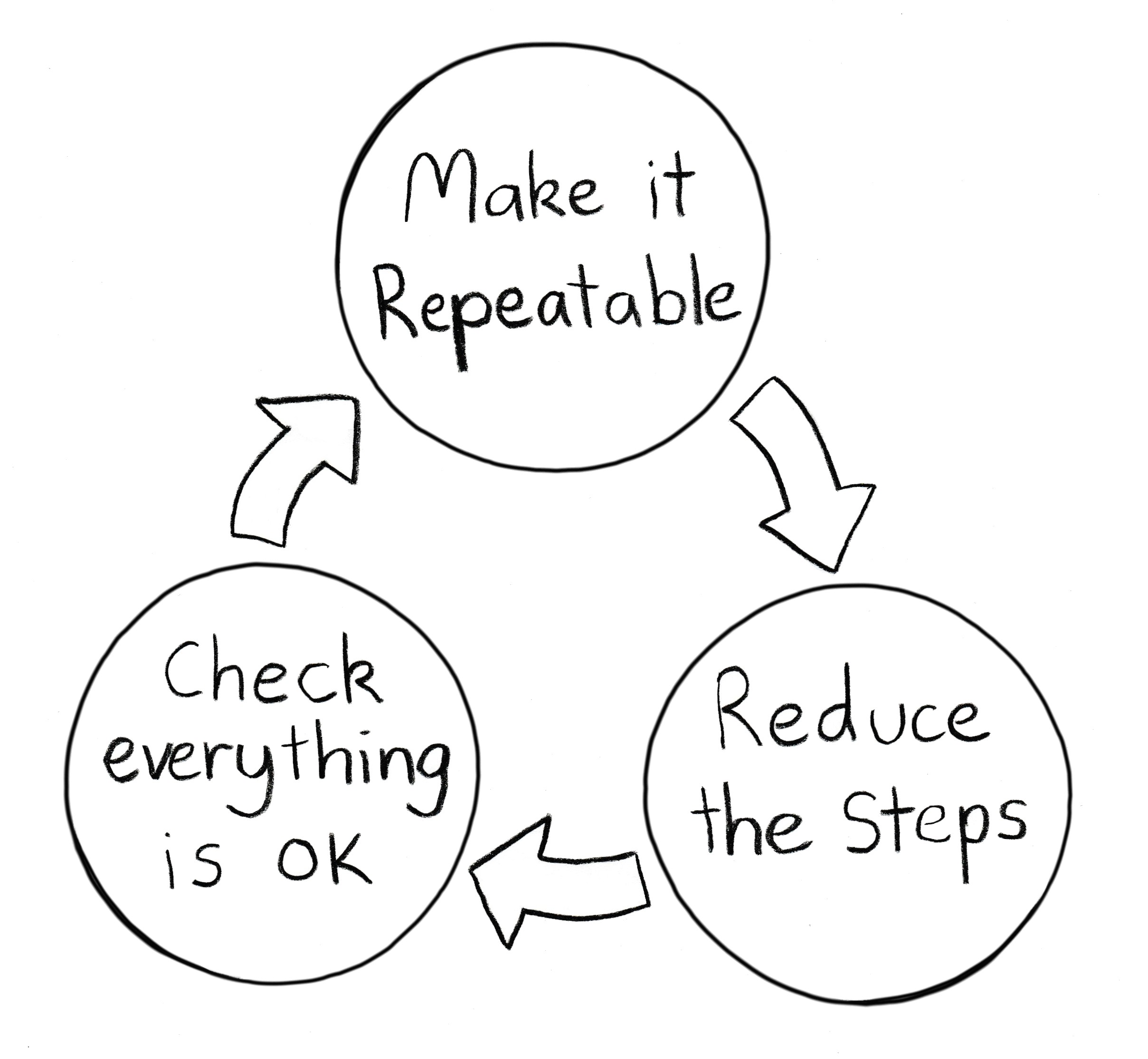
The Lean CX Score is a set of six separate, actionable steps, all equally important to your CX.  Each step in the Lean CX Score has one question.  If you answer the question positively you get a point, but if you answer the question negatively you have some work to do to improve.  Five out of six points means you are delivering an outstanding customer experience.  Anything below that means you have an opportunity for greater profit by improving – or face the threat of your competition stealing your customers.  It’s that simple.

Here are the steps…

  • To see the rest of the Lean CX Framework, its research and stories, you can get the full Lean CX Score on Amazon now, and be the disruptor, not the disrupted!

More chapters from The Lean CX Score book:

Lean CX ScoreThis is an excerpt from "The Lean CX Score."  Get your copy now and start creating disruptors that completely annihilate your competition.

Oh and good news!  You'll be improving the speed, morale and engagement of your teams at the same time.  Get the Lean CX Score now.
Lean Parable – Where Lisa Makes a Change

Five Minute LeanThis is an excerpt from the book "Five Minute Lean", by David McLachlan - a wonderful book that blends teaching of the tools, culture and philosophy of traditional Lean with a modern-day Lean parable.

You can get the whole book on Amazon here and enjoy your own copy.

Where Lisa Makes a Change

“I’m going to quit my job.”

There was silence on the other end of the phone.  Lisa was walking at a brisk pace, as she normally did during her lunch hour.  It was a great way to enjoy the bay side and escape the office, not to mention giving her a break from the unrelenting phone calls in the call centre that had made her life so difficult over the last few years.

When Lisa joined the Shoe Emporium five years ago it had seemed like a dream.  After all, she was working in a job that paid her to talk about one of her favourite topics – shoes, and it was a small business with an owner who was passionate about the things he created.  When they came to work every day, she truly felt like they were changing the world.

Now, as the company grew larger, it was less like a family and more like a business.  She shared the floor with more than 300 employees, while shareholders and board directors controlled most, if not all of the decisions.  More often than not they were decisions that cut costs and reduced the quality of service to the customers that Lisa had once loved so dearly.   It had made service queues horrendously long and these days it took forever to get anything done, let alone delivered.

So now, there really seemed to be no other choice.

“Hello?  Steve, did you hear me?  I said I’m going to quit.”

Lisa was answered by the sound of loud clanging, grinding and shouting – certainly not what she was expecting.  It sounded as though Steve was driving, but if that was the sound of his engine it was clear he wasn’t going to get very far.

“Lisa, I heard you,” Steve shouted. “But I thought you loved that job?  Can you meet for coffee?  I’m three blocks away.”

“No, I – “

“I’ll see you there.”  Lisa looked at the ended conversation on her phone and rolled her eyes.  Steve was not going to talk her out of this one.  But one coffee couldn’t hurt.  Could it?

*

By the time Steve’s beautiful, shiny car limped into the parking lot of their local café, Lisa had already ordered them both cappuccinos and was seated at a table overlooking the bay.

Steve leapt out of the car, brushed himself off as though he was ridding himself of the experience he just had, and sat down.  He was a fair looking man with a mop of light brown hair, perhaps in his late forties but wearing an outfit of someone in their late twenties, and with an impossible smile permanently plastered on his face.

Steve had owned a car detailing and tinting service for many years, but it was only recently that things seemed to be going extremely well for him.  Which was obviously the reason for the new ride.

“Wow, what a car!” he said. “I’ll have to remember that it doesn’t seem to like driving over 120 miles per hour on a dirt road, though.”

Lisa smiled and shook her head.

Before she had time to respond, a shiny new van pulled up next to Steve’s car, and out popped a man in overalls.  He looked around, spotted Steve, gave a quick wave as though they’d done this all before and then headed under the hood of Steve’s clanging monstrosity that had only just made it into the car park.

Ignoring Lisa’s slightly perplexed look, Steve put down his coffee and said: “But more importantly, did I hear you correctly?  You said you are quitting your job?”

Lisa’s face sunk a little.  “I just can’t do it anymore, Steve.  I know I used to love this job, but with all the cost cutting they’ve done it’s nearly impossible to give my customers a good experience.  Some people I’ve known for years have told me they love talking to me on the phone, but they just can’t put up with the poor product and terrible delivery times any longer.”

Steve nodded as she spoke.

“Believe it or not, I know exactly what you mean,” he said. “In fact that’s the reason I wanted to meet – I may have a way to help you.”

“Steve,” said Lisa, with a serious tone, “I hardly think you detailing cars is the same as me selling shoes.”

“They might seem different,” considered Steve.  “But it wasn’t too long ago that I hated the work I did as well.  I was doing 12-hour days, constantly having to stay back to fix the work my employees did during the day, cleaning cars and tinting their windows.  Customer complaints were also through the roof.  It was really terrible!

“Thankfully, that’s not where my story ended.  The owner of the car sales desk we work with approached me one day and asked if I wanted to ‘improve my business so much that I enjoyed it again’.  Of course, my answer was yes.  I was on my twenty-first straight day and was more than a little delirious.”

Steve laughed at himself, and it made Lisa feel better too.  He did look a lot happier, she thought, and that made her curious.

“The sales owner showed me a way – a way of streamlining things, making them easier, and standardising them so anyone can do it.  I cannot begin to tell you what a huge difference it made.  Most of my employees started working with the new streamlined standard, and the ones that didn’t, left.  It even cost me less per car, so I could reduce my prices a little and beat my competition.  Now I even get home on time, every day.  It’s wonderful!”

Lisa beamed at her old friend.  “Steve, that’s great!” she said. “But how does that apply to me?  I don’t tint or detail cars.  I just sell shoes in an online store call centre.  And I don’t have employees – I’m not even the boss where I work.”

“That’s true Lisa, but there is one thing both our companies share, and that’s a process for doing things.  The sales desk owner told me that everything has a process, and even though the processes are different, the way we fix them is the same.

“Besides, you can’t quit your job.  What about your bills, your mortgage, and your family?  I know you want to leave, but other jobs aren’t always easy to find.”

Lisa’s face sunk as he said the words, and reality slowly crept in.  She was behind on most bills as it was.  As much as she thought she wanted it, being unemployed wasn’t really an option.

Steve gave her a sympathetic smile.  “If this works, it could really change your life for the better.  What do you think?  Do you want to give it a try?”

Lisa nodded.  “Well if I can’t quit my job, Steve, I might as well improve it.”

“Great!” And the look on Steve’s face seemed to make the day brighter already.  He paused for a moment in thought.

“You know, there are a few things we can do to get started straight away,” he said.

“How did I know you were going to say that?” Lisa said, and she smiled slightly and shook her head.

“I wouldn’t usually start so soon, but if we’re going to improve your job, we really need to know what your product is.”

“Well that’s easy,” said Lisa.  “You already know I sell shoes.  Wouldn’t that be my product?”

“Not always,” said Steve.  “You see, your product is what brings value to your customer.  And to find out what truly brings them value, you have to ask.  Most people think they know, but when they ask their customer they often find a different answer altogether.

“Let me show you what I mean,” Steve continued, and he looked over his shoulder and shouted to the van mechanic under his car that he seemed to know so well.

“Hey Nathan!”

“Yeah?” the mechanic yelled back from under the hood of the car.

“What sort of flowers should I get for my daughter’s wedding?”

Nathan stopped what he was doing and looked out from under the hood.  “How should I know?” he said, a little bewildered, and got back to work.

“Exactly,” said Steve pointedly as he turned back to Lisa with a smile.

“You wouldn’t ask a mechanic what to do for your wedding.  And to find out what value means to your customer, you need to ask your customer.”

Lisa nodded her head as she took all this in.  “Ok, Steve.  I get your point.  You know, I talk to enough customers during the day so I’m sure it won’t be too hard to ask them one more question, and find out what value means to them.”

Steve smiled. “And once we know that, we can really get started.”

Lisa looked down at her watch, and wrinkled her nose. “Time to get back,” she said.

“But you’ll give it a shot?” asked Steve.

“I’ll give it a shot,” Lisa nodded.

“Great!” said Steve, and he downed the last of his coffee in one gulp.

Five Minute LeanThis is an excerpt from the book "Five Minute Lean", by David McLachlan - a wonderful book that blends teaching of the tools, culture and philosophy of traditional Lean with a modern-day Lean parable.

You can get the whole book on Amazon here and enjoy your own copy.

Selected chapters from the story within Five minute Lean:

Check out these selected chapters from the teachings within Five Minute Lean: