Tag Archives: project management

How to Handle a Project Crisis

Note: Click on the video above to watch.

Handling a Project Crisis: What to Do When Things Go South

So, you’ve just been thrown into the deep end as the lead project manager, and things are looking pretty grim. You’ve got 300 people needing to move into a new building, but with just six weeks until the big day, you find out the new site isn’t even properly authorized, and it’s on tribal land in Arizona. To top it off, the current building is being sold, and the owner is adamant about not allowing remote work. Tomorrow, you’ll be negotiating with a business owner who thinks she’s always right. Sounds like a nightmare, right? Here’s how to tackle this mess like a pro.

1. Keep Cool and Don’t Take It Personally

First off, remember that project management is all about dealing with complex, often chaotic situations. It’s not about taking things personally but rather about finding solutions and options to move forward. If things are falling apart, it’s crucial to stay level-headed and focus on solving the problems rather than stressing over the situation.

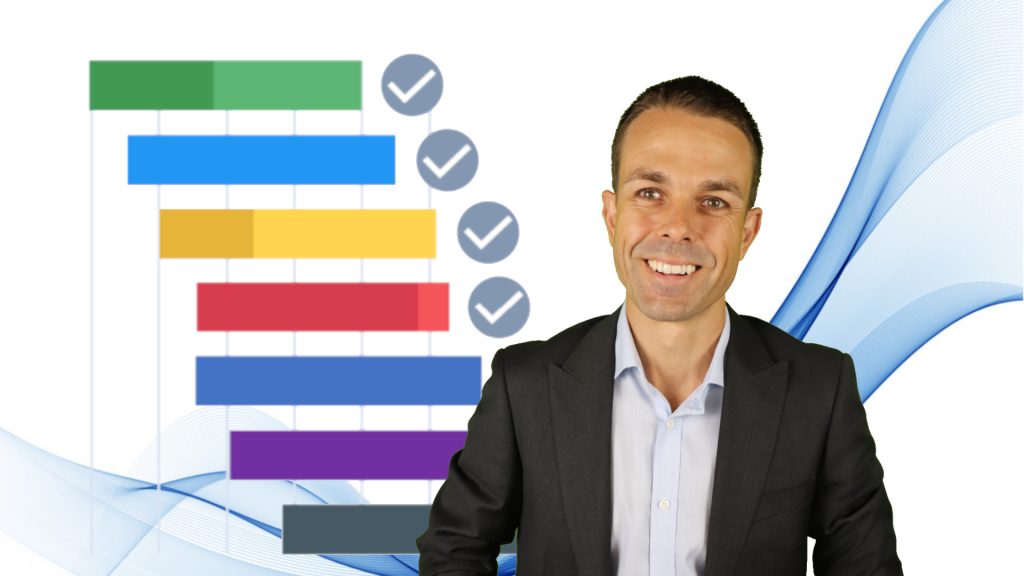
2. Present the Reality with a Gantt Chart

One of the best ways to handle a crisis is to lay out the facts clearly. Start by showing the business owner the current status of the project, including the remaining deliverables. Use a project schedule like a Gantt Chart to highlight where things are going to be delayed. Explain which risks or issues are causing delays and how this could potentially push the project back by months. A clear, visual representation of the situation can help make the urgency and impact more tangible.

3. Identify and Manage Risks

Next, categorize what’s happening as either a risk or an issue. A risk is a potential problem that hasn’t happened yet, while an issue is something that’s already occurred. Document these and assess their impacts.

Then, brainstorm possible solutions—can you expedite the process or find temporary alternatives? Assign costs and benefits to each option to help make an informed decision.

4. Use Cost-Benefit Analysis to Prioritize Options

When evaluating solutions, weigh the costs versus the benefits. For instance, if you can speed up getting the certificate of occupancy, what’s the cost, and how much time would it save? Present these options to the business owner to help prioritize which solutions offer the best trade-offs between cost and speed.

5. Employ People Skills

Dealing with a business owner who always thinks she’s right as is the case in this video could use a few people skills to navigate this tricky terrain:

Yes, And:

This technique, borrowed from improv comedy, involves agreeing with the person’s ideas and then adding your own input. For example, if the business owner insists on a certain approach, acknowledge it and then explain what the implications are and what additional steps might be needed. This helps keep the conversation positive and collaborative.

Communication Preferences:

Understand how the business owner prefers to communicate. Do they want detailed emails or face-to-face meetings? Tailoring your communication style to their preference can reduce friction and make your interactions more effective.

Deliver Small Wins:

Build trust by achieving and showcasing small victories. Regularly update the business owner with progress and minor successes to demonstrate that things are moving in the right direction.

Ask Open-Ended Questions:

Use open-ended questions to gather more information and encourage discussion. Instead of asking yes-or-no questions, ask, “What do you think we should do about this issue?” or “How would you like to handle this situation?” This invites the business owner to contribute ideas and feel more involved in the solution.

6. Keep Learning and Adapting

Remember, project management is a skill that improves with experience and continuous learning. Each project, especially the challenging ones, provides an opportunity to enhance your abilities. Stay focused on learning both the technical aspects of project management and the softer people skills that can make or break a project’s success.

Navigating through a project crisis can be daunting, but with a clear approach, effective communication, and problem-solving skills, you can steer the project back on track. Keep calm, stay organized, and remember that every challenge is a chance to grow. You’ve got this!

Until next time, keep pushing forward and learning from each experience.

See more Questions of the Day: 

You can see what people are saying about David McLachlan here: REVIEWS

Navigate to Free Project Management and Leadership Articles through the links on the right (or at the bottom if on Mobile) 
PMI PMP 35 PDUs CourseThe Ultimate PMP Project Management Prep Course (35 PDUs)
Agile Certified Practitioner (PMI-ACP 21 PDUs)The Complete Agile Course: PMI-ACP (21 PDUs), Coaching, Jira and MORE! 
50 Project Management Templates Gantt Chart Risk Matrix and more Excel50+ Project Management Templates in Excel and PowerPoint (Gantt Chart, Risk Matrix and more!)
Project Management Plan TemplatesPre-made Project Management Plan Template: Save 100 HOURS!


Insights from the 2023 Project Manager Salaries Report

Maximizing Your Earning Potential

The latest 2023 Earning Power Report from the Project Management Institute (PMI) gives a few clues for the benefits of holding a Project Management Professional (PMP) certification. For those considering whether to get their PMP, this might just be what you need to see, with some pretty compelling data on how a PMP can influence your salary across different regions and roles.

PMP Certification and Salary Impact

PMP Versus no PMP - Salaries

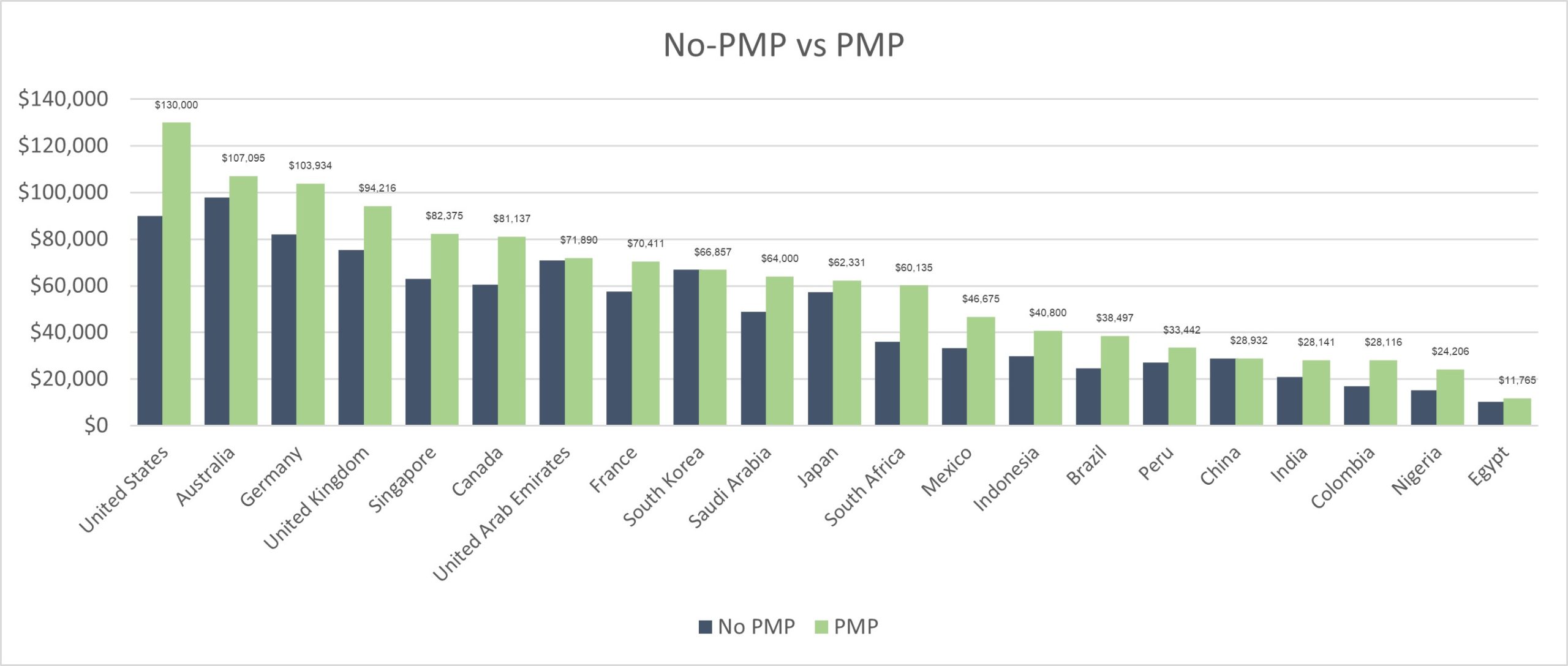
The report actually shows there is a decent salary boost for project managers who hold a PMP certification compared to those who do not. Here’s a quick overview of how PMP holders fare around the globe:

  • United States: Project managers with a PMP certification earn an average of $130,000, significantly higher than their non-certified peers.
  • Australia: PMP-certified project managers earn about $108,000, showing a strong return on investment.
  • Germany: With an average salary of $113,000, Germany also reflects the value of a PMP certification.
  • United Kingdom: Certified project managers earn around $94,000.
  • Singapore: The average salary stands at $82,000 for PMP holders.

Salary Increases by Country With a PMP

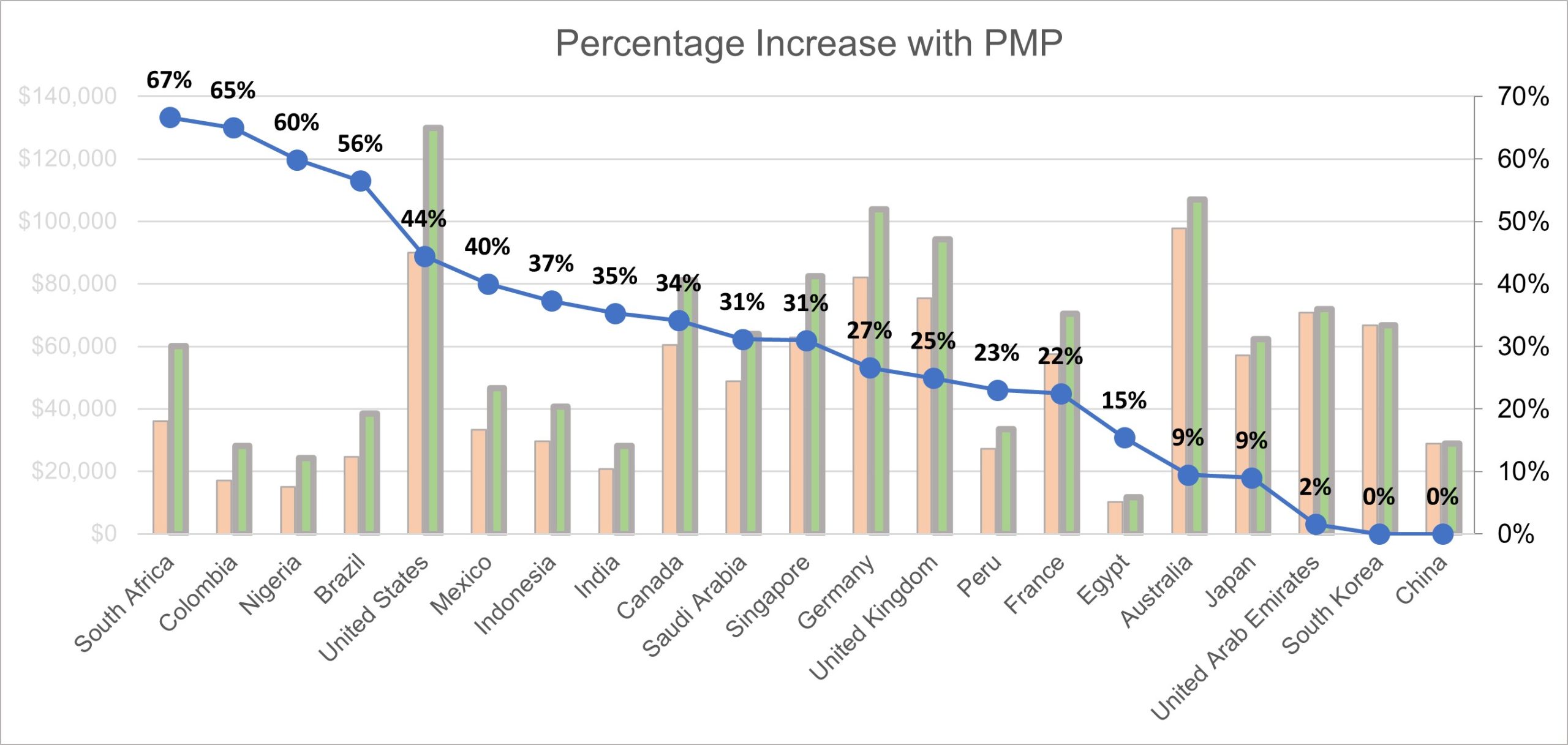
Percentage increase in salary with PMP - Project Management

The percentage increase in salary from obtaining a PMP varies by country, but here are the ones that stand out:

  • South Africa: A remarkable 67% increase, translating to a jump from $38,000 to $60,000.
  • Colombia: PMP holders see a 65% increase in their earnings.
  • Nigeria: With a 60% increase, PMP certification proves highly beneficial.
  • Brazil and the United States: Both countries experience a 40-50% rise in salary.
  • Germany: Offers a 27% increase.
  • United Kingdom: Gives a 25% increase.
  • Australia: Provides a 10% increase.

In dollar terms, these increases can be substantial:

  • United States: An average increase of $40,000.
  • South Africa: Around $25,000.
  • Germany: Approximately $21,000.
  • Canada: $20,000.
  • Singapore: $9,000.

Advancing to Program Management

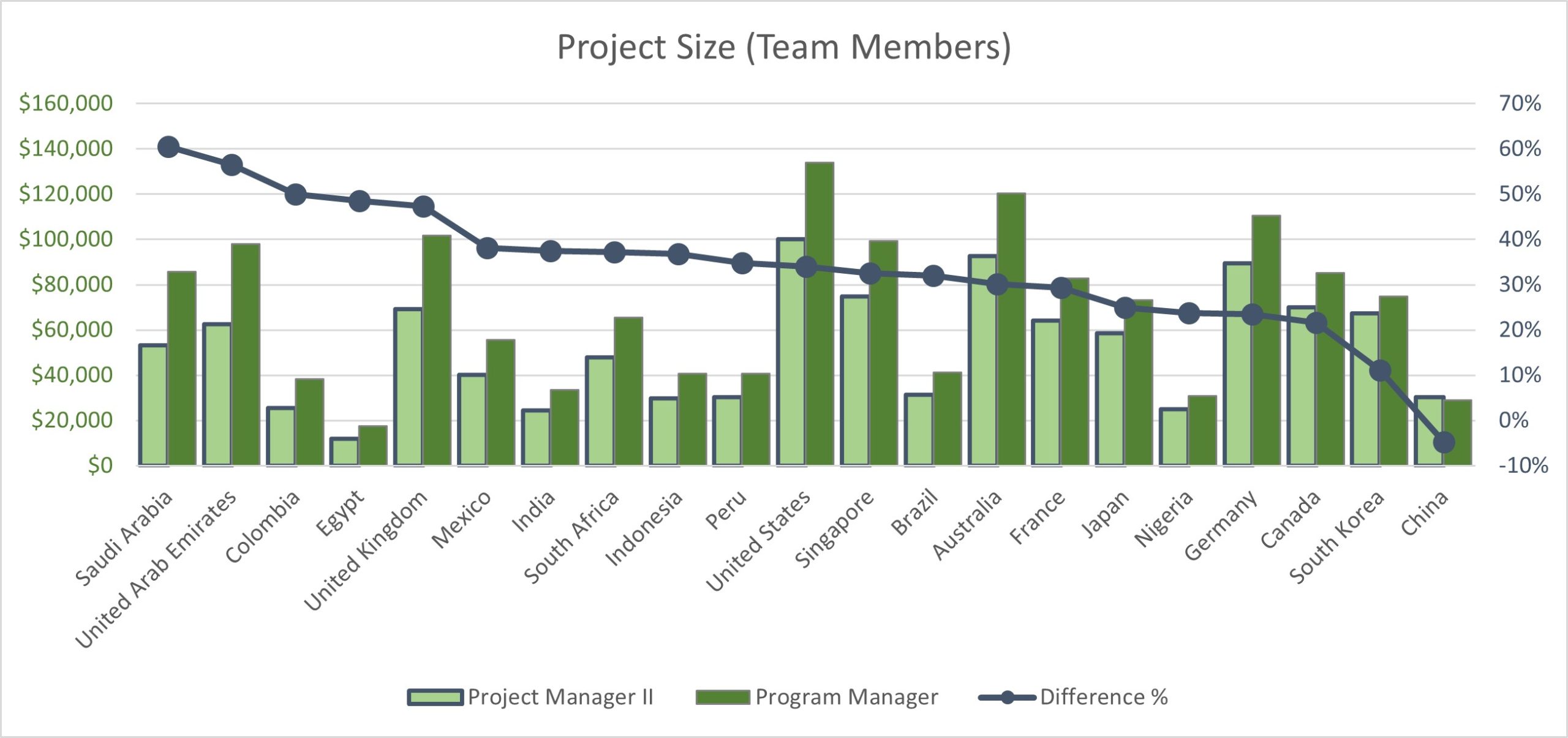
Project Manager salary increase with larger teams

The report also highlights the financial benefits of transitioning from a project manager to a program manager. Program managers, who oversee multiple projects, typically see a 35% average salary increase. Countries like Saudi Arabia and Colombia report even higher jumps, making this career advancement a lucrative opportunity.

Managing Larger Projects

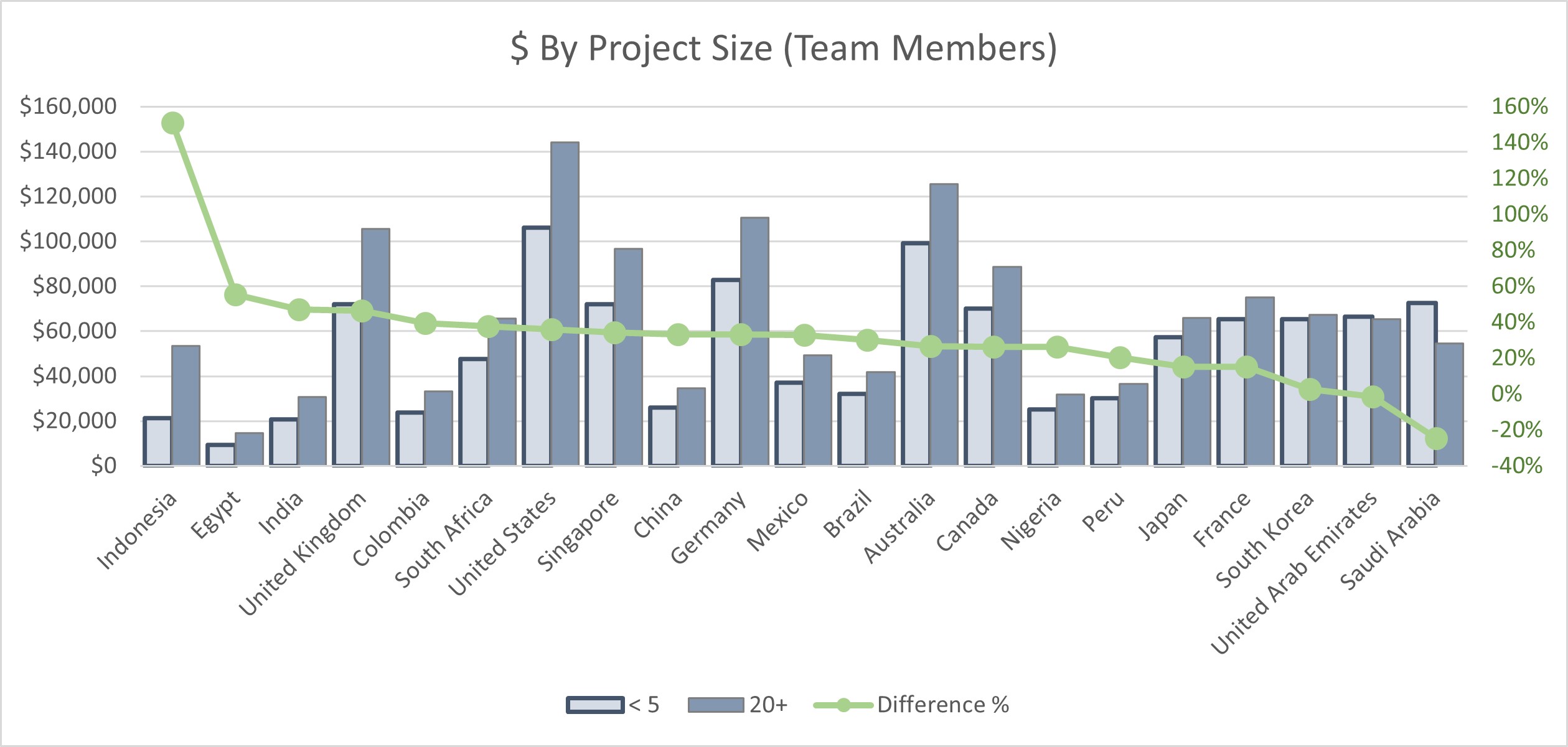
Project Manager Salary Increase when Program Manager - PMP

Managing larger projects with 20 or more team members instead of smaller teams can also enhance your earning potential. The report notes an average salary increase of 30% for those managing larger projects.

You Can Do It

Getting your PMP certification, advancing to program management, and managing larger projects can all make a big difference to your salary.

  • PMP Certification: Provides a 33% average salary increase.
  • Program Management: Offers a 35-40% increase.
  • Larger Projects: Results in a 30% increase.

For project managers aiming to increase their earning power, the evidence is clear: pursuing a PMP certification, advancing to program management roles, and managing larger projects are effective strategies. With determination and effort, you can leverage these insights to enhance your career and financial prospects.

See more PMP Articles and Tips for Passing your Exam: 

You can see what people are saying about David McLachlan here: REVIEWS

Navigate to Free Project Management and Leadership Articles through the links on the right (or at the bottom if on Mobile) 

PMI PMP 35 PDUs CourseThe Ultimate PMP Project Management Prep Course (35 PDUs)
Agile Certified Practitioner (PMI-ACP 21 PDUs)The Complete Agile Course: PMI-ACP (21 PDUs), Coaching, Jira and MORE! 
50 Project Management Templates Gantt Chart Risk Matrix and more Excel50+ Project Management Templates in Excel and PowerPoint (Gantt Chart, Risk Matrix and more!)
Project Management Plan TemplatesPre-made Project Management Plan Template: Save 100 HOURS!


Is the PMP Still Worth it in 2024?

PMP – Overpriced or Valuable Certification?

If you’re investing in your education this year, the Project Management Professional (PMP) certification is still a hot topic. Many people have heard that the exam may not be well-regarded enough, and that it requires ongoing maintenance through Professional Development Units (PDUs). Despite that, the PMP certification still offers significant benefits in 2024.

Benefit 1: It Makes It Easy To Hire You

Firstly, the PMP is valuable because it makes it easier to hire you. Recruiters frequently use “PMP” as a key search term to quickly identify qualified candidates, making it easier for job seekers with this certification to get noticed and shortlisted. This shortcut can be a significant advantage in a competitive job market.

Having the PMP itself shows recruiters that you have at least three years of experience leading projects, and have put many hours into your own education on Project Management – something many managers NEVER do. This sets you apart from the competition.

Benefit 2 – New Tools To Help Your Current Projects

Secondly, the process of studying for the PMP can help your current projects. Many professionals report gaining new insights and tools that enhance their project management skills. The certification covers essential areas such as project management processes, the business environment, and soft skills like leadership and communication, which can lead to practical improvements in your career.

I know it has personally helped me in my career, in starting new projects, getting the right support, helping stakeholders support the project, and ensuring the right value is delivered on time and on budget.

Benefit 3 – The PMP Is Still The Most Recognized PM Certification

Thirdly, the PMP is the most recognized project management certification globally, far surpassing alternatives like PRINCE2 or Scrum Master certifications. Its widespread recognition, with over 200,000 searches each month, just shows how valuable it can be, and its relevance across every industry where projects are managed.

Disadvantage – PDUs Too Hard and Expensive?

Many people say that having to maintain the certification every 3 years with ongoing “Professional Development Units” (PDUs) and more money to keep the certification current is too much.

This step is optional, however. You don’t have to maintain the certification. Simply gaining it in the first place is valuable, and shows you have put in the work. Often, your job experience would take over from there after a few years.

But a CPA in Accounting has a similar deal where they maintain their education and the CPA to show they are still current in the industry. It really is your choice.

Benefit 4 – It won’t make you less marketable

Lastly, earning a PMP certification will not diminish your marketability. Even if the certification does not lead to immediate job opportunities, it provides a strong foundation of knowledge and demonstrates a commitment to professional growth.

In summary, the PMP certification continues to offer valuable benefits, including improved job prospects, enhanced skills, and global recognition. For those willing to invest the effort, it remains a worthwhile endeavor in 2024.

Never Forget – You Can Do It

With a little hard work and persistence, you can gain this certification and improve your job prospects, improve your current projects with the things you will learn, and improve your options for your future career.

It can be hard, but I know you can do it. Keep going. Do something every day, no matter how small. In one years’ time you will have grown and changed, and you will not recognize the amazing person you have become.

See more PMP Articles and Tips for Passing your Exam: 

You can see what people are saying about David McLachlan here: REVIEWS

Navigate to Free Project Management and Leadership Articles through the links on the right (or at the bottom if on Mobile) 
PMI PMP 35 PDUs CourseThe Ultimate PMP Project Management Prep Course (35 PDUs)
Agile Certified Practitioner (PMI-ACP 21 PDUs)The Complete Agile Course: PMI-ACP (21 PDUs), Coaching, Jira and MORE! 
50 Project Management Templates Gantt Chart Risk Matrix and more Excel50+ Project Management Templates in Excel and PowerPoint (Gantt Chart, Risk Matrix and more!)
Project Management Plan TemplatesPre-made Project Management Plan Template: Save 100 HOURS!


Know Your Myers Briggs Personality Type – But Beware of the Barnum Effect

Myers Briggs Type Indicator

The Myers-Briggs Type Indicator (MBTI) is a widely used psychological assessment designed to help individuals understand their personality preferences and how they interact with the world. Based on Carl Jung’s theory of psychological types, the MBTI categorizes people into 16 distinct personality types across four dichotomies:

  • Extraversion vs. Introversion,
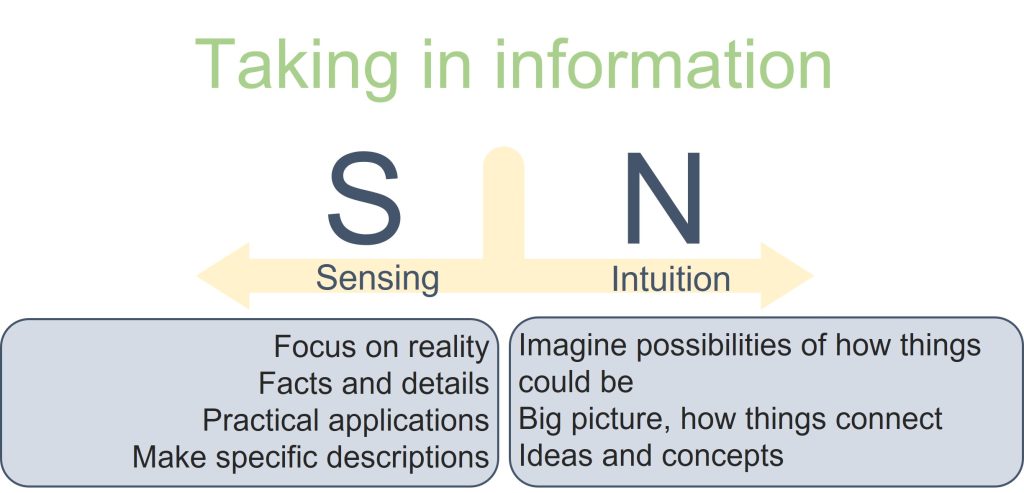
  • Sensing vs. Intuition,
  • Thinking vs. Feeling, and
  • Judging vs. Perceiving.

By identifying where you fall within these categories, the MBTI aims to provide insights into your natural tendencies, strengths, and potential areas for growth, ultimately fostering better self-awareness and more effective communication with others.

The Barnum Effect

The Barnum Effect on the other hand, is a cognitive bias where people believe vague, general statements about themselves are highly accurate and uniquely descriptive of themselves.

Named after the famous showman P.T. Barnum (made famous in the movie “The Greatest Showman”), the Barnum Effect explains why people might find personal horoscopes, personality descriptions, or fortune-telling surprisingly convincing. The Barnum Effect highlights how general statements can be interpreted as being uniquely specific to us as a person.

It shows our tendency as human beings to seek personal validation in open or general feedback.

Myers Briggs versus the Barnum Effect

So you can see that in getting a “personality assessment” or profile such as Myers Briggs Type Indicator, we might just be projecting our own personality onto the vague or general descriptions provided. But as long as we know that – let’s have some fun and get our own MBTI personality type!

Choose a single letter from each section to get four letters in total, then find your personality type at the bottom.

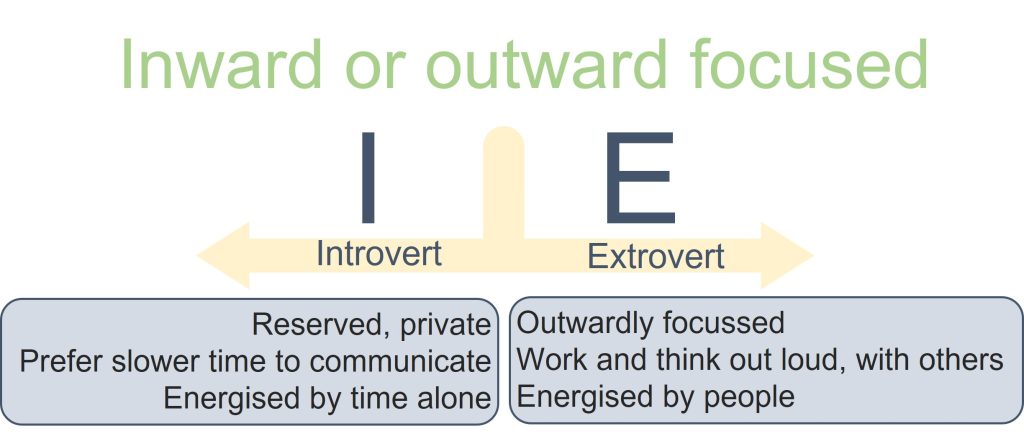
Introvert or Extrovert?

Select I or E – which ever you are MOST like:

  • Introvert: Reserved, private. Prefer slower time to communicate. Energized by time alone.
  • Extrovert: Outwardly focused, Work and think out loud, with others. Energized by people.

Select S or N – which ever you are MOST like for “Taking In Information”.

  • Sensing: Focus on reality, Facts and details, Practical applications, Make specific descriptions
  • INtuition: Imagine possibilities of how things could be, Big picture, how things connect, Ideas and concepts.

Select T or F for how you “Take in Information”:

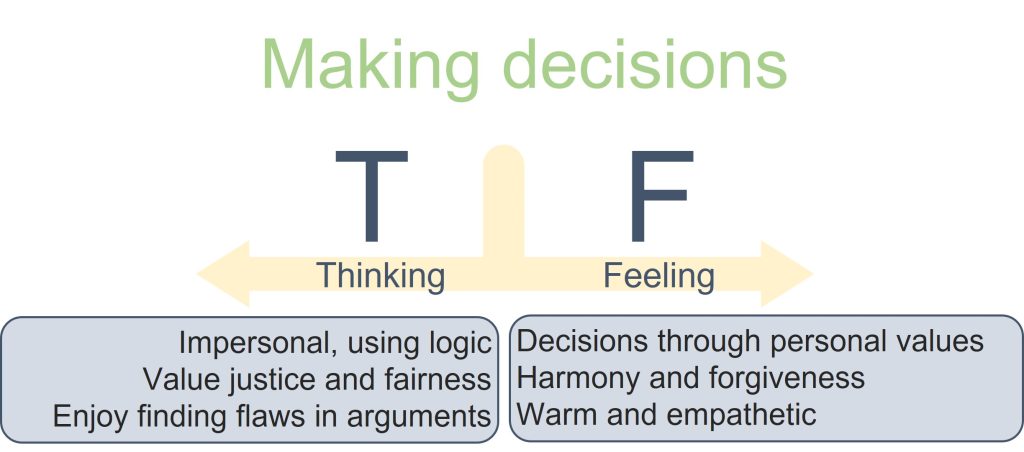
  • Thinking: Impersonal, using logic, Value justice and fairness, Enjoy finding flaws in arguments
  • Feeling: Decisions through personal values, Harmony and forgiveness, Warm and empathetic

Select J or P for how you view your “Outer Life”:

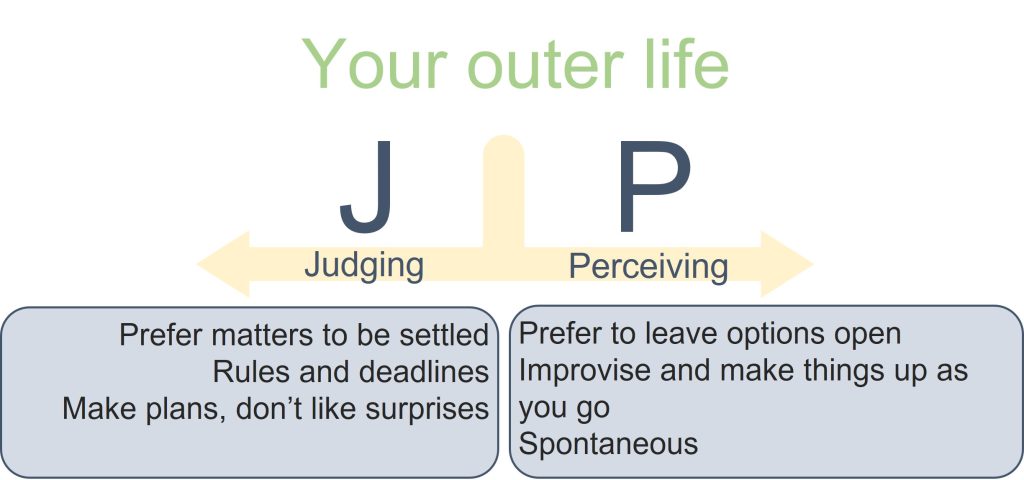
  • Judging: Prefer matters to be settled, Rules and deadlines, Make plans, don’t like surprises
  • Perceiving: Prefer to leave options open, Improvise and make things up as you go
    Spontaneous

Now you should have a four letter combination, such as INTP or ESFJ. Find your combination below for your MBTI personality type!

ISTP – The Mechanic

ISTP - The Mechanic - Myers BriggsStrengths: You can remain calm while managing a crisis, quickly deciding what needs to be done to solve the problem.

Development Areas: You’re focused so much on what needs to be done immediately that you fail to see the big picture.

Characteristics: Analytical, practical, realistic but also logical and adaptable.

ISFP – The Creative

ISFP - The Creative - Myers BriggsStrengths: You’re a creative visionary who enjoys providing practical help or service to others, as well as facilitating and encouraging cooperation.

Development Areas: You sometimes put off making decisions, in the hope that a better opportunity will come along.

Characteristics: Cooperative, modest and adaptable and also gentle and loyal.

ESFP – The Performer

ESFP - The Performer - Myers BriggsStrengths: You’re adaptable, friendly, and talkative. You enjoy working with others and experiencing new situations.

Development Areas: You have trouble meeting deadlines, and do not always finish what you start.

Characteristics: Tolerant and spontaneous as well as playful, enthusiastic and resourceful.

ESTP – The Doer

ESTP - The Doer - Myers BriggsStrengths: You apply common sense and experience to problems, quickly analyzing what is wrong and then fixing it.

Development Areas: Being so focused on immediate problems may lead to you ignoring long-term systematic problems.

Characteristics: Analytical, outgoing and enthusiastic as well as logical.

ISTP – The Duty Fulfiller

ISTJ - The Duty Fulfiller - Myers BriggsStrengths: You enjoy working within clear systems and processes.

Development Areas: You can become set in your ways and can sometimes be seen as rigid and impersonal.

Characteristics: Thorough, conscientious, realistic but also systematic and reserved.

ISFJ – The Nurturer

ISFJ - The Nurturer - Myers BriggsStrengths: You apply common sense and experience to solving problems for other people.

Development Areas: You may be overly cautious, and risk basing your decisions on what you think will please others.

Characteristics: Organized, practical and patient, but also dependable and loyal.

ESTJ – The Director

ESTJ - The Director - Myers BriggsStrengths: You drive yourself to reach your goal, organizing people and resources in order to achieve it.

Development Areas: You tend to be so focused on the objective pursuit of your goal that you ignore the ideas or feelings of others.

Characteristics: Responsible and efficient but can also be assertive as well as logical and realistic.

ESFJ – The Caregiver

ESFJ - The Caregiver - Myers BriggsStrengths: You’re sociable and outgoing, understanding what others need and express appreciation for their efforts.

Development Areas: You are overly influenced by what you think others want, and may find it difficult to adjust plans in response to unexpected opportunities.

Characteristics: Warm and appreciative as well as outgoing and supportive.

INFJ – The Protector

INFJ - The Protector - Myers BriggsStrengths: You enjoy finding a shared vision for everyone, inspiring others and devising new ways to achieve the vision.

Development Areas: You’re private and may do your thinking in a vacuum, resulting in an unrealistic vision that is difficult to communicate.

Characteristics: Compassionate, idealistic as well as imaginative and visionary.

INFP – The Idealist

INFP - The Idealist - Myers BriggsStrengths: You enjoy helping others with their growth and inner development to reach their full potential.

Development Areas: You struggle to speak up in meetings, leading others to believe you have nothing to contribute.

Characteristics: Flexible, spontaneous as well as reflective and contained.

ENFJ – The Giver

ENFJ - The Giver - Myers BriggsStrengths: You’re able to get the most out of teams by working closely with them, and make decisions that take into account the values of others.

Development Areas: You often talk a lot, and may become discouraged if you do not receive a lot of feedback from others.

Characteristics: Warm, collaborative and supportive and organized.

ENFP – The Inspirer

ENFP - The Inspirer - Myers BriggsStrengths: You’re willing to consider almost any possibility and often develop multiple solutions to a problem.

Development Areas: You may not follow through on decisions or projects, and risk burning out from over-committing or following every possibility.

Characteristics: Friendly and expressive as well as innovative and energetic.

INTJ – The Architect

INTJ - The Architect - Myers BriggsStrengths: You’re able to define a compelling, long-range vision, and can devise innovative solutions to complex problems.

Development Areas: You may come across as cold and distant when focusing on the task in hand.

Characteristics: Strategic and conceptual as well as innovative, independent and logical.

INTP – The Thinker

INTP - The Thinker - Myers BriggsStrengths: You can adopt a detached and concise way of analyzing the world, and often uncover innovative approaches.

Development Areas: You may struggle to work in teams, especially with others who you perceive to be illogical or insufficiently task-focused.

Characteristics: Independent and detached, as well as skeptical and innovative.

ENTJ – The Executive

ENTJ - The Executive - Myers BriggsStrengths: You’re able to efficiently organize people and resources in order to accomplish long-term goals.

Development Areas: You may overlook the contributions of others and the needs of the people who implement your plans.

Characteristics: Structured and challenging, they also tend to be strategic and questioning.

ENTP – The Visionary

ENTP - The Visionary - Myers BriggsStrengths: You enjoy developing strategy and often spot and capitalize on new opportunities that present themselves.

Development Areas: You avoid making decisions and may become excited about ideas that are not feasible because of constraints on time or resources.

Characteristics: Emergent and theoretical as well as imaginative and challenging.


You can see what people are saying about David McLachlan here: REVIEWS

Navigate to Free Project Management and Leadership Articles through the links on the right (or at the bottom if on Mobile) 
PMI PMP 35 PDUs CourseThe Ultimate PMP Project Management Prep Course (35 PDUs)
Agile Certified Practitioner (PMI-ACP 21 PDUs)The Complete Agile Course: PMI-ACP (21 PDUs), Coaching, Jira and MORE! 
50 Project Management Templates Gantt Chart Risk Matrix and more Excel50+ Project Management Templates in Excel and PowerPoint (Gantt Chart, Risk Matrix and more!)
Project Management Plan TemplatesPre-made Project Management Plan Template: Save 100 HOURS!


Leadership versus Management – You Need BOTH

Should You Be A Leader or a Manager?

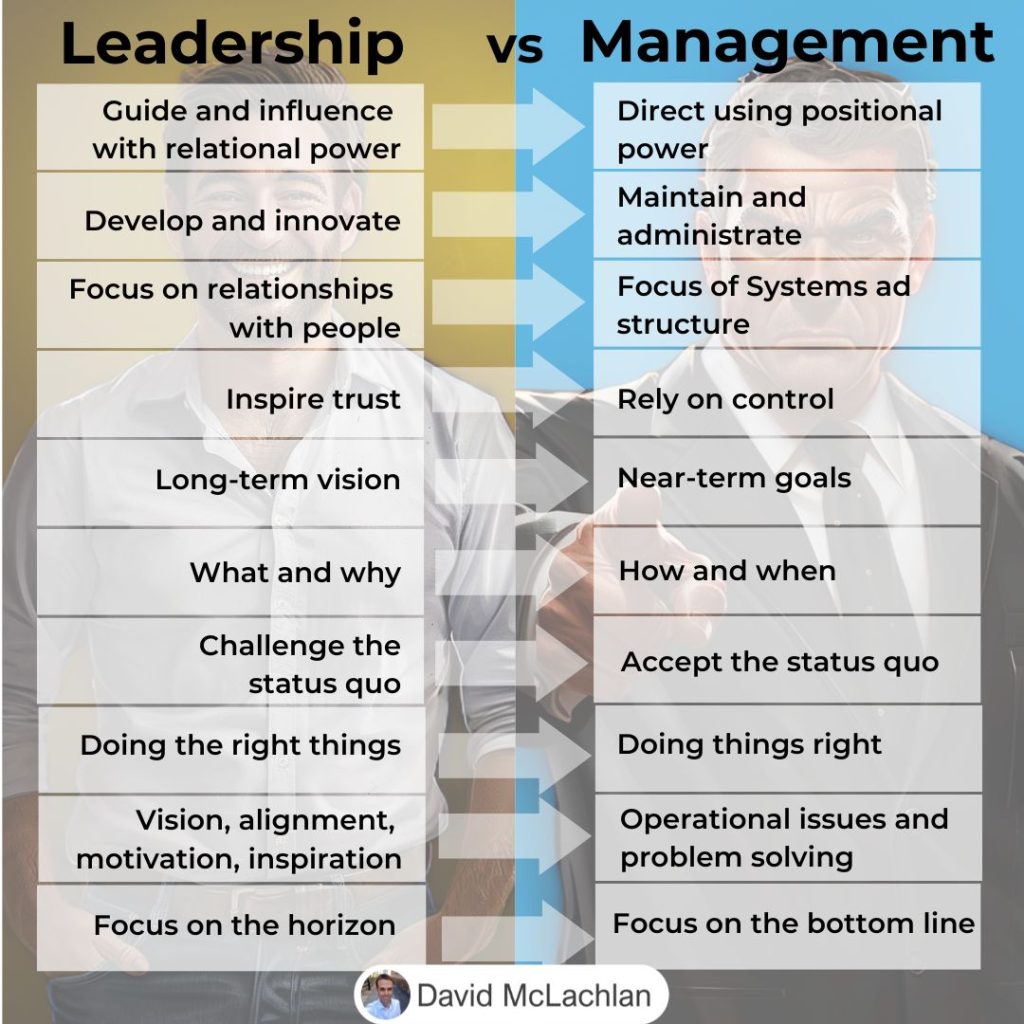
Many people say you should focus on being a Leader, instead of a boss or a Manager. But when you look at the definitions for each you will begin to realize that you need both Leadership and Management in your skillset in order to get things done.

What a Leader Does

A Leader will focus on people and improvement with things like:

  • ✅ Inspiring trust in their people
  • ✅ Looking at the Long-term vision
  • ✅ The WHY behind what the team is doing
  • ✅ Ensuring their team are focusing on the right things to get where they want to go
  • ✅ Challenging the status quo in order to improve and innovate

What a Manager Does

Meanwhile, a Manager will focus on the numbers, administration and getting things done, such as:

  • ☑️ Using Directive leadership and their Positional Power to get things done quickly
  • ☑️ Maintaining the way things are and administrating the day-to-day work
  • ☑️ Focusing on near-term goals for the team to achieve
  • ☑️ Looking at How and When things will be achieved
  • ☑️ Doing things the right way
  • ☑️ Operational issues and problem solving
  • ☑️ Focusing on the bottom line

By combining both the skills of a leader and a manager, you will keep your team engaged and find success in working towards the right goals for your business and project.

See more Project Management Picture Concepts: 

You can see what people are saying about David McLachlan here: REVIEWS

Navigate to Free Project Management and Leadership Articles through the links on the right (or at the bottom if on Mobile) 
PMI PMP 35 PDUs CourseThe Ultimate PMP Project Management Prep Course (35 PDUs)
Agile Certified Practitioner (PMI-ACP 21 PDUs)The Complete Agile Course: PMI-ACP (21 PDUs), Coaching, Jira and MORE! 
50 Project Management Templates Gantt Chart Risk Matrix and more Excel50+ Project Management Templates in Excel and PowerPoint (Gantt Chart, Risk Matrix and more!)
Project Management Plan TemplatesPre-made Project Management Plan Template: Save 100 HOURS!


What Is A WBS Dictionary?

Breaking Down The Work

A typical Work Breakdown Structure “decomposes” items, or breaks them down from a high level feature or deliverable, into smaller Work Packages or User Stories that a person can work on.

But once you’ve decomposed those deliverables, you need to add information to them to make them meaningful. And you do that with a WBS Dictionary.

What Goes In A WBS Dictionary?

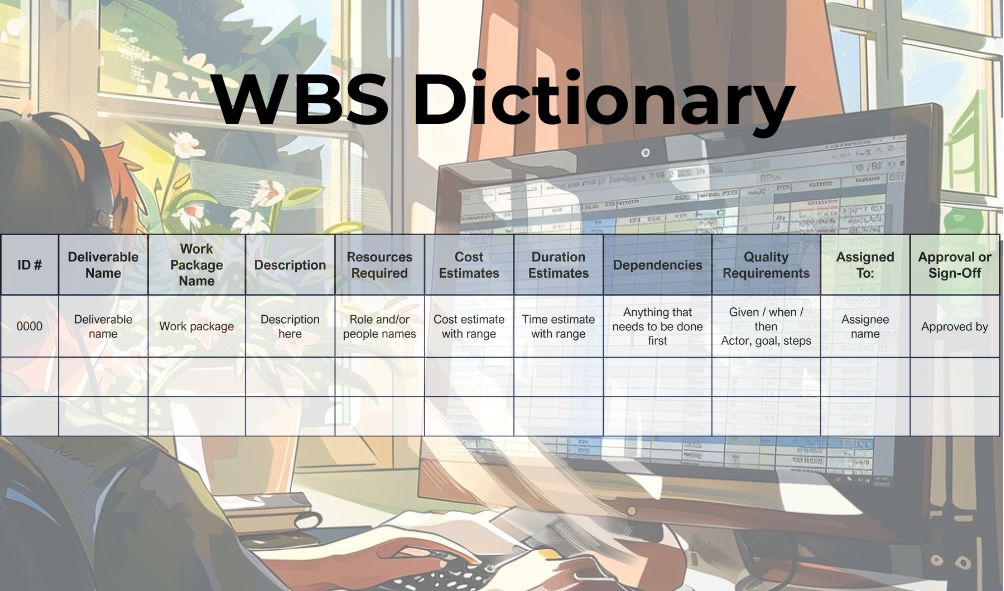
A WBS Dictionary lists our deliverables, the work packages in those deliverables, and then any additional project information we need. It will usually include:

  • A Unique ID
  • Deliverable Name
  • Work Package Name
  • Description

And then Project attributes, such as:

  • Resources Required
  • Cost Estimates
  • Duration Estimates
  • Dependencies (what needs to be completed first)
  • Quality Requirements (tasks or acceptance criteria)

And lastly, the people involved, such as:

  • Who the item is assigned to
  • Who approved or signed off on the item.

Having all this information at a glance makes it easier to understand your project and see what is needed.

See more Project Management Picture Concepts: 

You can see what people are saying about David McLachlan here: REVIEWS

Navigate to Free Project Management and Leadership Articles through the links on the right (or at the bottom if on Mobile) 
PMI PMP 35 PDUs CourseThe Ultimate PMP Project Management Prep Course (35 PDUs)
Agile Certified Practitioner (PMI-ACP 21 PDUs)The Complete Agile Course: PMI-ACP (21 PDUs), Coaching, Jira and MORE! 
50 Project Management Templates Gantt Chart Risk Matrix and more Excel50+ Project Management Templates in Excel and PowerPoint (Gantt Chart, Risk Matrix and more!)
Project Management Plan TemplatesPre-made Project Management Plan Template: Save 100 HOURS!


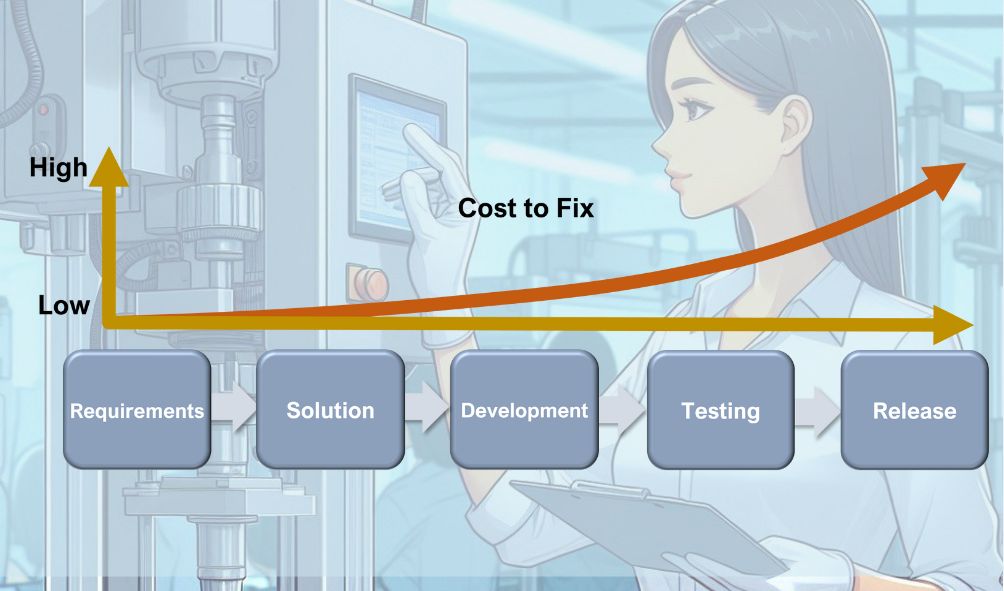
How The Cost of Quality Increases On Your Project

The cost to fix a defect increases as it gets closer to the Customer.

🤝 During Requirements: It costs very little to check, prototype and review requirements before we program them.

🤝 During Solution and Design: It costs relatively little to review and change a design.

🤝 During Development: It costs a bit more in time and effort to redo an item if it gets this far and there’s a defect. We may need to re-look at the requirements and design too, and re-code the solution.

🤝 During Testing: If we catch a defect during Testing, we may have to redo it in Development, or even go through the process from requirements again.

❌ But once a defect gets to a customer, we have the added cost of bad customer reviews, impacts to our brand or reputation, PLUS the time taken to review the customer complaints and address them, PLUS the waste of something we created that may have to be completely redone.

➡️ What else would you add to the Cost of Quality?

See more Project Management Picture Concepts: 

You can see what people are saying about David McLachlan here: REVIEWS

Navigate to Free Project Management and Leadership Articles through the links on the right (or at the bottom if on Mobile) 
PMI PMP 35 PDUs CourseThe Ultimate PMP Project Management Prep Course (35 PDUs)
Agile Certified Practitioner (PMI-ACP 21 PDUs)The Complete Agile Course: PMI-ACP (21 PDUs), Coaching, Jira and MORE! 
50 Project Management Templates Gantt Chart Risk Matrix and more Excel50+ Project Management Templates in Excel and PowerPoint (Gantt Chart, Risk Matrix and more!)
Project Management Plan TemplatesPre-made Project Management Plan Template: Save 100 HOURS!


How to Measure Business Value for Your Project (NPV, ROI and more!)

Measuring Business Value

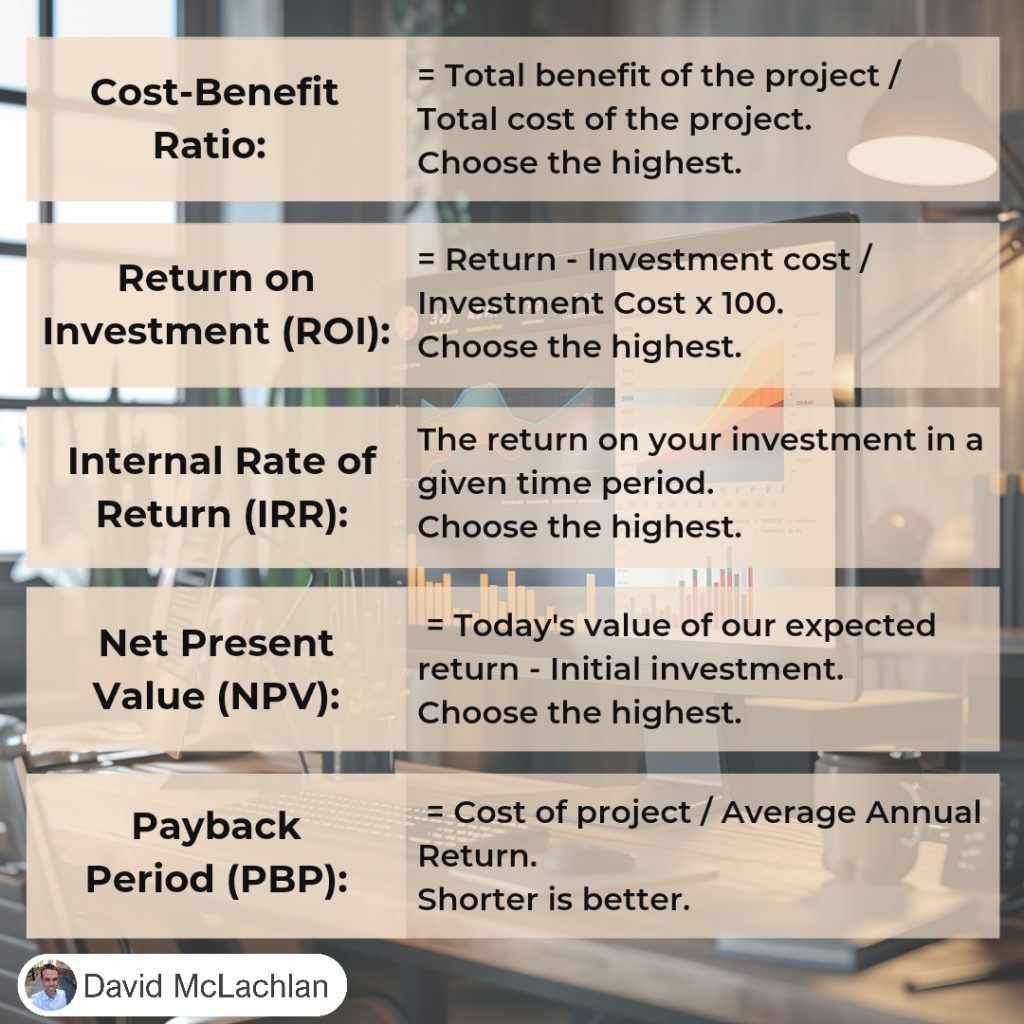
There are many ways to measure the business value you deliver as part of your project. Some of these ways are tangible (money, shareholder value, market share) and some are intangible (Brand recognition, goodwill, strategic alignment etc).

Ultimately the best value comes down to an improvement in some financial measure for your company, and these are measured in the following ways:

Cost-Benefit Ratio:

The cost-benefit ratio = the Total benefit of the project / Total cost of the project.

Choose the highest.

Return on Investment (ROI)

Return on Investment = the Project Return – Project Cost / Project Cost x 100.

Choose the highest.

Internal Rate of Return (IRR)

IRR is the return on your investment in a given time period.

Choose the highest.

Net Present Value (NPV)

Net Present Value = Today’s value of our expected return – Initial investment.

Choose the highest.

Payback Period (PBP):

The Payback period = The Cost of the project / Average Annual Return.

Shorter is better.

See more Project Management Picture Concepts: 

You can see what people are saying about David McLachlan here: REVIEWS

Navigate to Free Project Management and Leadership Articles through the links on the right (or at the bottom if on Mobile) 
PMI PMP 35 PDUs CourseThe Ultimate PMP Project Management Prep Course (35 PDUs)
Agile Certified Practitioner (PMI-ACP 21 PDUs)The Complete Agile Course: PMI-ACP (21 PDUs), Coaching, Jira and MORE! 
50 Project Management Templates Gantt Chart Risk Matrix and more Excel50+ Project Management Templates in Excel and PowerPoint (Gantt Chart, Risk Matrix and more!)
Project Management Plan TemplatesPre-made Project Management PLAN Template: Save 100 HOURS!


Crowdstrike and Quality Management on a Project

Why is Quality important in your project?

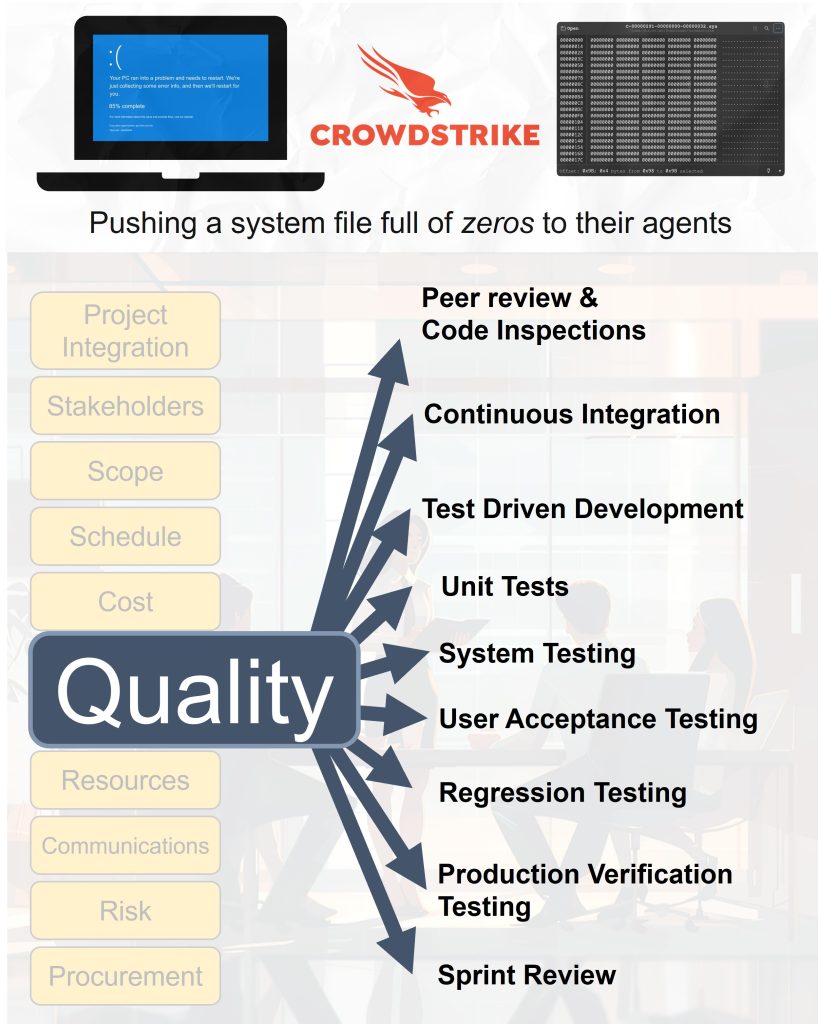
You probably heard about the Crowdstrike outage on the weekend of July 2024 that disrupted airports, banks and stores all around the world. It was caused by Crowdstrike pushing a system file full of zeros to production.

How can we avoid this sort of disaster as we manage our own Projects? There are many ways:

➡️ Peer review & Code Inspections: Checking the requirements with a user or reviewing the code with another Developer.

➡️ Continuous Integration: Merging changes into the main test system (often daily) with automatic tests.

➡️ Test Driven Development: Tests are written first, failed, then run again and passed after the solution is coded.

➡️ Unit Tests: Testing each small piece or User Story.

➡️ System Testing: Testing the integrated system as a whole.

➡️ User Acceptance Testing: Testing the system from the User’s point of view.

➡️ Regression Testing: Testing the existing system with the changes to see if they’ve impacted normal operations.

➡️ Production Verification Testing: Testing the change in the live environment after go-live then rolling the change back if it goes wrong.

➡️ Sprint Review: Demonstrating the actual change to the customer or senior users before release.

Quality is one of the 10 Project Management Knowledge Areas for a reason.

⭐ What are some of the ways you manage Quality on your own projects? ⭐

See more Project Management Picture Concepts: 

You can see what people are saying about David McLachlan here: REVIEWS

Navigate to Free Project Management and Leadership Articles through the links on the right (or at the bottom if on Mobile) 
PMI PMP 35 PDUs CourseThe Ultimate PMP Project Management Prep Course (35 PDUs)
Agile Certified Practitioner (PMI-ACP 21 PDUs)The Complete Agile Course: PMI-ACP (21 PDUs), Coaching, Jira and MORE! 
50 Project Management Templates Gantt Chart Risk Matrix and more Excel50+ Project Management Templates in Excel and PowerPoint (Gantt Chart, Risk Matrix and more!)
Project Management Plan TemplatesPre-made Project Management Plan Template: Save 100 HOURS!


The Change Control Process in Project Management

Change Happens When Delivering a Project

There are many competing factors when delivering change with a Project. Not only do you have many competing stakeholders with their different needs, biases, history in the organization and more, but you have competing constraints too.

The triple constraint of Scope, Schedule and Cost is impacted frequently on a project. If scope changes a little, it might impact how long it takes to deliver it. And that might cost more. Balancing these is an essential part of being a good Project Manager.

Use Change Requests to Keep Change under Control

If you’re studying or working in Project Management this year, know the broad Change Control process.

So, so many project managers never even outline their Change Control approach – or worse – they confuse it with modern Organizational Change Management (transitioning a product to operations or BAU).

The good part is, you get to decide (with your stakeholders) your project’s Change Control approach and you outline this in your Change Management Plan.

YES this works for Agile too, but it’s usually just a single line as the Product Owner decides on Scope Changes with the Product Backlog, and they understand and absorb the impact to their Schedule (Cost is often fixed).

Make sure you know it. Make sure you write it down.

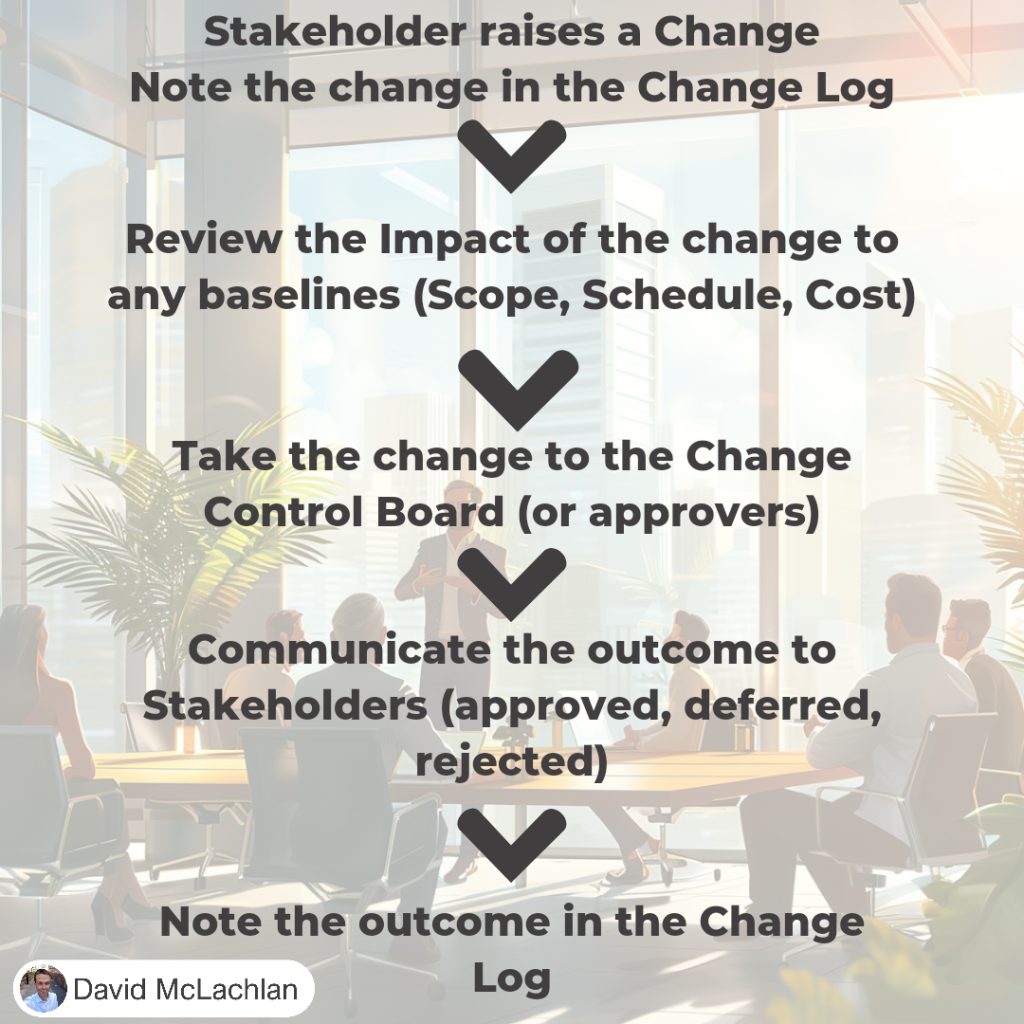
Then deliver value and win. The typical Change approach might be:

  1. A Stakeholder raises a change to the Scope, Schedule, Cost, Resources (or any other baselined part of the project).
  2. We note that proposed change in the Change Log.
  3. We analyze the impact of the change to our project Cost, Schedule, Scope, and any other necessary impact.
  4. We take this information to the Change Control Board, or the approver. This might be multiple people or just one person (i.e. a Project Sponsor or Product Owner).
  5. We communicate the outcome of the change to the necessary stakeholders (Approved, Deferred, Rejected).
  6. We update the Change Log with the outcome and take the necessary change action.

See more Project Management Picture Concepts:

You can see what people are saying about David McLachlan here: REVIEWS

Navigate to Free Project Management and Leadership Articles through the links on the right (or at the bottom if on Mobile) 
PMI PMP 35 PDUs CourseThe Ultimate PMP Project Management Prep Course (35 PDUs)
Agile Certified Practitioner (PMI-ACP 21 PDUs)The Complete Agile Course: PMI-ACP (21 PDUs), Coaching, Jira and MORE! 
50 Project Management Templates Gantt Chart Risk Matrix and more Excel50+ Project Management Templates in Excel and PowerPoint (Gantt Chart, Risk Matrix and more!)
Project Management Plan TemplatesPre-made Project Management PLAN Template: Save 100 HOURS!