All posts by David McLachlan

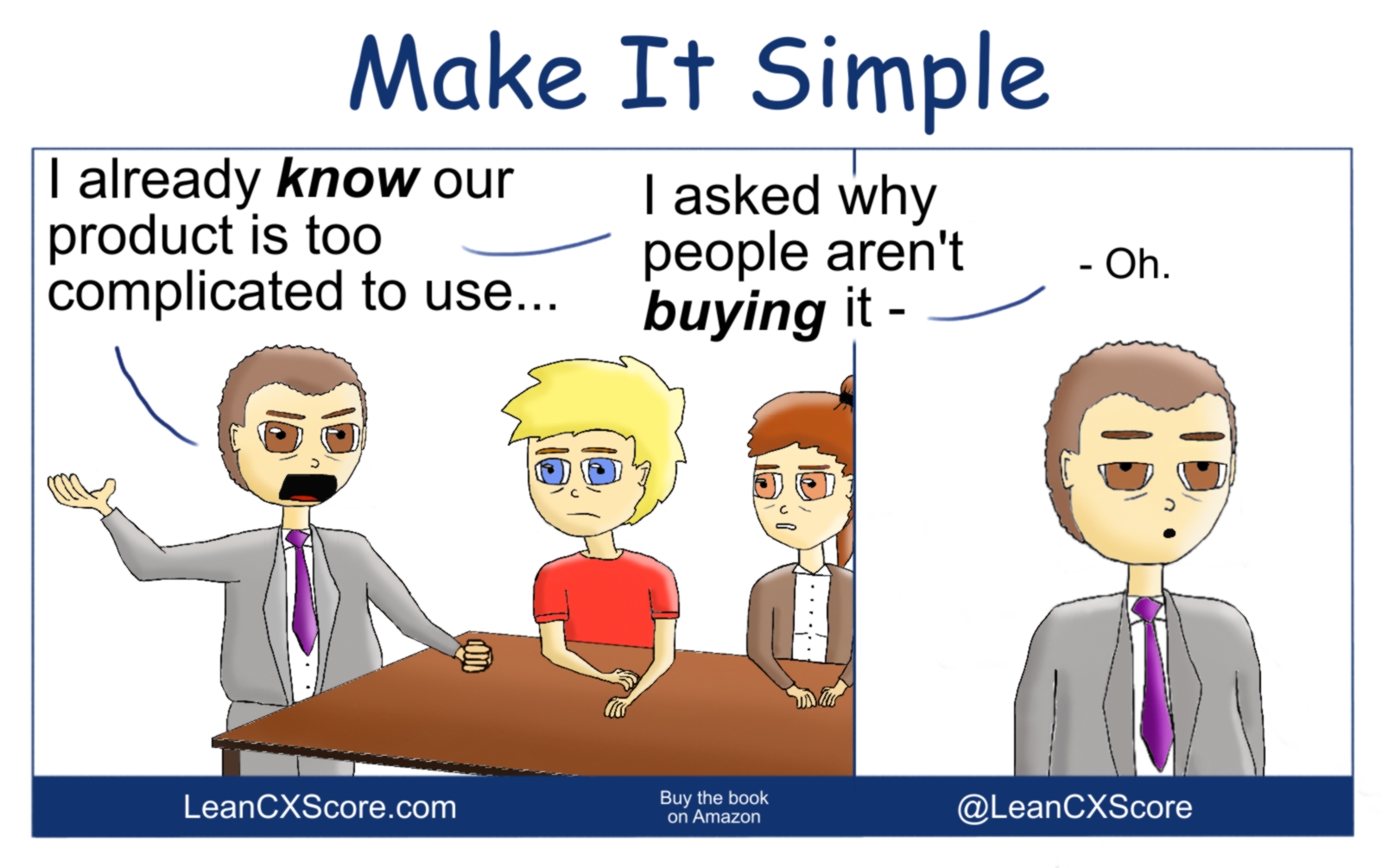
#5 Lean CX Comic – Make It Simple (Or They Will Leave You)
#5 Lean CX Comic – Make It Simple (Or They Will Leave You)

Lean Comic

See all the Lean CX Comics here

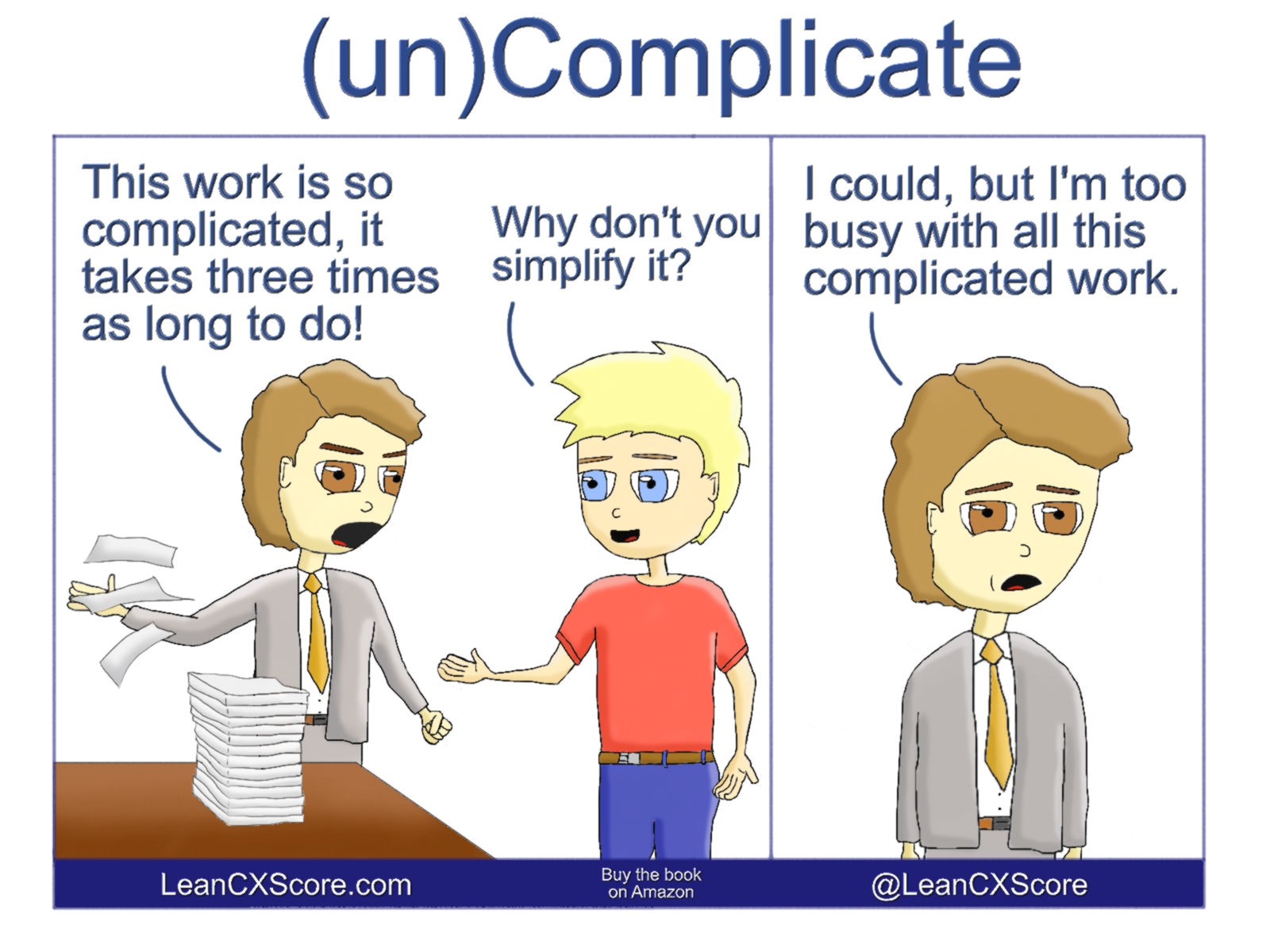
News Flash: People Aren’t Buying Your Complicated Products

It’s official.  People prefer doing things that are easy.  You’ve been in that situation, haven’t you?  Something has been too hard, taken too long, been passed along too may times, so you left.

If it’s hard to use, fewer people will use it.  Sure, there might be a small percentage who put in the time and work through it – maybe they really like you or your company, or maybe there is another benefit like status or money involved.  But keep it complicated for too long, and they won’t stick around forever.

What Does “A Complicated Product” mean?

Saying something is complicated is all very well, but what does it actually mean?

In the book “The Lean CX Score“, David McLachlan outlines five scenarios for complicated products, called the Lean CX Wastes.

Lean Customer Experience means exactly that – the customer experience is streamlined and not full of wasteful things or experiences.  Things such as having to redo something over and over, having to perform too many steps to get what a customer wanted, or being handed off between too many people or departments.  If you’ve ever had to do any of those you will know what I mean – the experience can be frustrating and every wasteful step you are forced to perform grates on your patience just a little bit more, until finally you leave.

It Works Everywhere

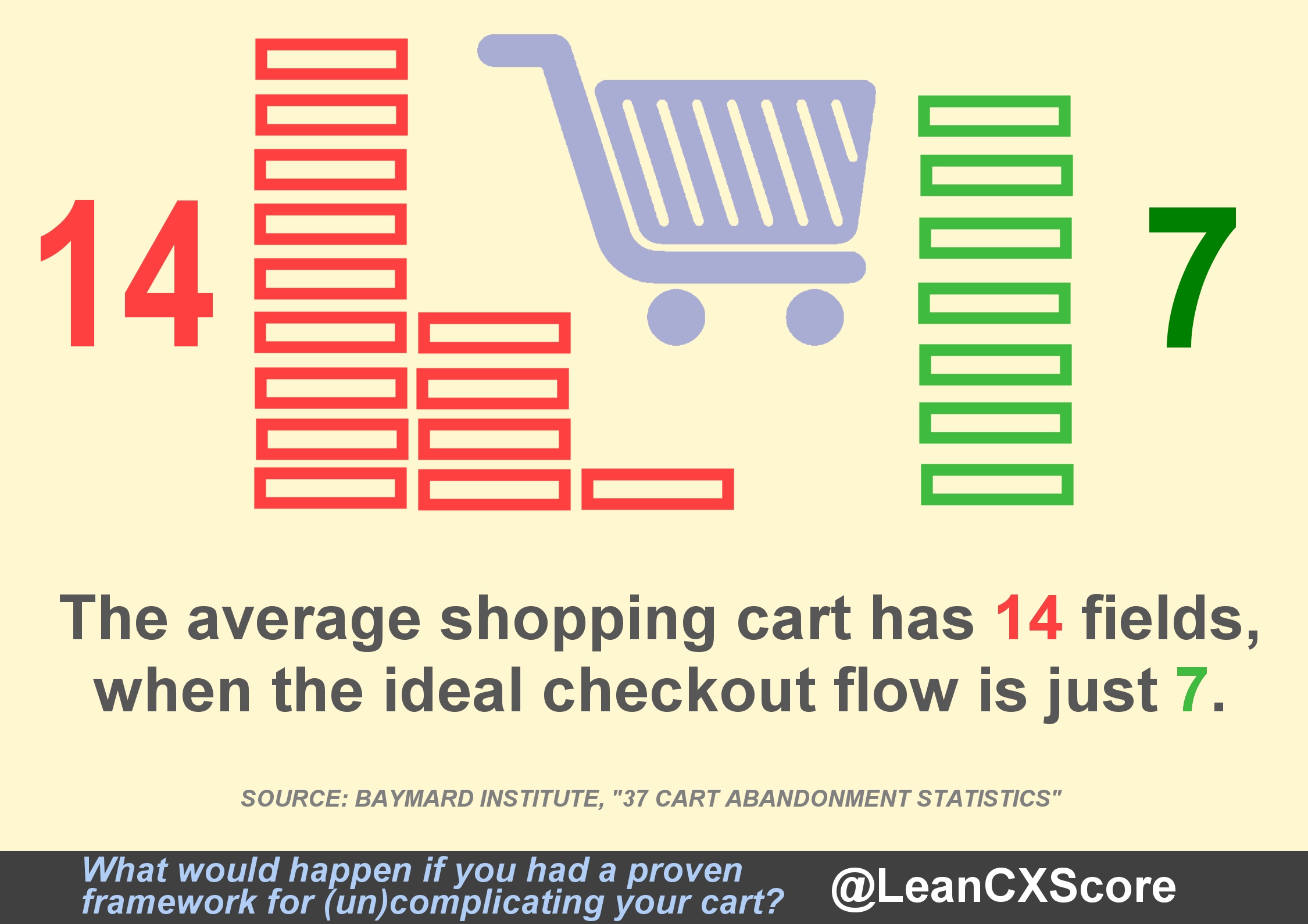
Recent research into online shopping carts by the Baymard Institute found that the average online shopping cart experience had 14 fields, when they really only needed 7 for an ideal checkout flow.  They also found that 35% of abandoned online orders were recoverable solely through a better checkout flow and design.  The research is there, and it happens everywhere.  Online checkouts are one thing we can simplify, but what about the work your teammates or employees do when delivering a product or service?

All the way through the value chain your business is making things more complicated than they have to be, which increases cost, increases the likelihood a customer will leave and reduces your profit as a result.

After all, in chasing the latest gimmick or management fad it is tempting to forget about the lifeblood of any business – your customers – and the money they bring by buying your product or service.

Reducing complexity in your product prompts more people to buy, and reducing complexity in the value chain that delivers your product lowers the cost of delivering it.

The Lean CX Score Is The Step-By-Step Framework For Making Things Simple

If complex products or services are the enemy of good customer experience, then it makes sense to use the Lean CX Score framework as a step-by-step guide to making things simple.

One of the Lean CX steps is called “One Step Flow”, where a customer can get what they want in one step, instead of many different steps over many different people.

You will absolutely love the Lean CX book, because it gives many different real-life examples of One Step Flow – from signing up to watch Game of Thrones in one step, getting the best Energy deal in one step, a hospital getting cancer scans and diagnoses in one step, posting a job ad in one step, and much, much more.

That is just one part of the Lean CX Score – imagine what you could do with the rest of it too?

If you want to improve your business, team, or job prospects, I highly recommend you read it today.

See all the Lean CX Comics here
Lean CX ScoreGet "The Lean CX Score" now, and start creating disruptors in your industry that completely annihilate your competition.

Oh and good news!  You'll be improving the speed, morale and engagement of your teams at the same time.  Get the Lean CX Score now.
Excerpts From The Lean CX Score Book

Like the book or want to share it with others?  Share this page and get the book on Amazon.

Lean CX Score Book

Preview chapters from The Lean CX Score book:

Lean CX ScoreThis is an excerpt from "The Lean CX Score."  Get your copy now and start creating disruptors that completely annihilate your competition.

Oh and good news!  You'll be improving the speed, morale and engagement of your teams at the same time.  Get the Lean CX Score now.
Excerpts From The Five Minute Lean Book

Like the book or want to share it with others?  Share this page and get the book on Amazon.

Five Minute Lean

Selected chapters from the story within Five Minute Lean:

Check out these selected chapters from the teachings within Five Minute Lean:


Want to learn about Lean? Get the book "Five Minute Lean", by David McLachlan - a wonderful book that blends teaching of the tools, culture and philosophy of traditional Lean with a modern-day Lean parable. You can get the whole book on Amazon here and enjoy your own copy.

Lean CX Infographics

Click the pictures for more info

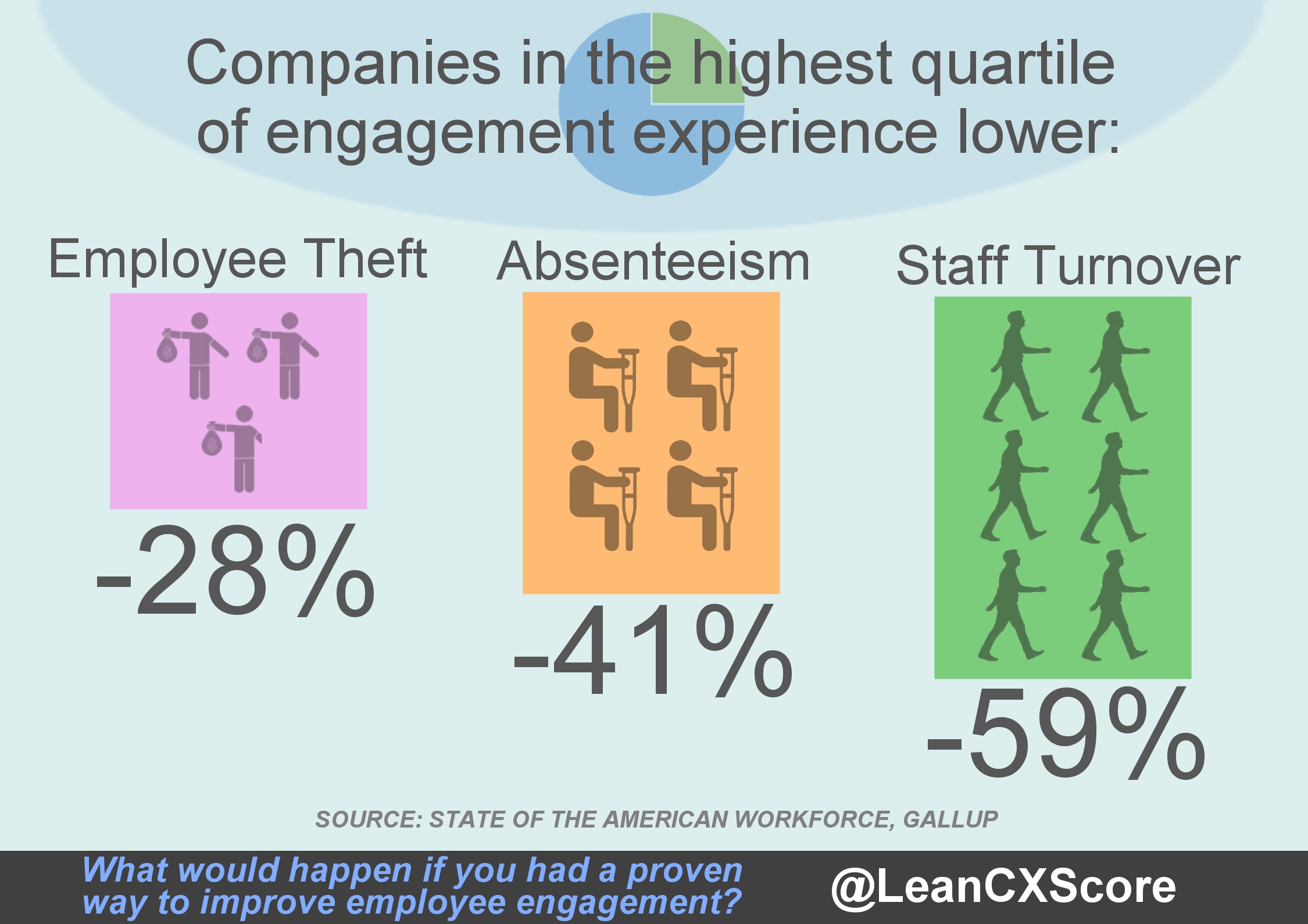
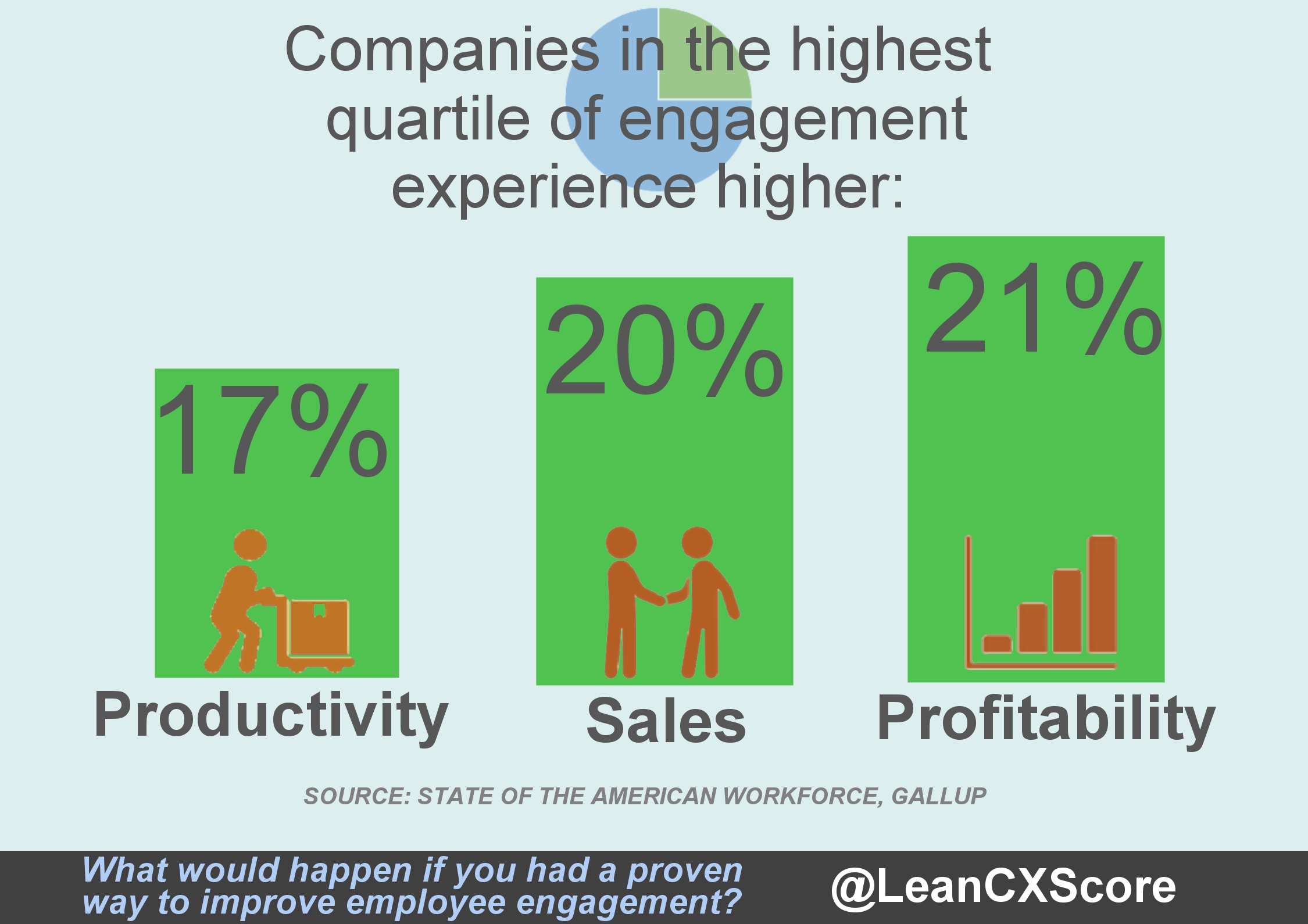
Lean CX Infographic Employee Engagement Benefits

Lean Infographic Employee Engagement Benefits

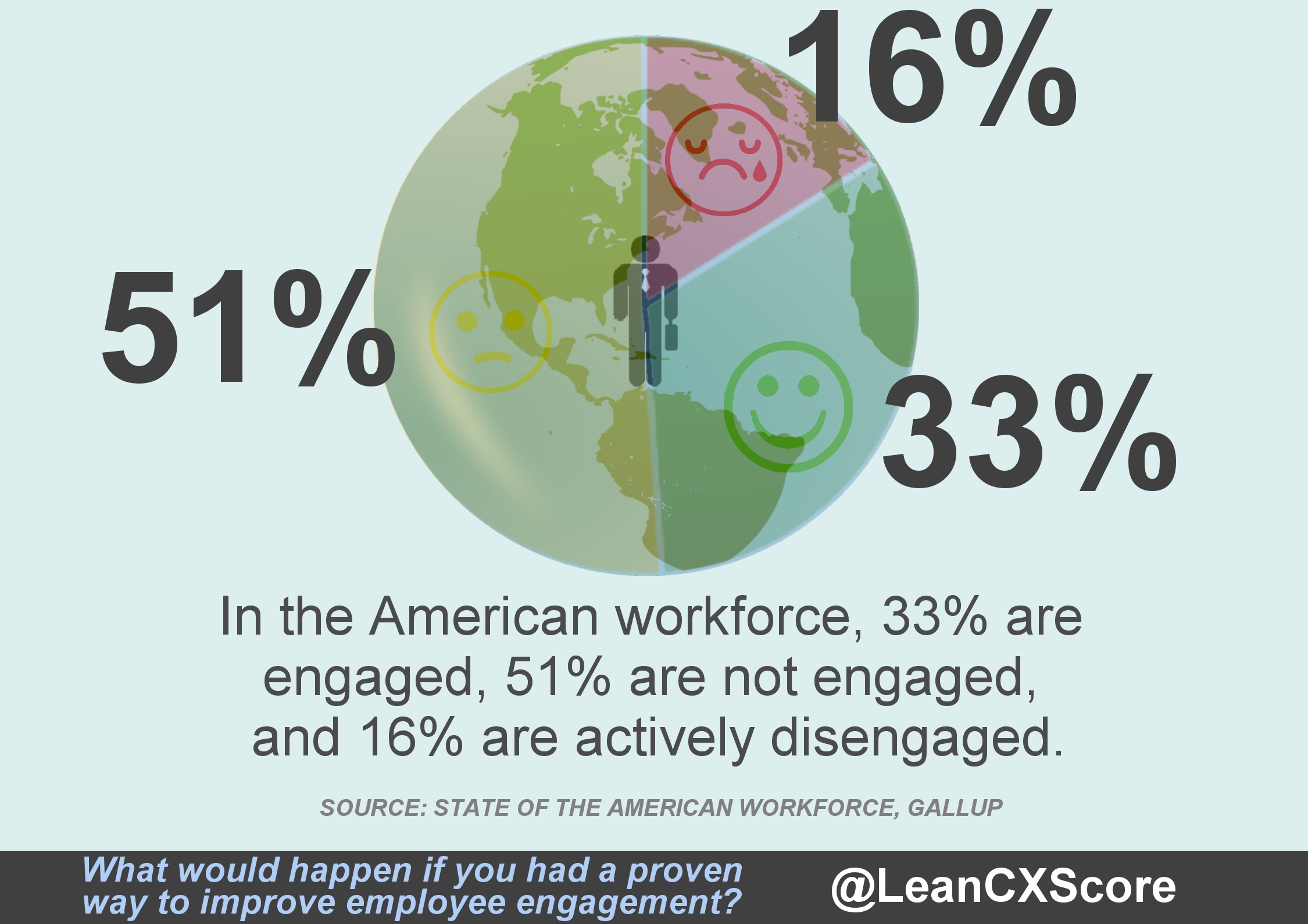
Lean CX Infographic Employee Engagement

Lean CX Infographic Shopping cart abandonment Form Fields

Lean CX Infographic Shopping cart abandonment

Lean CX Infographic Shopping cart abandonment

Online shopping cart abandonment

Lean CX ScoreGet "The Lean CX Score" now, and start creating disruptors in your industry that completely annihilate your competition.

Oh and good news!  You'll be improving the speed, morale and engagement of your teams at the same time.  Get the Lean CX Score now.
Lean CX Comics

Click the pictures for more info

Lean Comic Complicated Work

Lean Comic

Lean comic rework

Lean CX, Customer Experience
Lean CX Comic, Customer Experience

Lean CX, Customer Experience


Lean CX ScoreGet "The Lean CX Score" now, and start creating disruptors in your industry that completely annihilate your competition.

Oh and good news!  You'll be improving the speed, morale and engagement of your teams at the same time.  Get the Lean CX Score now.
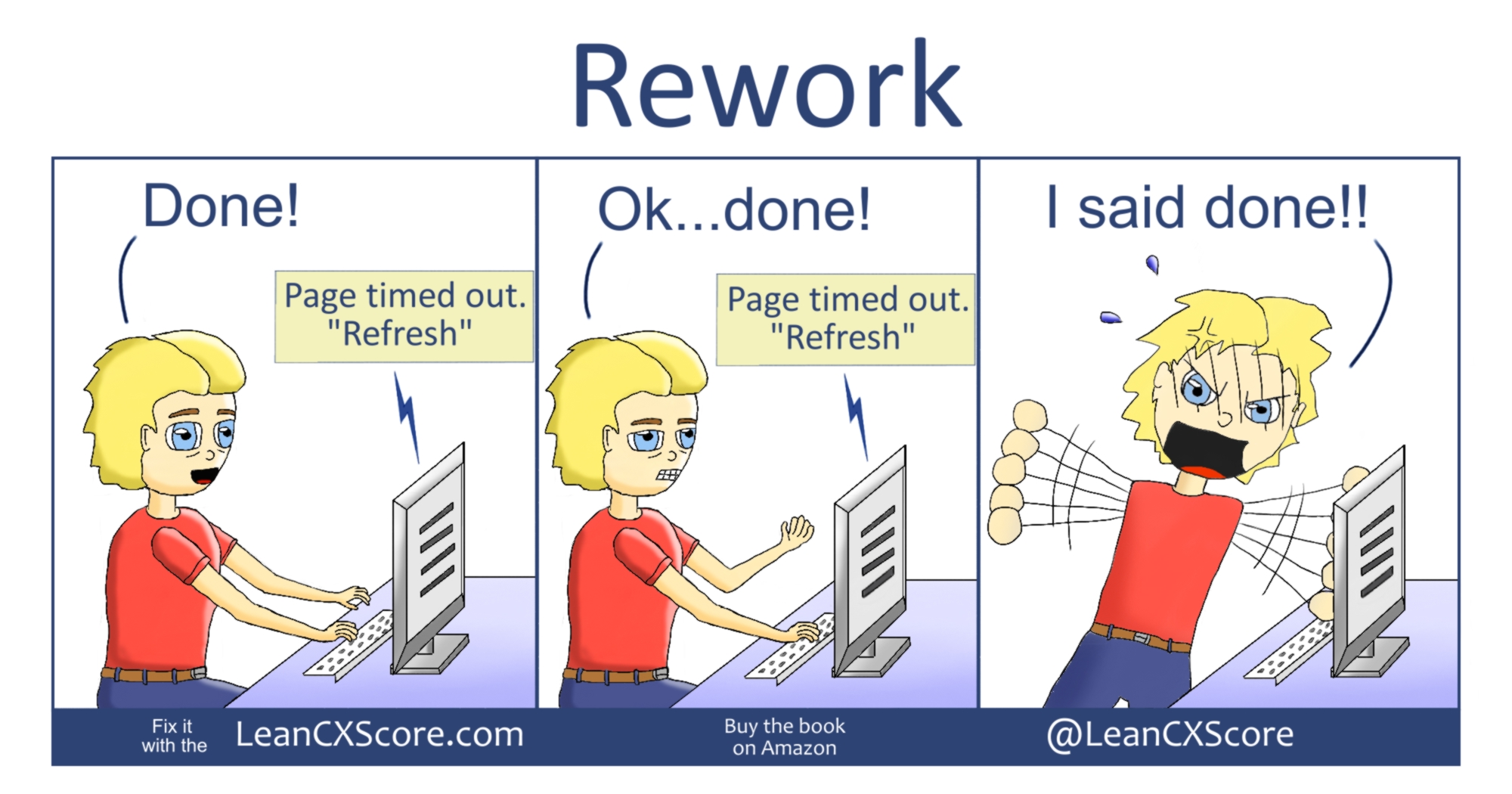
#4 Lean CX Comic – Remove Rework

#4 Lean CX Comic – Remove ReworkLean comic rework

Click to Enlarge – or – Right Click and “Save As” to save.

See all the Lean CX Comics here

Have you ever had to do something, and then do it over again?  Maybe the first time wasn’t too bad, but by the third or forth time you have to redo something you might be just about ready to rage-quit.  This kind of thing is happening to your customers – and guess what?  When it happens they are ready to leave, and when they leave they are neither buying your product nor likely to return.

There are certain scenarios and behaviours that drive your customers away, and they have been captured in the five Lean CX Wastes within the Lean CX Score Framework.

“Rework” is one of those Lean CX Wastes – wastes that drive your customers and your team and employees crazy.  Having to redo things is also a huge cost to businesses every year – in many cases simply by reducing the amount of times you have to redo something by one can cut a company’s cost and improve its speed by 30 to 50%.

Rework – Has It Ever Happened To You?

More importantly, you and I can most likely relate to Rework because it has happened to us before.  Has your boss ever asked you to redo something thirty times, with micromanaged “improvements” that don’t actually move the needle of improvement that much?  Or have you ever had to call a company back three, four, five times or more just to get what they should have been able to give you the first time?

Or what about a website, where is wasn’t clear what you needed to do to get what you wanted, so you had to click a dozen different places before you discovered the “right” thing?

All of this adds up to wasted time, wasted effort, which is why it is one of the Lean CX “Wastes”.

Lean CX Removes those Lean CX Wastes

If gaining and keeping customers is important to you (and if you’re in the business of making a profit, it should be), then removing the Lean CX Wastes will definitely be important to you.  The Lean CX Wastes are:

  1. Rework
  2. Excessive Steps
  3. Not getting what I want
  4. Excessive Hand-offs
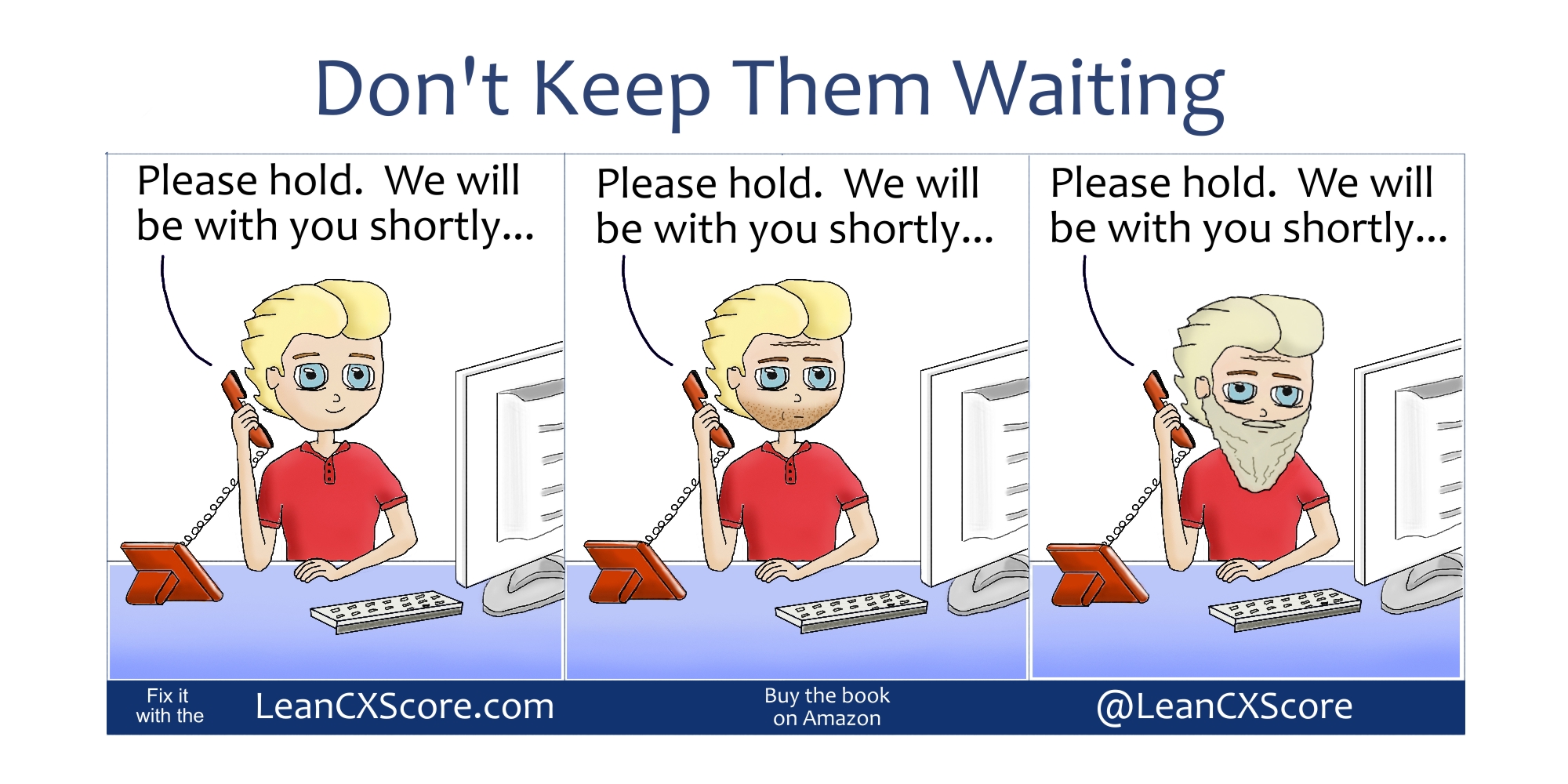
  5. Waiting

They can be remembered with the acronym: RENEW (or NEWER).  The five Lean CX Wastes are outlined in the book: The Lean CX Score, by David McLachlan, but this comic and article should give you a basic outline of one of the most important ones: Rework.

See all the Lean CX Comics here

Lean CX ScoreGet "The Lean CX Score" now, and start creating disruptors in your industry that completely annihilate your competition.

Oh and good news!  You'll be improving the speed, morale and engagement of your teams at the same time.  Get the Lean CX Score now.
Lean CX Infographic – Would You Like A Piece Of $260 Billion?

Lean CX Infographic Shopping cart abandonment

Get all the infographics here

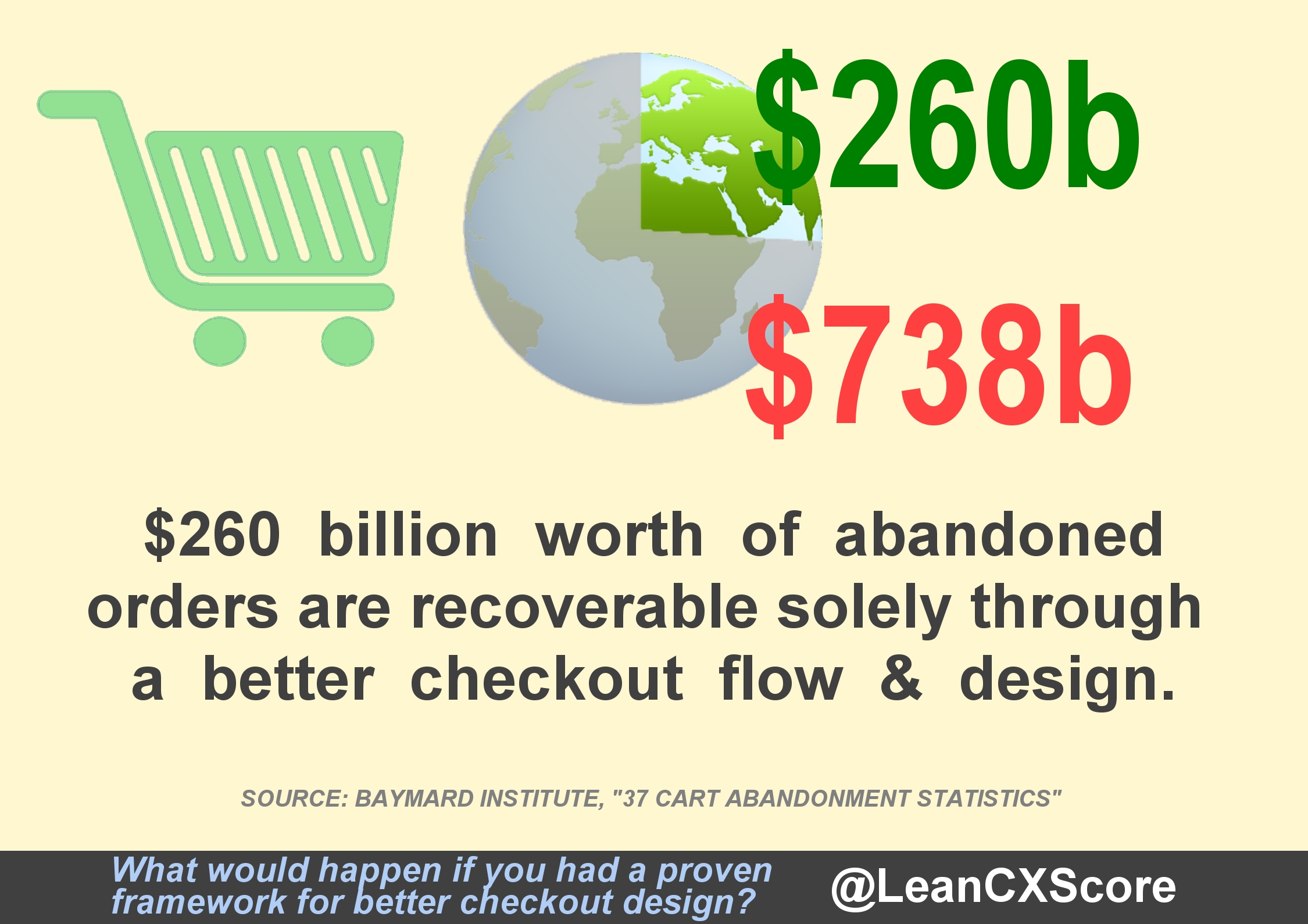
Would You Like A Piece of $260 Billion?

Recent research by the Baymard Institute found that more than 69 percent of customers abandon their shopping cart instead of buying a product or service.  From that same research Baymard Institute found that companies with an online checkout experience could see a 35% increase in conversion (read: sales) just by having a better checkout design.

That means reducing areas that can go wrong for a customer, making things easier to buy, and making the experience more streamlined.

In fact, they found that the average online checkout had around 14 fields, while they needed only 7.  Amazon, of course, are doing it with just one, using their “one click buy” buttons, and reaping huge rewards as a result.

How Do You Quantify “Better Checkout Flow and Design”?

Just saying they need a better checkout flow and design is one thing, but how to you actually quantify that?  How do you measure better flow or reduced complexities?  How do you measure the Customer’s Experience?

The good news is there is a book called “The Lean CX Score” which combines the most customer-centric improvement system from the last century with the most important life-blood of any business – its customers.  And it also contains an exact framework for measuring the usability of your customer’s experience and knowing whether they are likely to return, or likely to abandon you.

You see, without customers paying for your product or service, and returning time and time again, there is a good chance you won’t be able to pay the bills to keep the lights on, and will subsequently go bust.  It’s not exactly rocket science.  And as we’ve seen, by making things easy for our customer to do and easy for them to buy, we can significantly increase the number of customers and the number of times they return.  More customers, more profit, means keeping and thriving in your business.

Lean CX Is The Key To The $260 Billion Door

All of which means that if you want a piece of that $260 billion, you’d better start making things easy.  For the price of a couple of cups of coffee, you can get “The Lean CX Score” by David McLachlan which outlines, step-by-step, how to create disruptive products and services that are more streamlined, faster, and easier to use than your competition.  And when you use it, get ready to see your business thrive and your competition bite the dust.

Lean CX Is The Key To Creating Disruptors

A disruptor is a product, service, or entire business that changes the rules of the game, so that it is seen as better, can scale and grow faster, and sell more than anything in its industry.  But what people don’t realise is that disruptors are most commonly created in fields that are already existing – selling products or services that already exist and we know that customers want anyway.  The disruptive business just finds ways to streamline the process of creating and delivering what the customer wants.  As the Baymard Institute research showed, that can start with an increase of 27% to your online sales channel, but as you continue to use the Lean CX framework to improve and if you ultimately become a disruptor, history has shown us that the sky is the limit.

Get all the infographics here

Lean CX ScoreGet "The Lean CX Score" now, and start creating disruptors in your industry that completely annihilate your competition.

Oh and good news!  You'll be improving the speed, morale and engagement of your teams at the same time.  Get the Lean CX Score now.
Lean CX Infographic – 27% Of Checkouts Are Too Long Or Complicated

Lean CX Infographic Shopping cart abandonment

Get all the infographics here

Your Complicated Process Is Driving Customers Away

Have you ever tried to buy something online recently?  With online business taking off like never before, there is a good chance that your answer is “Yes”.

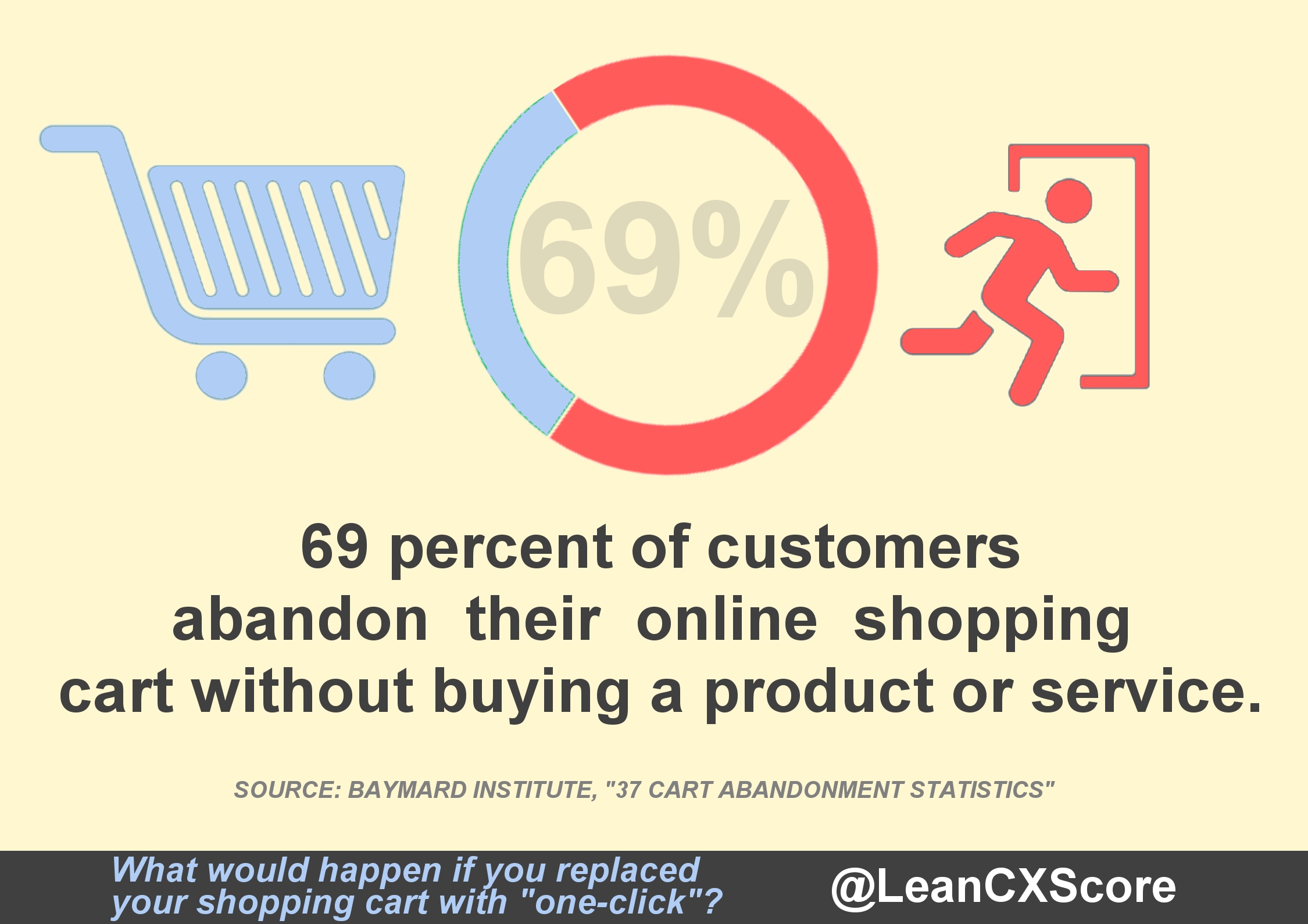
And just like 69% of people, there’s also a good chance that you’ve tried to buy something online but abandoned your shopping cart before you were able to buy.

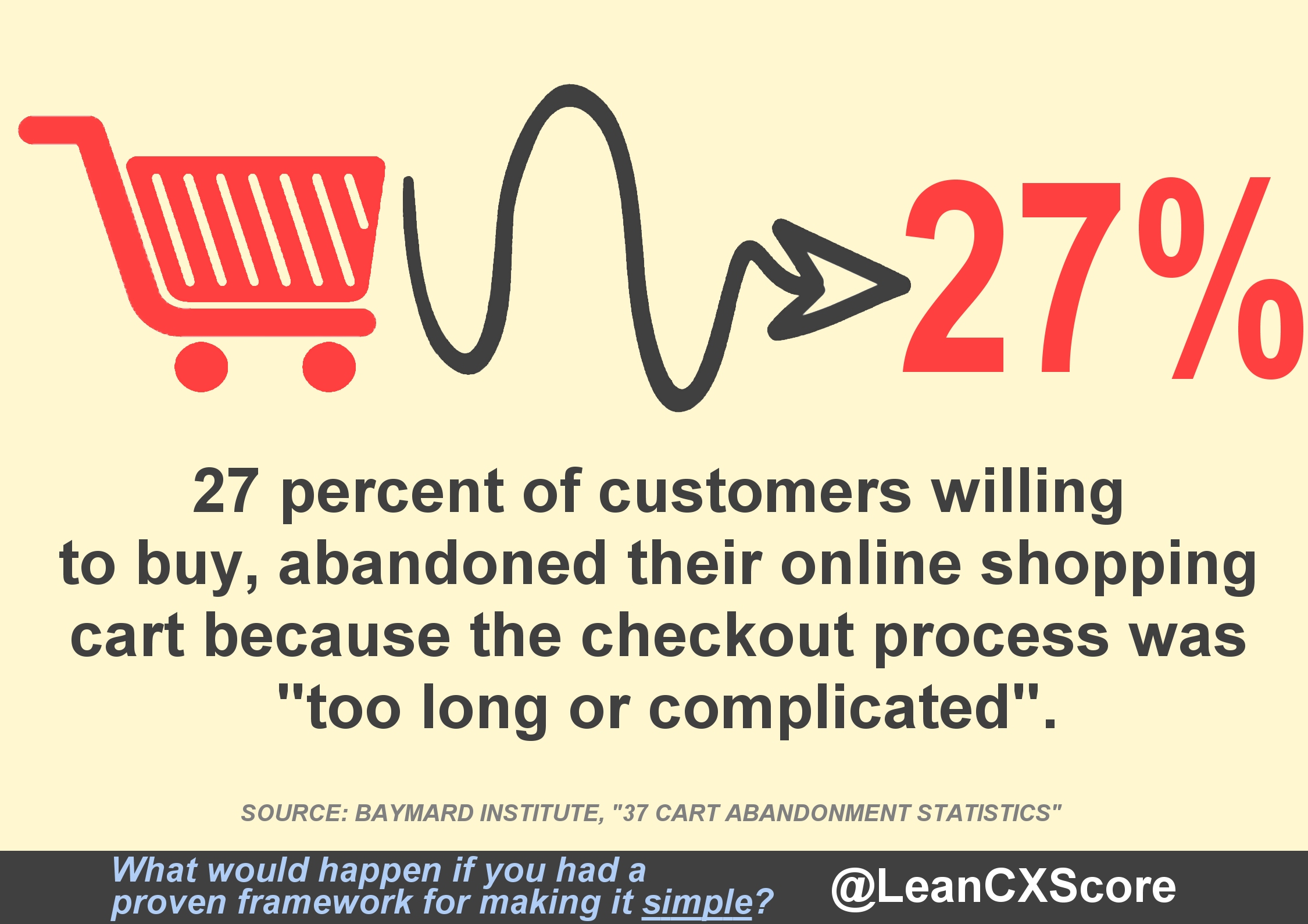
Did you know that 27 percent of those people who abandoned their online shopping cart, and who weren’t just browsing, abandoned it because the checkout was too long or complicated?  That’s a lot of people  leaving you at the most critical time, and the good news is “long and complicated” is actually something we can fix.

The Lean CX Score Fixes “Long and Complicated”

What would it mean to you if you had a proven, step-by-step framework for reducing that time and complexity in your checkout experience?  For one (as we’ve just seen), you would have a good chance of improving the online sales to your business by up to 27% or even more, which would mean a very tidy jump in profit for you too.

The Lean CX Score is that proven framework.  Revealed in the book of the same name by David McLachlan in 2017, the step-by-step framework of Lean CX combines the most important asset of your business (your customers, who pay your bills by buying your product or service, remember?), and Lean or the Toyota Production System, which is one of the most incredible customer-centric improvement methods of the last century.  Lean CX has modified both in a ground breaking way to suit Customer Experience and white collar jobs, reduce time and improve ease of use.

Reducing Waste Improves Speed and Happiness 

The Lean CX Score outlines five Customer Experience “wastes” – common scenarios that when you fix will have customers clamouring to buy from you.  Just a few of those wastes that you need to remove are:

  1. Waiting
  2. Extra Steps
  3. Extra Hand-offs, and;
  4. Rework

While reading the book will give you the full outline of those Lean CX wastes and how to remove them by using the Lean CX Score, you can get an idea of them just with the list above.  Let’s take a look:

Rework, or having to redo things, can easily happen on an Online Shopping Cart experience when you have to enter your payment details more than once, or after making a mistake, or having to refresh a form that times out.

Extra Steps could be extra form fields that aren’t really necessary, or that could easily be reduced.  In fact Amazon got rid of its form fields completely with its “One Click Buy”.  How is that for reducing extra steps?

Excessive Hand-offs could be too many online screens to travel through, where further mistakes can be made.

Are You Ready To Improve Speed and Make Things Easy?

The Lean CX Score is the first book of its kind, that completely outlines an exact step-by-step framework for improving the speed and simplicity of your customer’s experience, helping them buy easily and buy more often.

When you’re ready to profit more, enjoy more happiness and easier work, then I highly recommend you get the book.

Get all the infographics here

Lean CX ScoreGet "The Lean CX Score" now, and start creating disruptors in your industry that completely annihilate your competition.

Oh and good news!  You'll be improving the speed, morale and engagement of your teams at the same time.  Get the Lean CX Score now.
Lean CX Infographic – Online Shopping Cart Abandonment at 69%

Online shopping cart abandonment

Get all the infographics here

69% Of Customers Are Leaving You At The Most Important Time

Online business is booming.  Everywhere you look around the world there are businesses ranging from small startups, to huge corporations, to single parents selling home-made items out of their garage, and they’re all moving their sales channels online.

If you are in one of those businesses, this infographic should terrify you.  The Baymard Institute found that 69% of customers were abandoning their online shopping carts instead of purchasing the product or service, leaving at the most critical moment for a business in the customer journey – the moment where they actually fork over their cold hard cash.

Businesses Need Money, And Customers Have Money

It seems simple, doesn’t it?  Customers pay you money for a product or service, and you use that money to operate your business and (hopefully) turn a profit.  The more customers you have, the more money they pay you.  The best businesses in the world finds ways to serve millions of people and make billions of dollars in return.

Customers can be business to business (B2B), or business to customer (B2C), or any other type you could think of, but the point is that so many businesses forget about that crucial element – where the money comes from – that lifeblood of any business endeavour.  And the key that unlocks that door is Customer Experience, and more specifically Lean CX, but I can’t tell you about that just yet.

This Knowledge Can Make You A Disruptor

So how can this knowledge help you, then?

We know that 69% of customers abandon their online shopping carts, but what can you do with that?

They say “Knowledge is power”,  but let’s be honest – you and I already know that knowledge alone is not enough.  Having knowledge is definitely a start though – after all, most people you know or work with don’t know this information and in the land of the blind, the one eyed person is king.

No, knowing this is not enough, unless you have a repeatable framework – a lens to look through – that can give you the right action to take.  That framework is the Lean CX Score.

The Lean CX Score is a set of six repeatable steps – six questions you can ask that apply to any business endeavour, any product or service and any task your team provides.   Step two of the Lean CX Score just happens to be a little thing called “One Step Flow”.

One Step Flow – The Key To Reducing 69% Online Shopping Cart Abandonment

When you have this framework – this repeatable framework you can apply to anything – then suddenly the Baymard Institute research becomes clear.  Suddenly you are a genius, instead of another disrupted company.

One Step Flow asks us “Can I get what I want in One Step?”

That means no logging in, no filling out details, no getting your credit cards, no forgetting your password, no checking your balance, and no additional steps that would cause a customer to abandon.  Can you think of someone else who created a one-step customer experience?

Amazon.

Their online checkout features a little thing called “One Click Buy”, where a customer is already logged in, usually via an app, and only has to click the buy button and the rest is taken care of.  No address details, no payments details, it’s already done.

Now – knowing that 69% of customers abandon their online shopping cart, Amazon effectively got rid of their shopping cart by using the Lean CX Score step of “One Step Flow”.  What could that mean for their sales?  Is it possible they could increase by 10%?  Maybe 30%?  What about the full 69%, as word of mouth gets around that they are easy to buy from, and costs are lowered because their process is so streamlined?

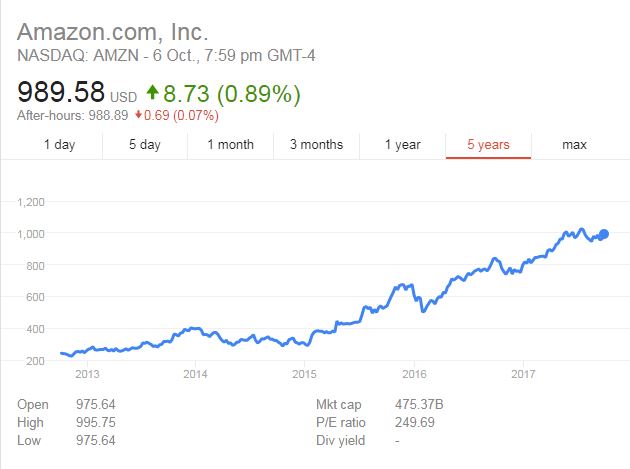
Amazon’s stock price has certainly seen some benefit of increased profit over the years (in other words, their stock price is going up, up and up).

Can You Imagine The Possibilities?

With the right step by step, repeatable framework, you can do the same thing as Amazon and completely disrupt the industry that you’re in.  Part of disrupting your industry is the secret of One Step Flow, but there are five other steps in the Lean CX Score.

Imagine what you could do with all six?  Maybe it’s about time you got the book.

Get all the infographics here

Lean CX ScoreGet "The Lean CX Score" now, and start creating disruptors in your industry that completely annihilate your competition.

Oh and good news!  You'll be improving the speed, morale and engagement of your teams at the same time.  Get the Lean CX Score now.
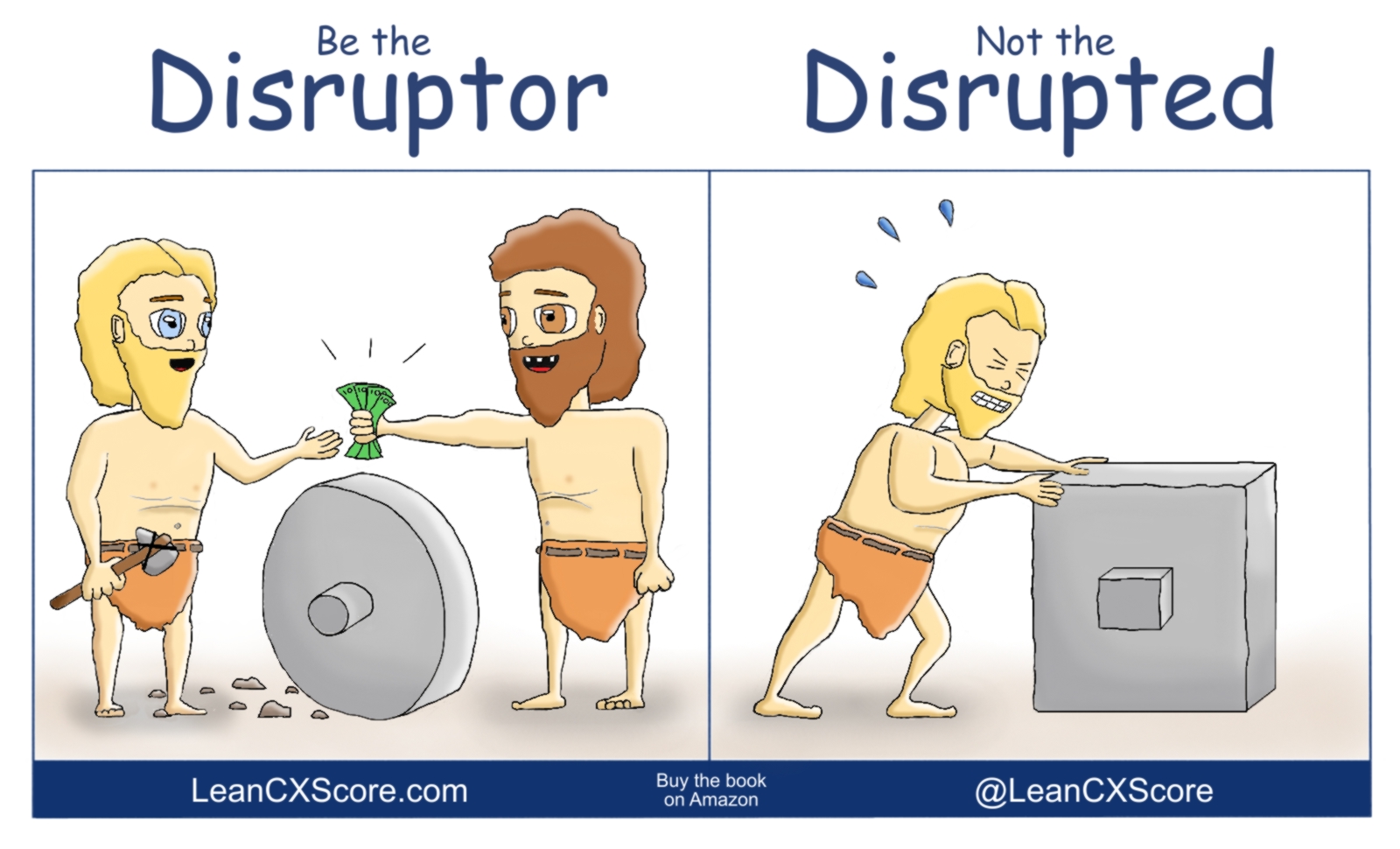
#3 Lean CX Comic – Be The Disruptor, Not The Disrupted

#3 Lean CX Comic – Be The Disruptor, Not The DisruptedLean CXClick to Enlarge – or – Right Click and “Save As” to save.

See all the Lean CX Comics here

You are either becoming a disruptor, or you’re about to be put out of business by one.  So many industries have already been completely changed in the past 10 years, and the disruption is not going to stop.  If you don’t discover a formula now for creating disruptive products and services yourself, there’s a good chance your team or business won’t be around to see the next 10 years.

But what exactly is a disruptor?  A disruptor, as we see it, is something that changes the rules of the game, so that it is seen as better, can scale and grow faster, and sell more than anything in its industry.  As a result, other brands and products fall by the wayside, and ultimately disappear, often within a matter of only a few years.

The good news is, the Lean CX Score is an exact framework for creating disruptors out of normal products or services.  In other words, you can be the Amazon, instead of the Borders.  You can be the Netflix, instead of the Blockbuster.  You can be the Facebook, instead of MySpace.  And using these steps actually improves your team speed, morale and engagement at the same time.  The rewards are incredible.  It’s time to get your copy of the Lean CX Score today.

See all the Lean CX Comics here

Lean CX ScoreGet "The Lean CX Score" now, and start creating disruptors in your industry that completely annihilate your competition.

Oh and good news!  You'll be improving the speed, morale and engagement of your teams at the same time.  Get the Lean CX Score now.