Tag Archives: customer experience

Lean CX Infographics

Click the pictures for more info

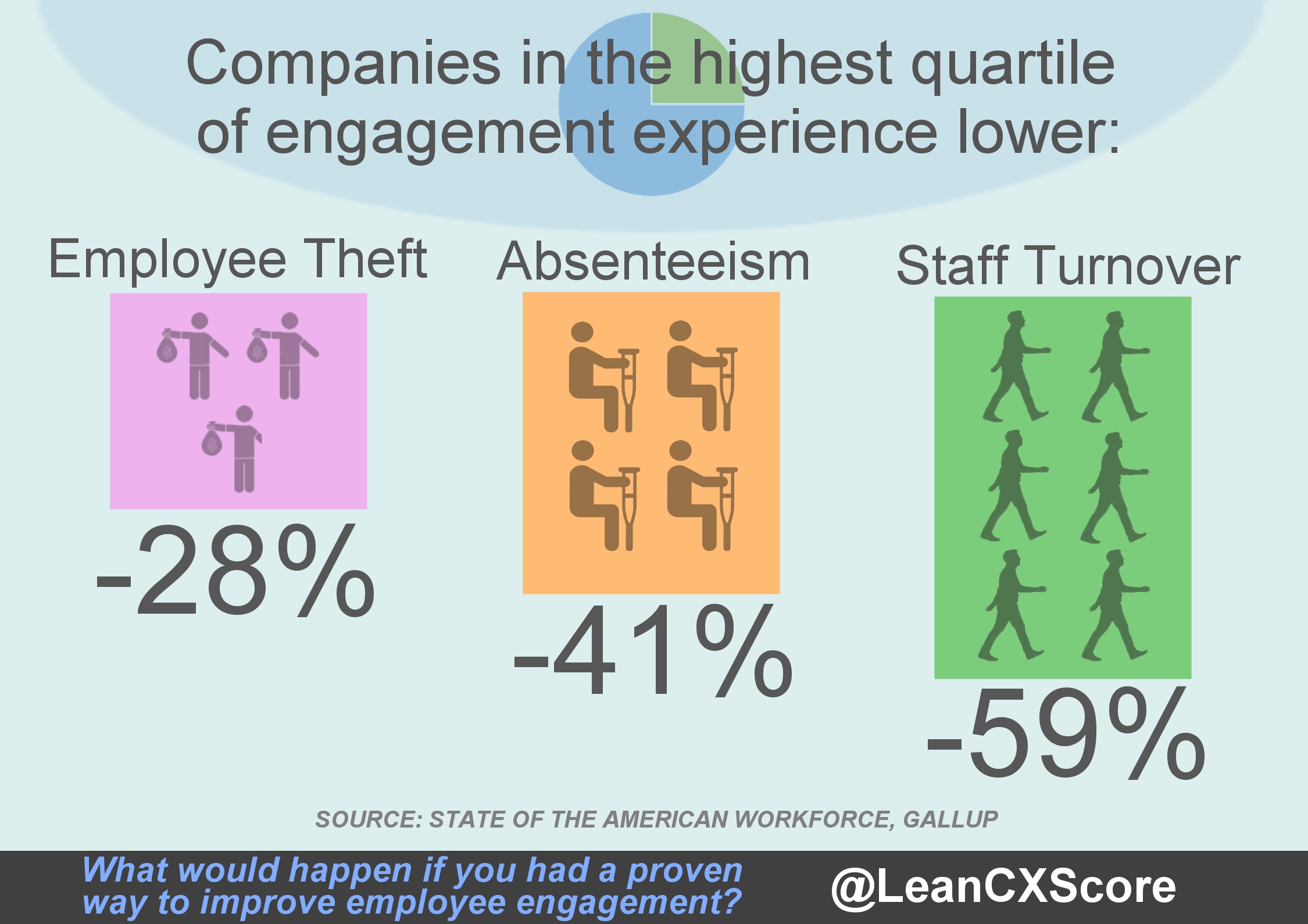
Lean CX Infographic Employee Engagement Benefits

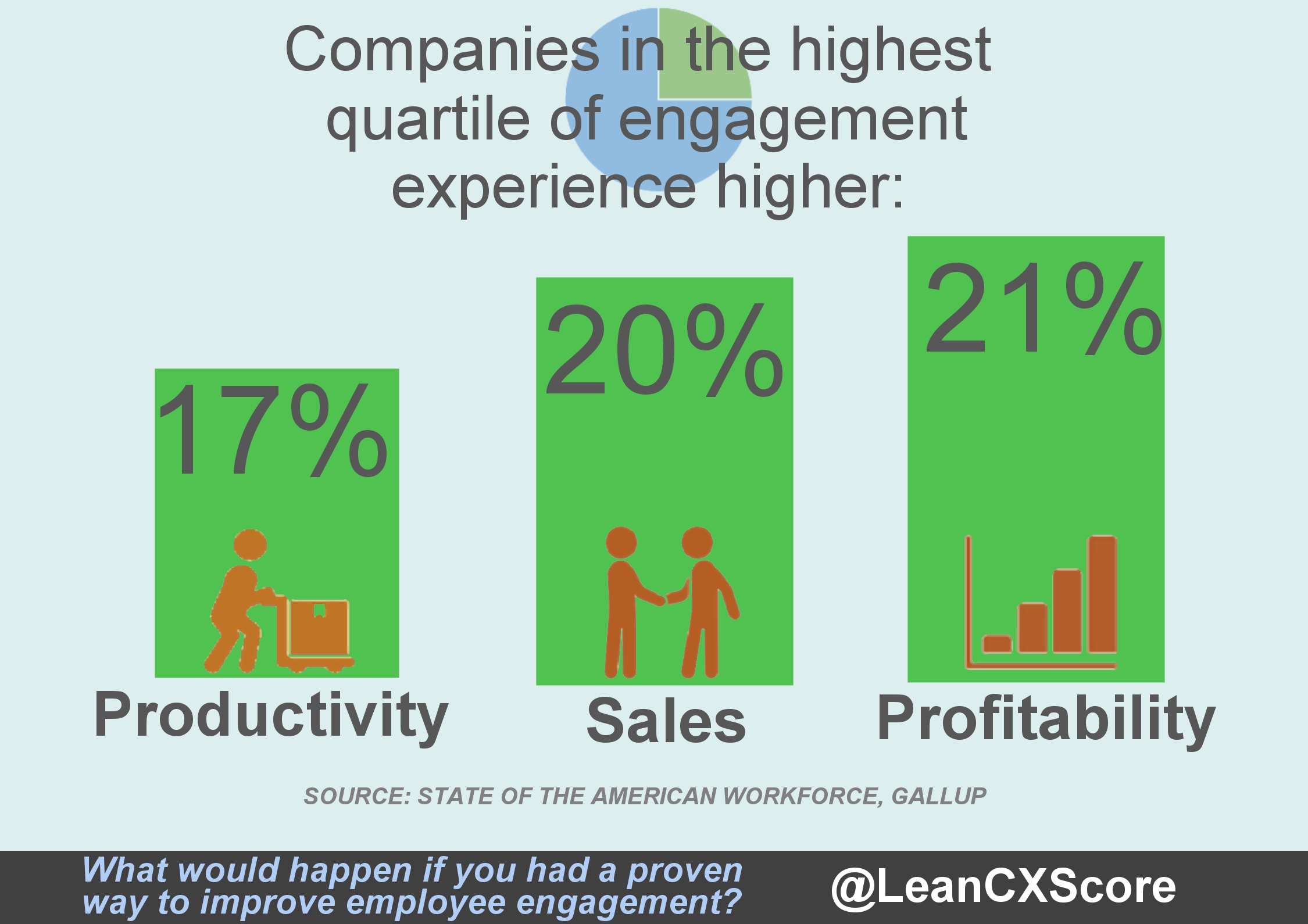
Lean Infographic Employee Engagement Benefits

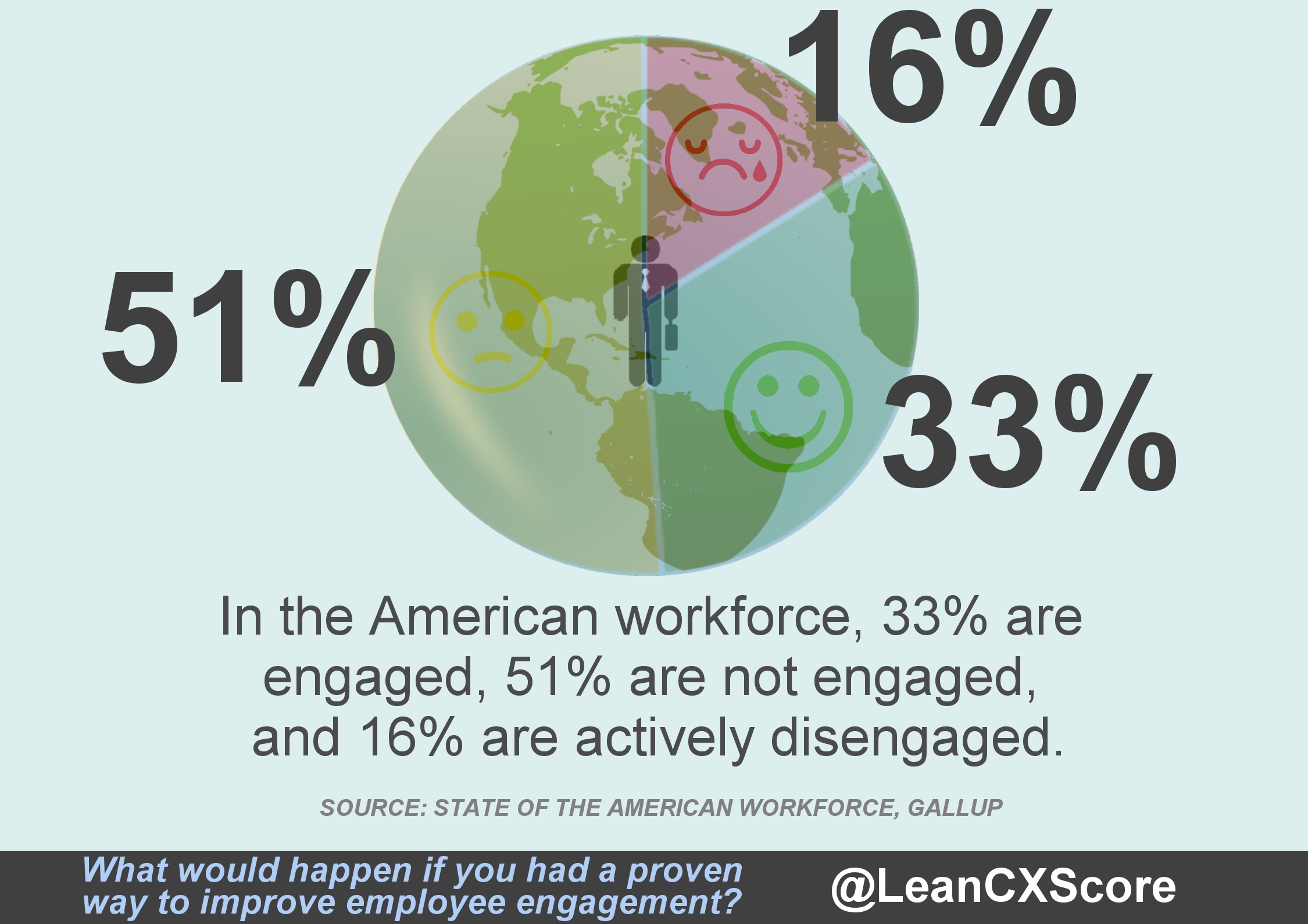
Lean CX Infographic Employee Engagement

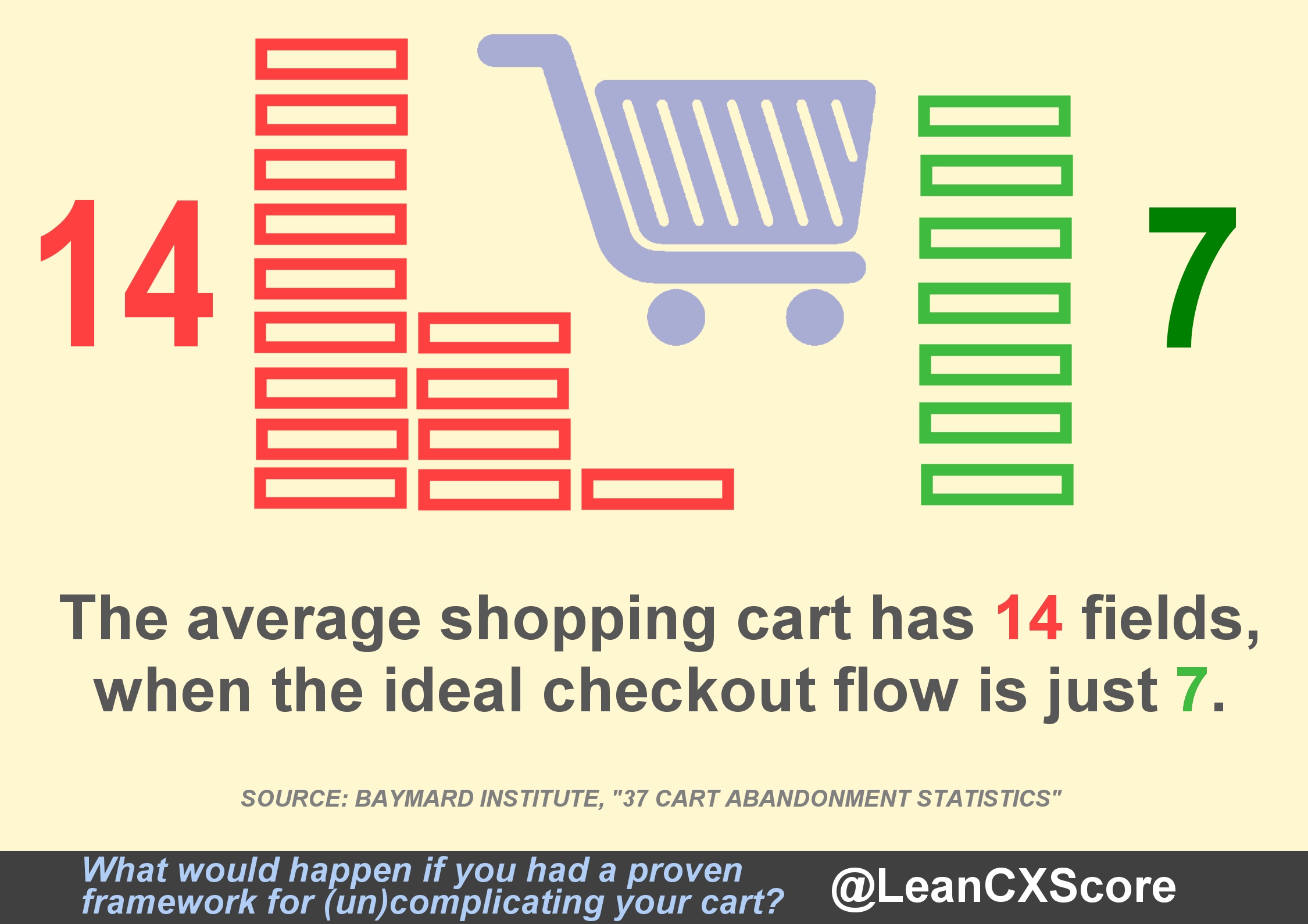
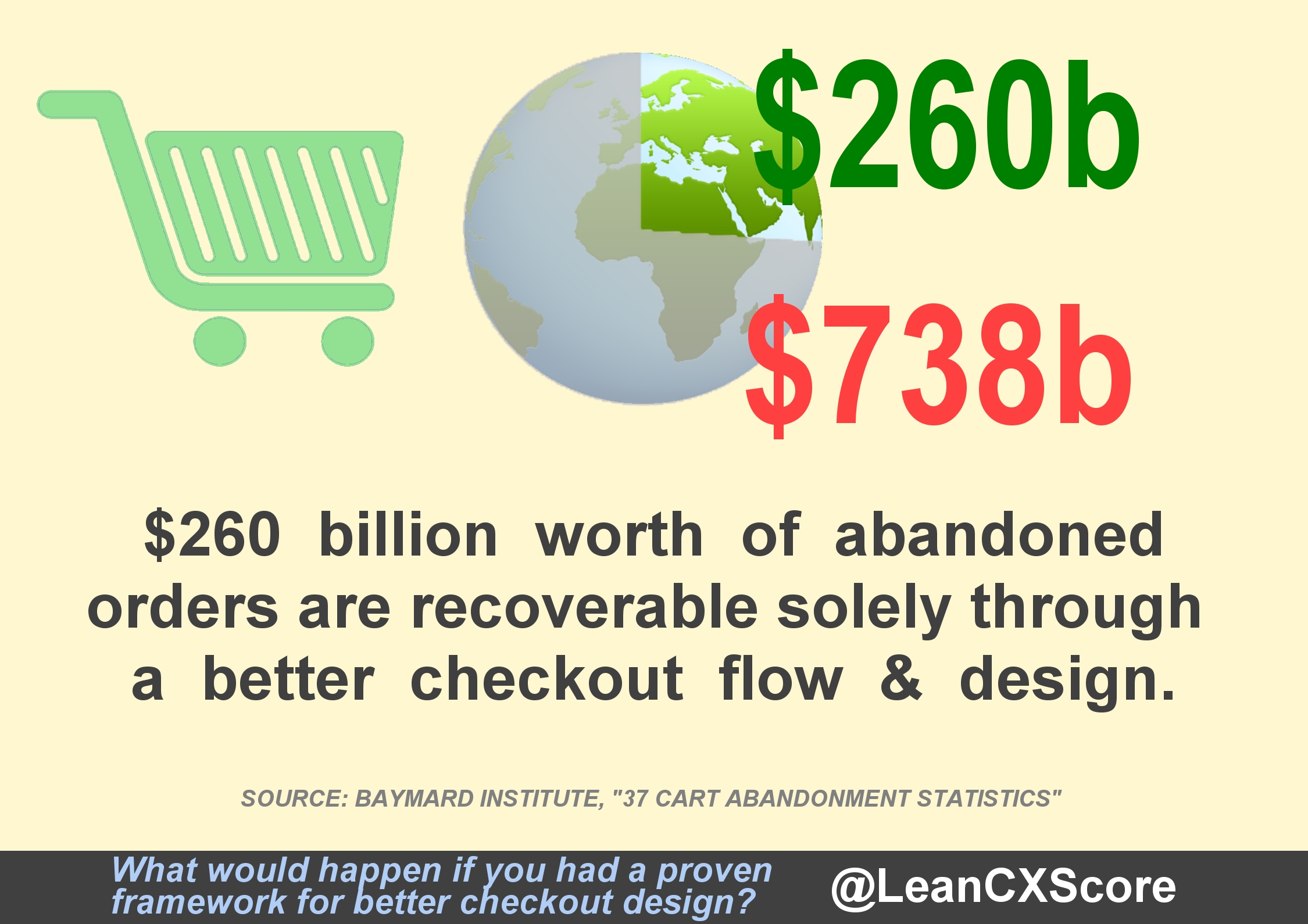
Lean CX Infographic Shopping cart abandonment Form Fields

Lean CX Infographic Shopping cart abandonment

Lean CX Infographic Shopping cart abandonment

Online shopping cart abandonment

Lean CX ScoreGet "The Lean CX Score" now, and start creating disruptors in your industry that completely annihilate your competition.

Oh and good news!  You'll be improving the speed, morale and engagement of your teams at the same time.  Get the Lean CX Score now.

Lean CX Comics

Click the pictures for more info

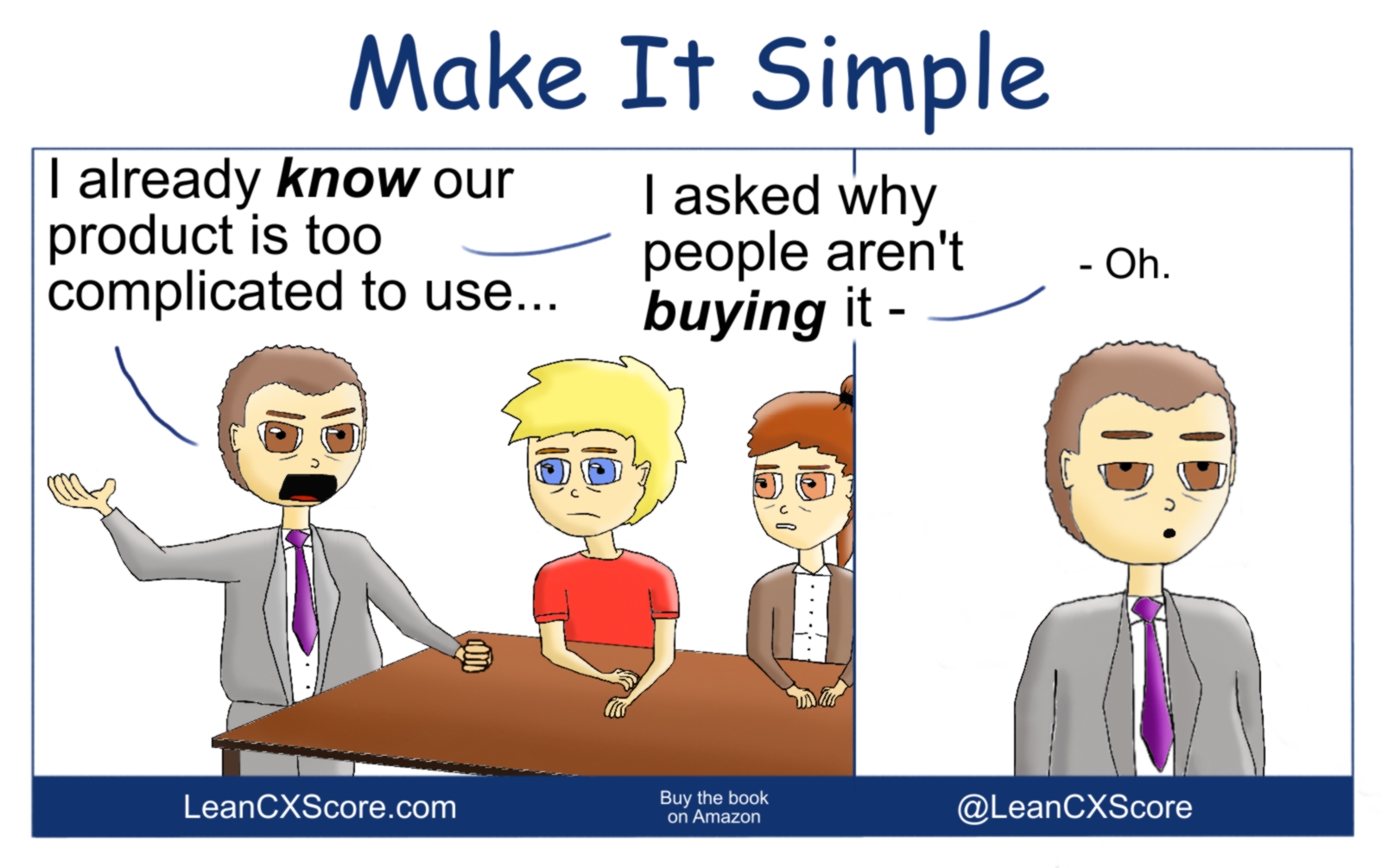
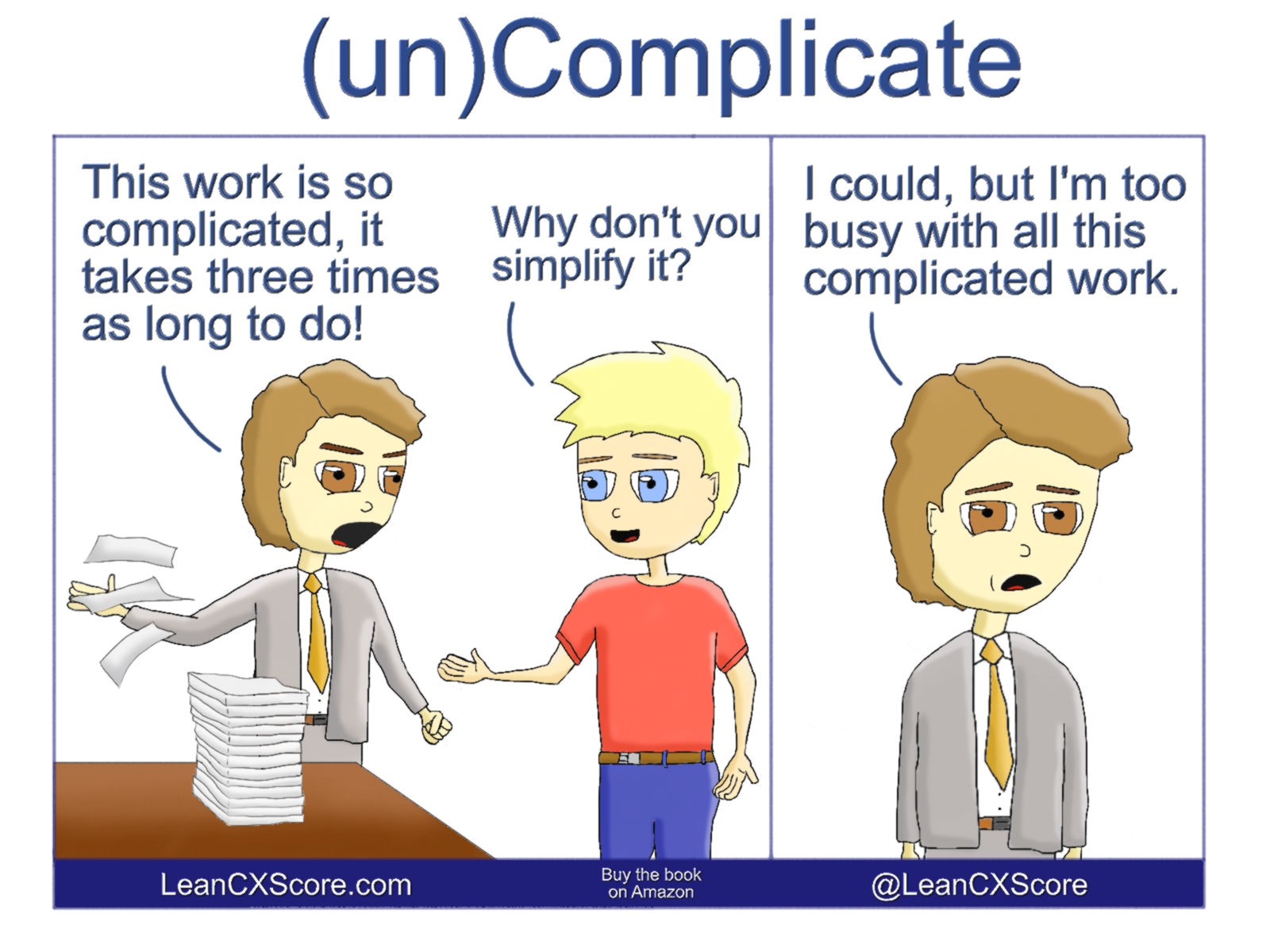
Lean Comic Complicated Work

Lean Comic

Lean comic rework

Lean CX, Customer Experience
Lean CX Comic, Customer Experience

Lean CX, Customer Experience


Lean CX ScoreGet "The Lean CX Score" now, and start creating disruptors in your industry that completely annihilate your competition.

Oh and good news!  You'll be improving the speed, morale and engagement of your teams at the same time.  Get the Lean CX Score now.

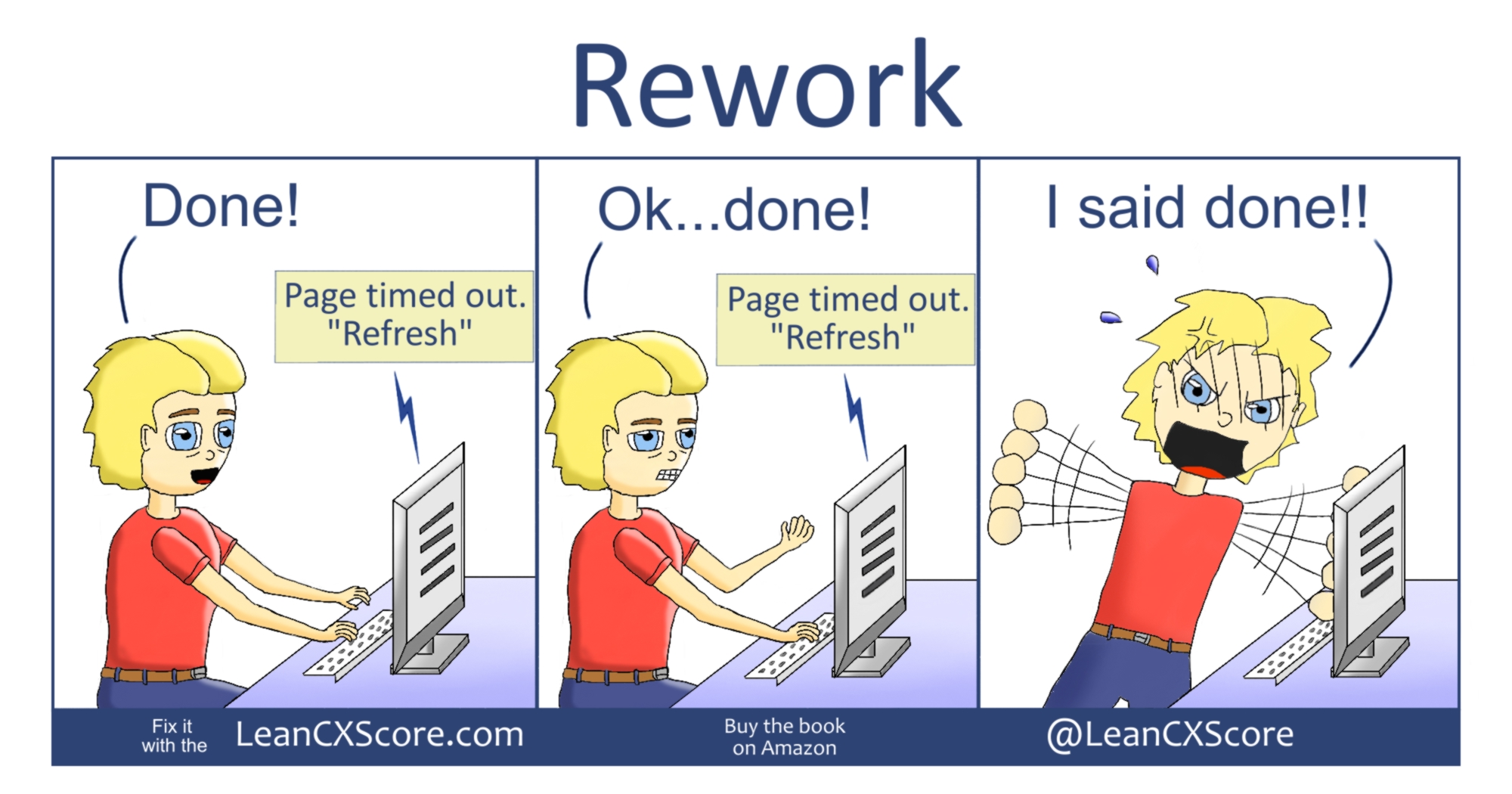
#4 Lean CX Comic – Remove Rework

#4 Lean CX Comic – Remove ReworkLean comic rework

Click to Enlarge – or – Right Click and “Save As” to save.

See all the Lean CX Comics here

Have you ever had to do something, and then do it over again?  Maybe the first time wasn’t too bad, but by the third or forth time you have to redo something you might be just about ready to rage-quit.  This kind of thing is happening to your customers – and guess what?  When it happens they are ready to leave, and when they leave they are neither buying your product nor likely to return.

There are certain scenarios and behaviours that drive your customers away, and they have been captured in the five Lean CX Wastes within the Lean CX Score Framework.

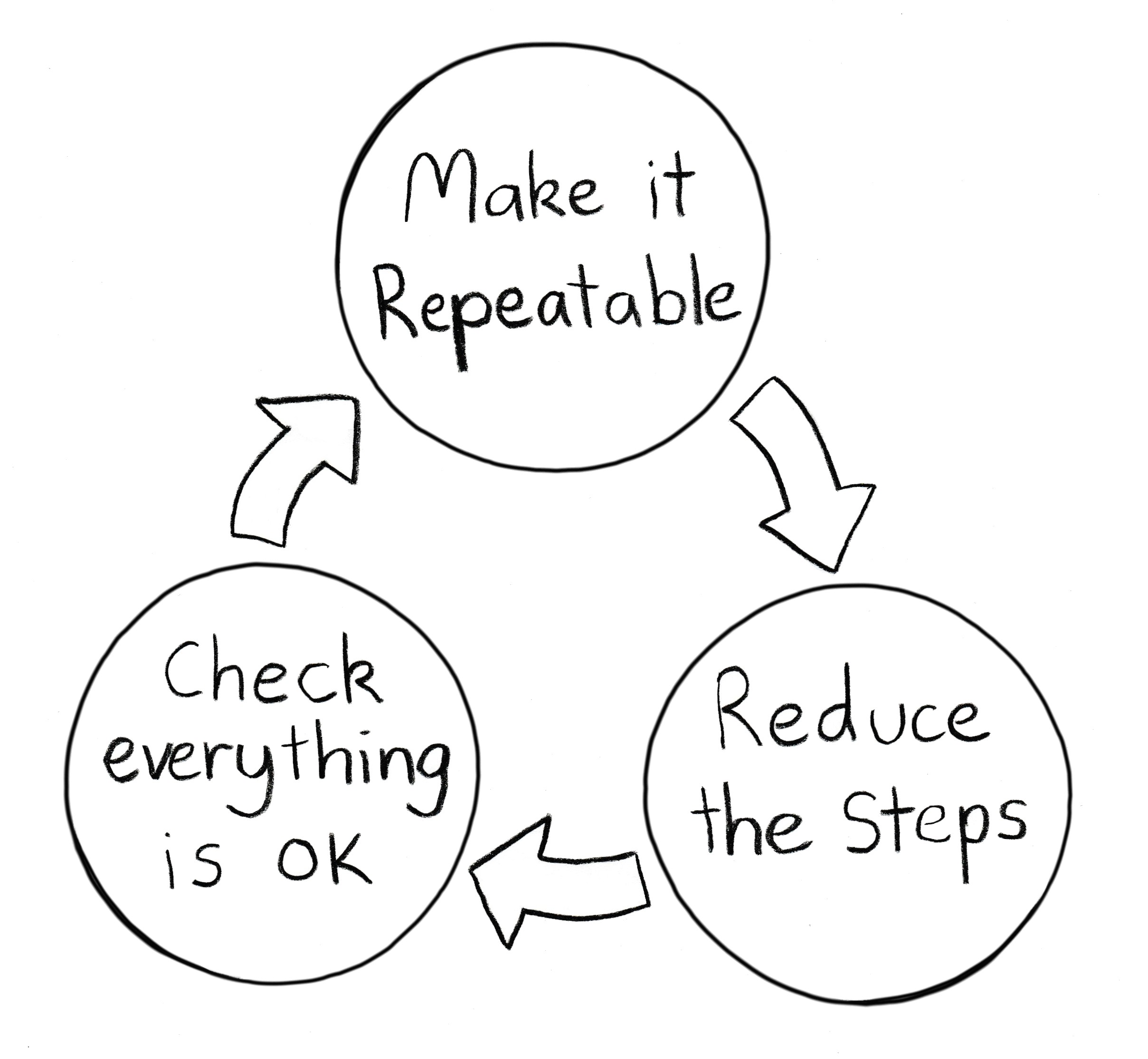
“Rework” is one of those Lean CX Wastes – wastes that drive your customers and your team and employees crazy.  Having to redo things is also a huge cost to businesses every year – in many cases simply by reducing the amount of times you have to redo something by one can cut a company’s cost and improve its speed by 30 to 50%.

Rework – Has It Ever Happened To You?

More importantly, you and I can most likely relate to Rework because it has happened to us before.  Has your boss ever asked you to redo something thirty times, with micromanaged “improvements” that don’t actually move the needle of improvement that much?  Or have you ever had to call a company back three, four, five times or more just to get what they should have been able to give you the first time?

Or what about a website, where is wasn’t clear what you needed to do to get what you wanted, so you had to click a dozen different places before you discovered the “right” thing?

All of this adds up to wasted time, wasted effort, which is why it is one of the Lean CX “Wastes”.

Lean CX Removes those Lean CX Wastes

If gaining and keeping customers is important to you (and if you’re in the business of making a profit, it should be), then removing the Lean CX Wastes will definitely be important to you.  The Lean CX Wastes are:

  1. Rework
  2. Excessive Steps
  3. Not getting what I want
  4. Excessive Hand-offs
  5. Waiting

They can be remembered with the acronym: RENEW (or NEWER).  The five Lean CX Wastes are outlined in the book: The Lean CX Score, by David McLachlan, but this comic and article should give you a basic outline of one of the most important ones: Rework.

See all the Lean CX Comics here

Lean CX ScoreGet "The Lean CX Score" now, and start creating disruptors in your industry that completely annihilate your competition.

Oh and good news!  You'll be improving the speed, morale and engagement of your teams at the same time.  Get the Lean CX Score now.

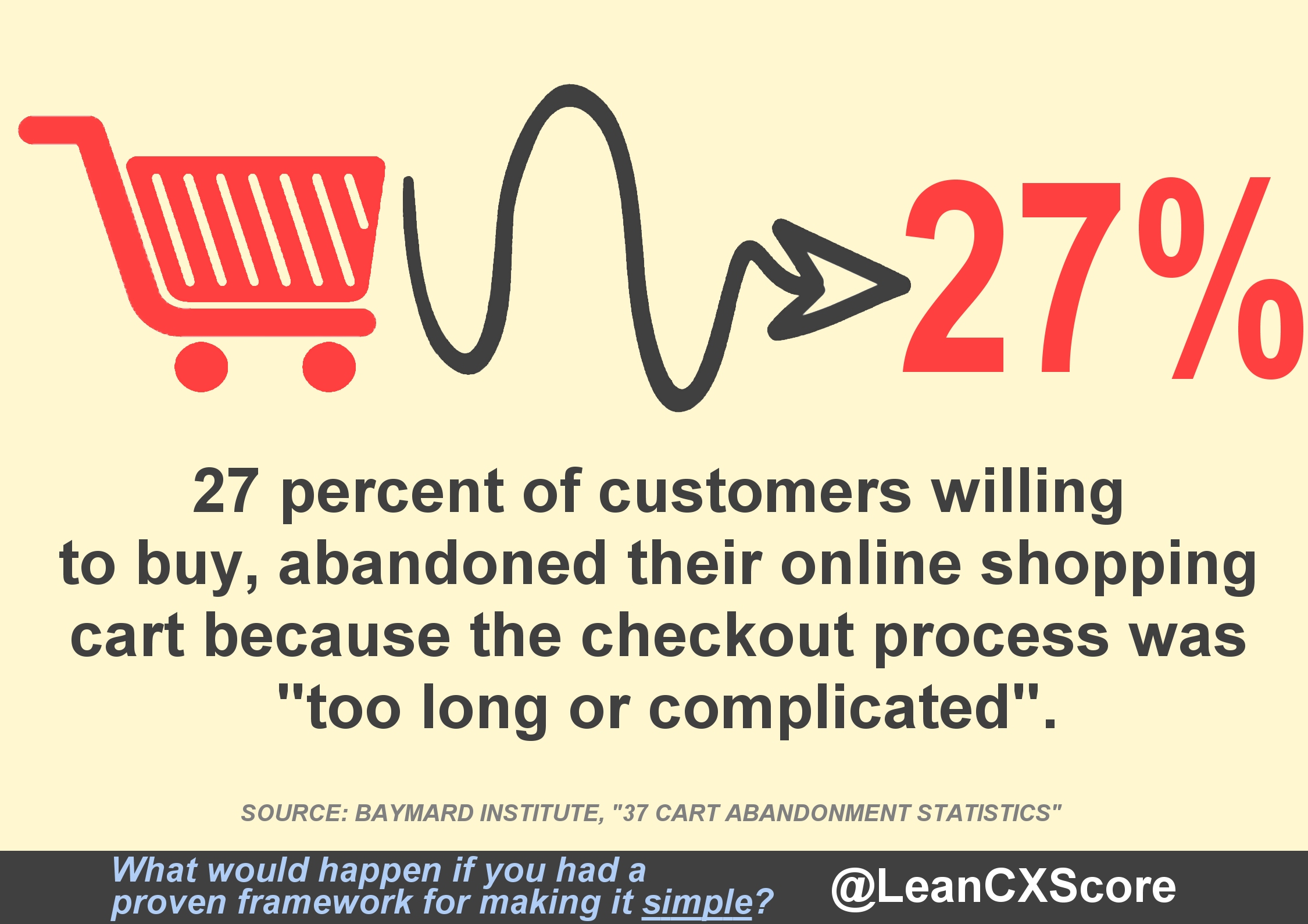
Lean CX Infographic – 27% Of Checkouts Are Too Long Or Complicated

Lean CX Infographic Shopping cart abandonment

Get all the infographics here

Your Complicated Process Is Driving Customers Away

Have you ever tried to buy something online recently?  With online business taking off like never before, there is a good chance that your answer is “Yes”.

And just like 69% of people, there’s also a good chance that you’ve tried to buy something online but abandoned your shopping cart before you were able to buy.

Did you know that 27 percent of those people who abandoned their online shopping cart, and who weren’t just browsing, abandoned it because the checkout was too long or complicated?  That’s a lot of people  leaving you at the most critical time, and the good news is “long and complicated” is actually something we can fix.

The Lean CX Score Fixes “Long and Complicated”

What would it mean to you if you had a proven, step-by-step framework for reducing that time and complexity in your checkout experience?  For one (as we’ve just seen), you would have a good chance of improving the online sales to your business by up to 27% or even more, which would mean a very tidy jump in profit for you too.

The Lean CX Score is that proven framework.  Revealed in the book of the same name by David McLachlan in 2017, the step-by-step framework of Lean CX combines the most important asset of your business (your customers, who pay your bills by buying your product or service, remember?), and Lean or the Toyota Production System, which is one of the most incredible customer-centric improvement methods of the last century.  Lean CX has modified both in a ground breaking way to suit Customer Experience and white collar jobs, reduce time and improve ease of use.

Reducing Waste Improves Speed and Happiness 

The Lean CX Score outlines five Customer Experience “wastes” – common scenarios that when you fix will have customers clamouring to buy from you.  Just a few of those wastes that you need to remove are:

  1. Waiting
  2. Extra Steps
  3. Extra Hand-offs, and;
  4. Rework

While reading the book will give you the full outline of those Lean CX wastes and how to remove them by using the Lean CX Score, you can get an idea of them just with the list above.  Let’s take a look:

Rework, or having to redo things, can easily happen on an Online Shopping Cart experience when you have to enter your payment details more than once, or after making a mistake, or having to refresh a form that times out.

Extra Steps could be extra form fields that aren’t really necessary, or that could easily be reduced.  In fact Amazon got rid of its form fields completely with its “One Click Buy”.  How is that for reducing extra steps?

Excessive Hand-offs could be too many online screens to travel through, where further mistakes can be made.

Are You Ready To Improve Speed and Make Things Easy?

The Lean CX Score is the first book of its kind, that completely outlines an exact step-by-step framework for improving the speed and simplicity of your customer’s experience, helping them buy easily and buy more often.

When you’re ready to profit more, enjoy more happiness and easier work, then I highly recommend you get the book.

Get all the infographics here

Lean CX ScoreGet "The Lean CX Score" now, and start creating disruptors in your industry that completely annihilate your competition.

Oh and good news!  You'll be improving the speed, morale and engagement of your teams at the same time.  Get the Lean CX Score now.

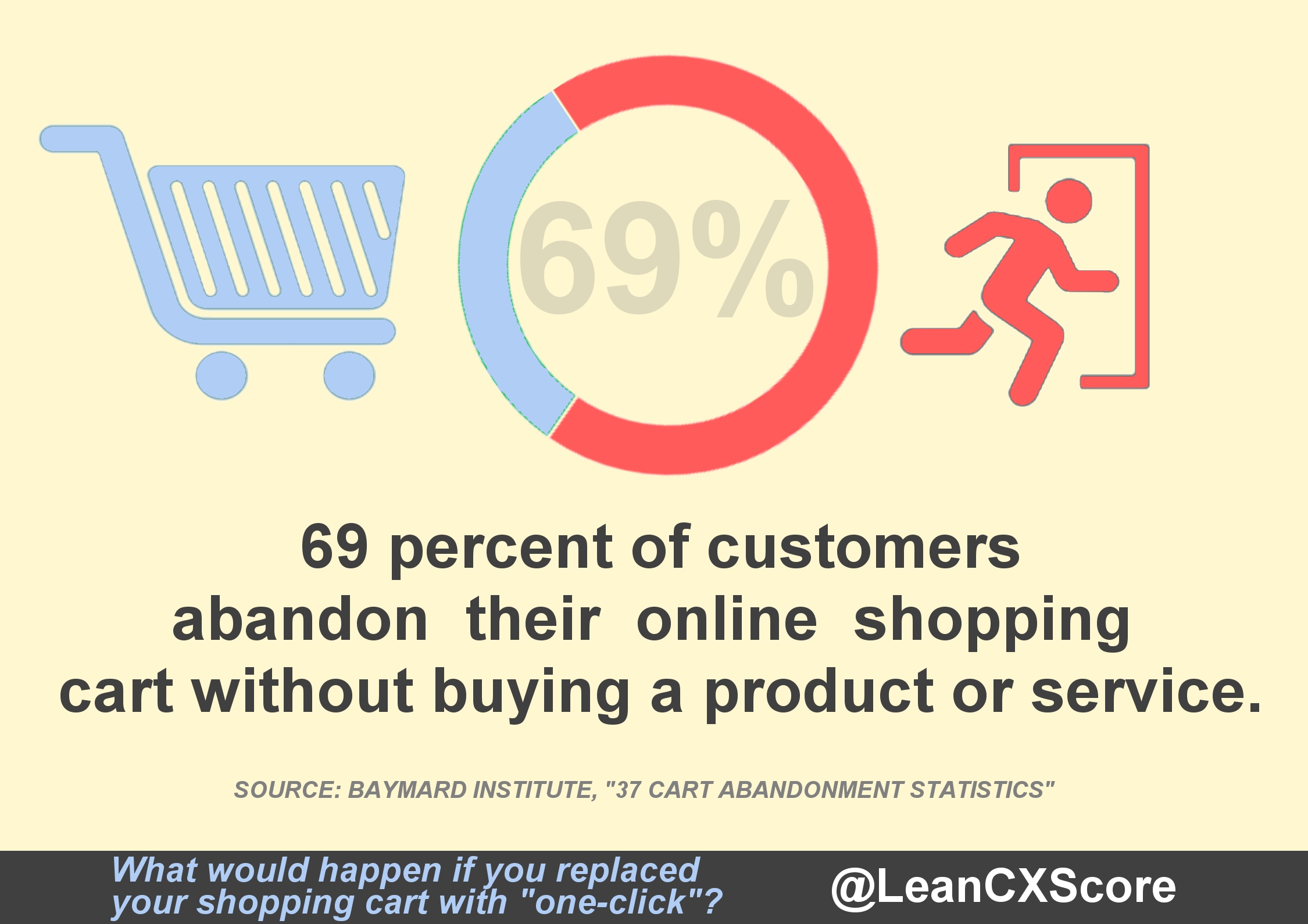
Lean CX Infographic – Online Shopping Cart Abandonment at 69%

Online shopping cart abandonment

Get all the infographics here

69% Of Customers Are Leaving You At The Most Important Time

Online business is booming.  Everywhere you look around the world there are businesses ranging from small startups, to huge corporations, to single parents selling home-made items out of their garage, and they’re all moving their sales channels online.

If you are in one of those businesses, this infographic should terrify you.  The Baymard Institute found that 69% of customers were abandoning their online shopping carts instead of purchasing the product or service, leaving at the most critical moment for a business in the customer journey – the moment where they actually fork over their cold hard cash.

Businesses Need Money, And Customers Have Money

It seems simple, doesn’t it?  Customers pay you money for a product or service, and you use that money to operate your business and (hopefully) turn a profit.  The more customers you have, the more money they pay you.  The best businesses in the world finds ways to serve millions of people and make billions of dollars in return.

Customers can be business to business (B2B), or business to customer (B2C), or any other type you could think of, but the point is that so many businesses forget about that crucial element – where the money comes from – that lifeblood of any business endeavour.  And the key that unlocks that door is Customer Experience, and more specifically Lean CX, but I can’t tell you about that just yet.

This Knowledge Can Make You A Disruptor

So how can this knowledge help you, then?

We know that 69% of customers abandon their online shopping carts, but what can you do with that?

They say “Knowledge is power”,  but let’s be honest – you and I already know that knowledge alone is not enough.  Having knowledge is definitely a start though – after all, most people you know or work with don’t know this information and in the land of the blind, the one eyed person is king.

No, knowing this is not enough, unless you have a repeatable framework – a lens to look through – that can give you the right action to take.  That framework is the Lean CX Score.

The Lean CX Score is a set of six repeatable steps – six questions you can ask that apply to any business endeavour, any product or service and any task your team provides.   Step two of the Lean CX Score just happens to be a little thing called “One Step Flow”.

One Step Flow – The Key To Reducing 69% Online Shopping Cart Abandonment

When you have this framework – this repeatable framework you can apply to anything – then suddenly the Baymard Institute research becomes clear.  Suddenly you are a genius, instead of another disrupted company.

One Step Flow asks us “Can I get what I want in One Step?”

That means no logging in, no filling out details, no getting your credit cards, no forgetting your password, no checking your balance, and no additional steps that would cause a customer to abandon.  Can you think of someone else who created a one-step customer experience?

Amazon.

Their online checkout features a little thing called “One Click Buy”, where a customer is already logged in, usually via an app, and only has to click the buy button and the rest is taken care of.  No address details, no payments details, it’s already done.

Now – knowing that 69% of customers abandon their online shopping cart, Amazon effectively got rid of their shopping cart by using the Lean CX Score step of “One Step Flow”.  What could that mean for their sales?  Is it possible they could increase by 10%?  Maybe 30%?  What about the full 69%, as word of mouth gets around that they are easy to buy from, and costs are lowered because their process is so streamlined?

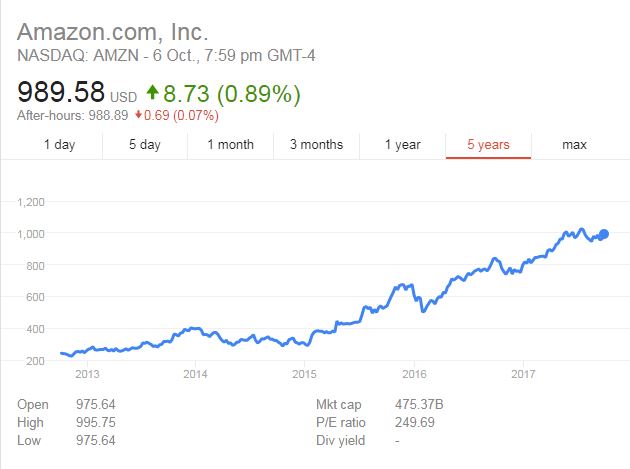
Amazon’s stock price has certainly seen some benefit of increased profit over the years (in other words, their stock price is going up, up and up).

Can You Imagine The Possibilities?

With the right step by step, repeatable framework, you can do the same thing as Amazon and completely disrupt the industry that you’re in.  Part of disrupting your industry is the secret of One Step Flow, but there are five other steps in the Lean CX Score.

Imagine what you could do with all six?  Maybe it’s about time you got the book.

Get all the infographics here

Lean CX ScoreGet "The Lean CX Score" now, and start creating disruptors in your industry that completely annihilate your competition.

Oh and good news!  You'll be improving the speed, morale and engagement of your teams at the same time.  Get the Lean CX Score now.

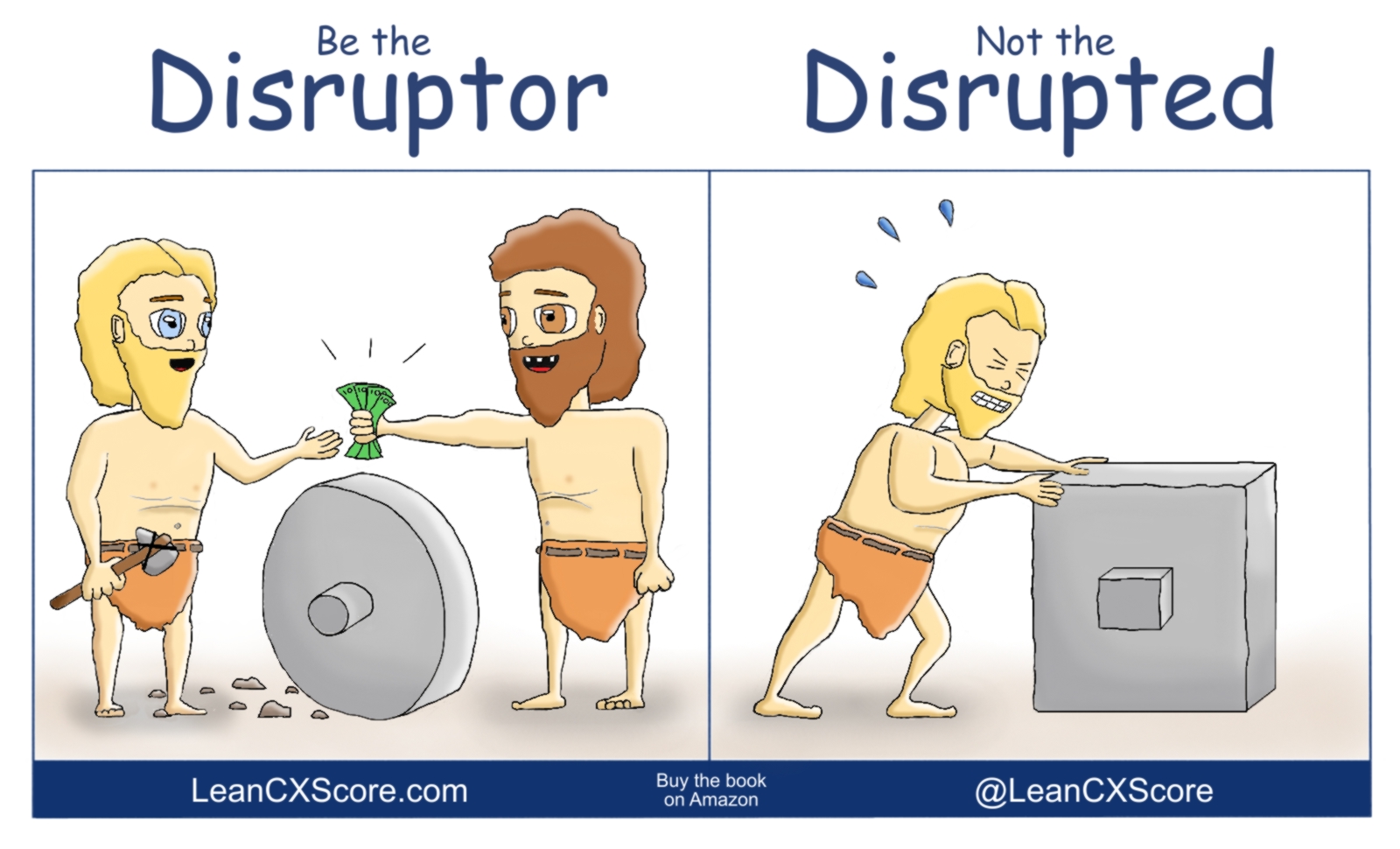
#3 Lean CX Comic – Be The Disruptor, Not The Disrupted

#3 Lean CX Comic – Be The Disruptor, Not The DisruptedLean CXClick to Enlarge – or – Right Click and “Save As” to save.

See all the Lean CX Comics here

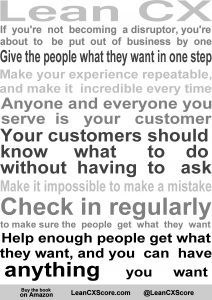
You are either becoming a disruptor, or you’re about to be put out of business by one.  So many industries have already been completely changed in the past 10 years, and the disruption is not going to stop.  If you don’t discover a formula now for creating disruptive products and services yourself, there’s a good chance your team or business won’t be around to see the next 10 years.

But what exactly is a disruptor?  A disruptor, as we see it, is something that changes the rules of the game, so that it is seen as better, can scale and grow faster, and sell more than anything in its industry.  As a result, other brands and products fall by the wayside, and ultimately disappear, often within a matter of only a few years.

The good news is, the Lean CX Score is an exact framework for creating disruptors out of normal products or services.  In other words, you can be the Amazon, instead of the Borders.  You can be the Netflix, instead of the Blockbuster.  You can be the Facebook, instead of MySpace.  And using these steps actually improves your team speed, morale and engagement at the same time.  The rewards are incredible.  It’s time to get your copy of the Lean CX Score today.

See all the Lean CX Comics here

Lean CX ScoreGet "The Lean CX Score" now, and start creating disruptors in your industry that completely annihilate your competition.

Oh and good news!  You'll be improving the speed, morale and engagement of your teams at the same time.  Get the Lean CX Score now.

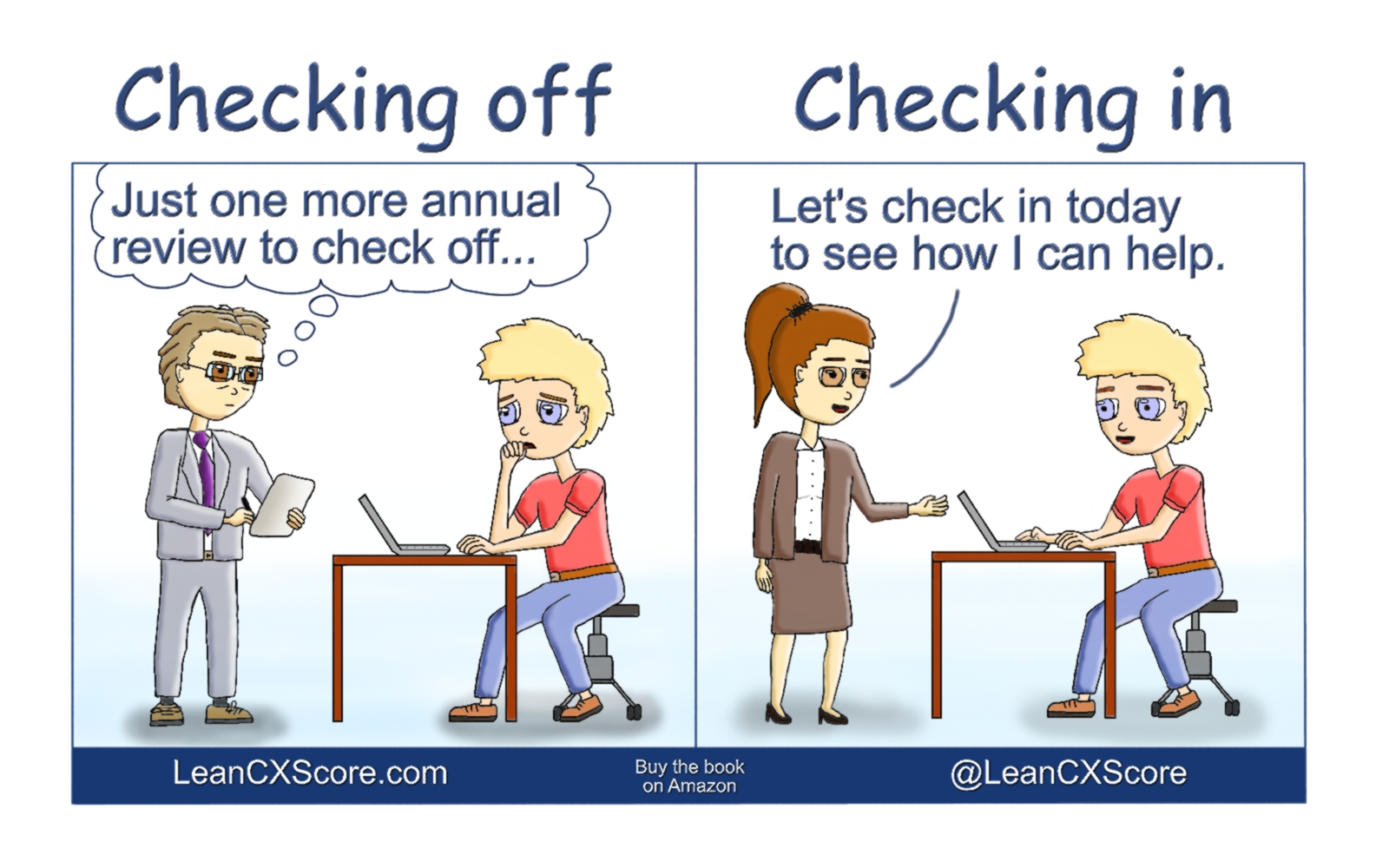
#2 Lean CX Comic – Are You Checking Off, Or Checking In?

#2 Lean CX Comic – Are You Checking Off, Or Checking In?Lean CX Comic 2Click to Enlarge – or – Right Click and “Save As” to save.

See all the Lean CX Comics here

It’s tempting to forget about our team and our customers, and just assume they are getting what they want or doing OK.  But studies have shown that Leaders who check in with their team at least once a week see increased engagement scores of up to 27%.

Engagement also has an effect on company revenue and profit, with companies in the highest quartile for engagement seeing twice the revenue on average as those in the lowest quartile for engagement.

And of course, “checking in” with our customer to see if they got what they wanted has been proven to show remarkable rewards.  You may have heard of a little thing called the Net Promoter Score (unless you have been travelling through a remote desert).  Well the Lean CX principle behind the Net Promoter Score is – you guessed it – Checking In.

Want to see the other five Lean CX Score steps, that create disruptors and improve speed and morale?  Get the Lean CX Score book on Amazon now.

See all the Lean CX Comics here

Lean CX ScoreGet "The Lean CX Score" now, and start creating disruptors in your industry that completely annihilate your competition.

Oh and good news!  You'll be improving the speed, morale and engagement of your teams at the same time.  Get the Lean CX Score now.
Get the Lean CX Manifesto here:

Lean CX Manifesto

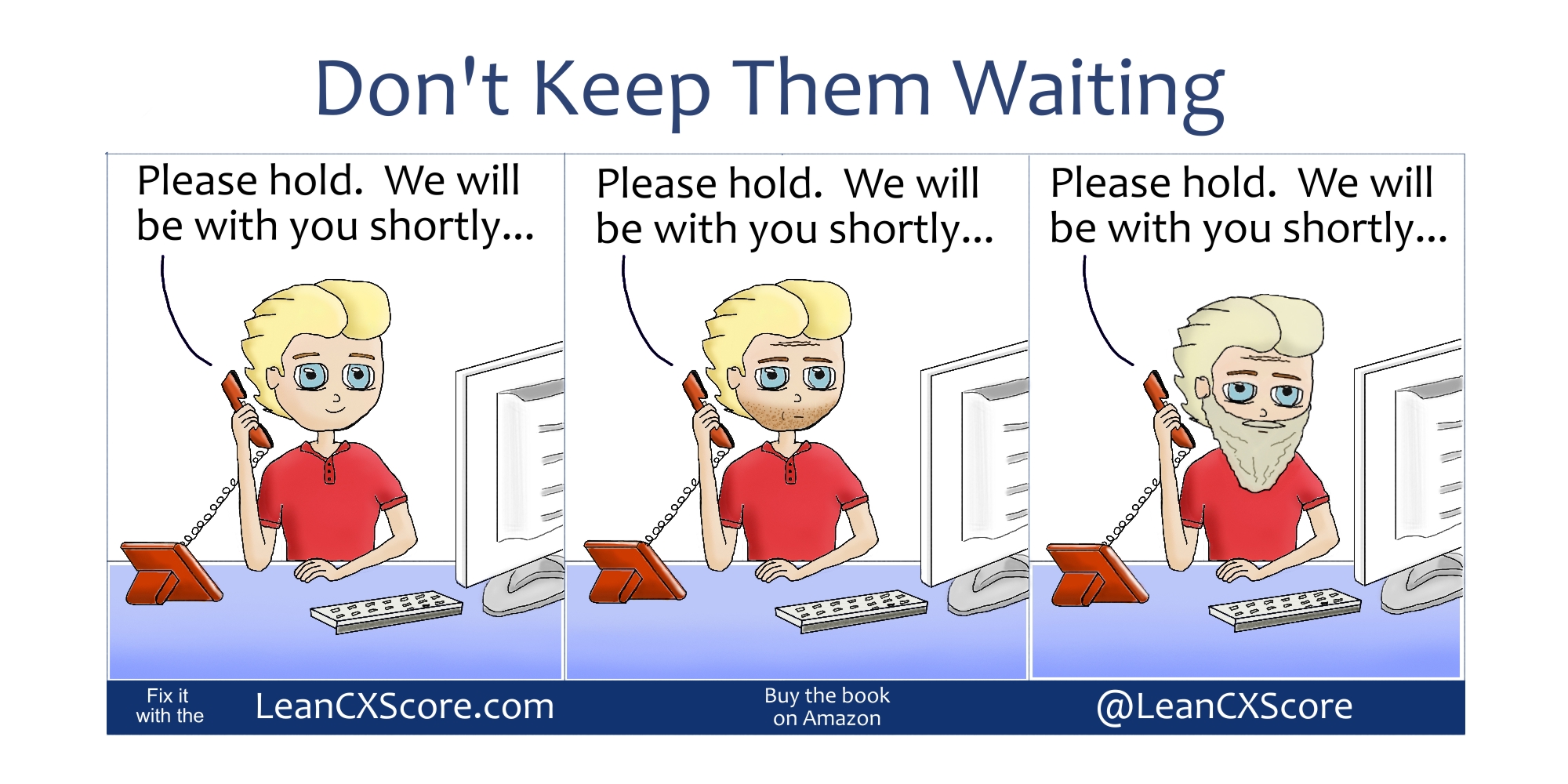
#1 Lean CX Comic – Don’t Keep Them Waiting

#1 Lean CX Comic – Don’t Keep Them Waiting

Click to Enlarge – or – Right Click and “Save As” to save.

See all the Lean CX Comics here

Waiting is one of the Lean CX Wastes.  Remove it and you are one step closer to giving both your customers and your team an incredible experience that makes them beg for more.  And you can remove waiting with the Lean CX Score.

The Lean CX Score is a set of six separate, actionable steps that will help you create disruptive products and services, instead of fearing them.  Gandhi said be the change you wish to see in the world, well I’m saying be the disruption you wish to see in the world!  And do it before it is too late.

See all the Lean CX Comics here

Lean CX ScoreGet "The Lean CX Score" now, and start creating disruptors in your industry that completely annihilate your competition.

Oh and good news!  You'll be improving the speed, morale and engagement of your teams at the same time.  Get the Lean CX Score now.
Get the Lean CX Manifesto here:

Lean CX Manifesto

Lean CX Score – What is Lean CX Anyway?

Lean CX ScoreThis is an excerpt from "The Lean CX Score."  Get your copy now and start creating disruptors that completely annihilate your competition.

Oh and good news!  You'll be improving the speed, morale and engagement of your teams at the same time.  Get the Lean CX Score now.

All Right, What Is CX Anyway?

If CX is the difference between success and failure, then let’s delve into it more deeply.

CX, as you might have guessed already, stands for Customer Experience.   As the world evolves into an era of global trade, a few new terms have also developed:  UX, CX, Lean, Agile, Kanban, AI, WIP and dozens more.  Often no one really knows what to do with them, even though everyone says to each other that they are really, really important.

So to make sure we’re all on the same page, let’s begin with a quick definition.

CX is Customer Experience.  It’s very popular, even if most people don’t really understand what it is.  If your business doesn’t have a framework for CX, then it is really just a broad description for everything to do with your customer and how they interact with you.  CX Specialists will often map out “Customer Journeys” and “Moments of Truth”, and other intricate terms that mean a lot to them.  The good news is that the Lean CX Score steps get right to the common denominator of all those things.  The even better news is, this book will give you a framework and a way to measure Customer Experience that actually works, so you can tell how well you are doing.

Often confused with CX is UX.  UX is User Experience.  It’s also a very popular term.  For a User to have an Experience, they need to be using something.  That something is most often a website – but it can be a product of yours too.  UX specialists often do up wireframes and look at where a user clicks or touches, in an effort to manage where a customer is going.  The good news here is, customers go where it is easy to go, and that’s exactly what the Lean CX Score is designed to do.

Finally, let’s not forget Customer Service, which is service given to your customers by an actual person.  It used to be the largest part of CX, and it has shrunk with the use of technology.  But it still remains extremely important.

Because a person can have a “CX” without engaging in a website or product “UX” (but not the other way around), Customer Experience becomes the more important of the two.  And because feedback from Customer Service can help improve a product’s User Experience, the way they all interact looks like this:

Lean CX Difference between CX UX

Now, when we say “Customer”, who do we mean exactly?  Most people make the mistake of thinking that we are only talking about the end customer – our paying customer.  But customers exist within everything we do.  Customer is defined in the Oxford Dictionary as:

“A person of a specified kind with whom one has to deal.”

In other words – anyone you provide a service to, whether it’s within your company or outside your company, can be classed as your customer: your boss, your team, other departments or more.  Improving those interactions often improves your job prospects (makes you more employable), your business (brings you more customers), and your bottom line (makes you more money).

More chapters from The Lean CX Score book:

Lean CX ScoreThis is an excerpt from "The Lean CX Score."  Get your copy now and start creating disruptors that completely annihilate your competition.

Oh and good news!  You'll be improving the speed, morale and engagement of your teams at the same time.  Get the Lean CX Score now.

Introducing The Lean CX Score by David McLachlan

“I am absolutely thrilled to introduce the Lean CX Score, and an excerpt from the Introduction of the book below.  The book starts with a bang and never lets go, and even within this short piece of the Lean CX Score you will hear stories and see research with the power to help you create disruptive products and services.  I hope you enjoy it!”

– David McLachlan
Lean CX ScoreThis is an excerpt from "The Lean CX Score."  Get your copy now and start creating disruptors that completely annihilate your competition.

Oh and good news!  You'll be improving the speed, morale and engagement of your teams at the same time.  Get the Lean CX Score now.
Lean CX Score framework

Introduction

Tom Corley woke up early one morning and realised something incredible.

He had spent the past five years following more than 300 people with the aim of answering a very specific question, and he finally had the answer.  You see, Tom had always wanted to know if our habits – the things we did every day – really did have an effect on our lives.

More specifically, Tom wanted to know if there were certain habits that separated the country’s wealthiest people – with a net worth of $3.2 million or more, and those who were just getting by, with a net worth of $5,000 or less.

Was the difference to do with their family?  Was it where they lived?  Or where they went to school?  No, it wasn’t any of those things.  In fact, when Tom finally found it, it surprised even him.

The number one habit of the country’s wealthiest people was something that anyone could do, although most people don’t.  It was reading.  But not just any reading.  It was reading for self-improvement *1.

It was something that you are doing right now.

I told you this story because I believe by reading this book you are doing something special.  After all, how often is it that someone picks up a book like this?  It could have been that person you work with, the person browsing the books next to you or maybe someone else in your family.  But it was you.

Reading for self-improvement was also what I was doing, before the discovery of the Lean CX Score.  I was searching for answers, and I was searching for improvement just like you.  I read hundreds of books on ways to improve life and business, and in fields such as strategy, team building, personal psychology, business improvement and project management.

It’s no accident that this number one habit makes such a difference.  It works because the more you learn, the more people you can help.  And the more people you can help, the more you, too, are rewarded – with a better business, happier team-mates, more paying customers, a better income, and a happier life.

The most successful companies provide a service to thousands (if not millions) of people, and are rewarded with millions (or billions) of dollars in return.  Apple, Uber, Amazon, Zappos, Microsoft, Google, Netflix – the names may change but the principles stay the same.  It was in studying these companies that were a success that I discovered the six key things anyone can do to make their own lives a success.

These six key things not only created businesses that completely outdid their competition, but they also improved the morale, speed and productivity of normal teams and tasks as well.  It was something that needed to be revealed so all could benefit, instead of just a chosen few.

It was something that needed to be shared.

The Customer is Always Right… Right?

It needed to be shared because most people aren’t getting the full story, and even then, the information is often conflicting.

Take just two recent examples, both from first class institutions.  The Harvard Business Review revealed that while “delighting customers” was the focus of many CEOs and leadership teams, it wasn’t the key to keeping customers coming back.  Reducing their effort – the work they had to do to get their problem solved – was the real solution to repeated sales *2.

But research by a firm called Ebiquity took the opposite view, where they found in 2014 that 75% of customers who received a “delightful” customer experience were willing to spend more with the companies that gave it to them *3.

Which one is right?

You’ll have to read on for the answer.  But when you do, you will see exactly how this research works, and how you can use them both to seriously improve your own results.  We will use real life stories and research, and it will be a handy resource to keep and have all this information in the one place.

If you’re curious to learn more about it, let’s reveal a little piece of the Lean CX Score to get started.

What is the Lean CX Score?

The Lean CX Score is a set of six separate, actionable steps, all equally important to your CX.  Each step in the Lean CX Score has one question.  If you answer the question positively you get a point, but if you answer the question negatively you have some work to do to improve.  Five out of six points means you are delivering an outstanding customer experience.  Anything below that means you have an opportunity for greater profit by improving – or face the threat of your competition stealing your customers.  It’s that simple.

Here are the steps…

  • To see the rest of the Lean CX Framework, its research and stories, you can get the full Lean CX Score on Amazon now, and be the disruptor, not the disrupted!

More chapters from The Lean CX Score book:

Lean CX ScoreThis is an excerpt from "The Lean CX Score."  Get your copy now and start creating disruptors that completely annihilate your competition.
Oh and good news!  You'll be improving the speed, morale and engagement of your teams at the same time.  Get the Lean CX Score now.