All posts by David McLachlan

Leadership Quote – You Have to Start to be Great – Zig Ziglar

– See all the Leadership Quotes here –

“You don’t have to be great to start, but you have to start to be great.” – Zig Ziglar

Have you heard this leadership quote?

Zig Ziglar was an American author, salesman, and motivational speaker who lived from 1926 to 2012. He recorded one of the greatest sales training videos of all time in 1982 called “The Secrets of Closing the Sale”, from which many  sales teachers have since garnered their methods.
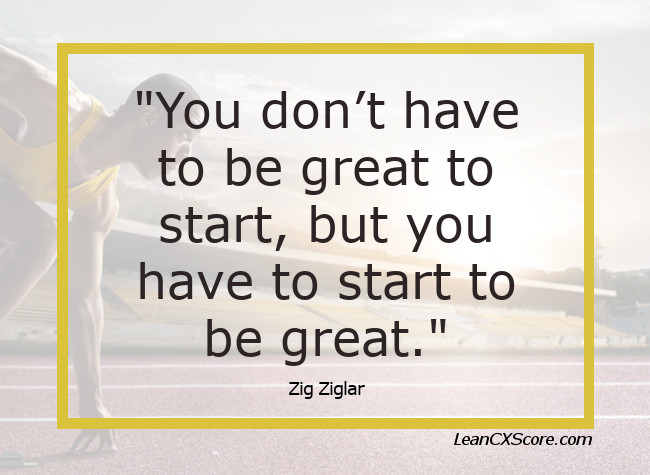
Ziglar Quote You Have To Start To Be Great

It’s Time To Get To Work

Zig Ziglar here is talking about making a start, taking some action. This is really excellent advice but, as anyone struggling with uncertainty or procrastination knows, it is easy to say and tough to do.

But there is a magic in starting, and it is this: When you start to do something, to create something or to put things out there in the world, people will respond. Maybe it’s not a lot of people at first, but even with a small few you can gather the feedback you need to improve.

By starting, you are discovering where your best results will be. You can follow the clues of what your customers respond to, what they buy, or what they watch or read. And when you adjust based on those clues, you are one step closer to success.

That is the road to greatness

Which is why Zig is saying you have to start to be great. That starting, creating, and adjusting is what leads you to greatness if you never, ever give up. But hundreds of thousands, perhaps millions of dreams have been lost thanks to people talking a good game but never taking action or seeing it through.

How many times has someone said, when talking about something at a party “I had that idea, that is now worth a million dollars (or more).” Whether it was a product, a business, a movie idea or something else, the fact that they had the idea is completely worthless unless they also had the work ethic and discipline to take action.

So what ideas do you have? And isn’t it about time you to that first, small step?

– David McLachlan

Get the Leadership Card Deck or the Lean CX Score Book:
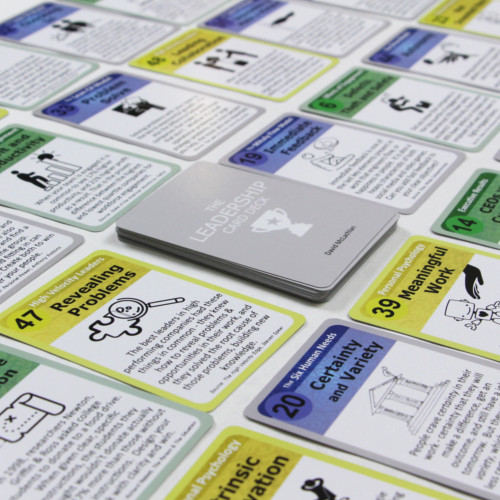
Leadership CardsView All The Leadership Cards (48)

- or - Have the Leadership Cards delivered for your next meeting

 

Lean CX ScoreGet "The Lean CX Score" now, and start creating disruptors in your industry that completely annihilate your competition.

Oh and good news!  You'll be improving the speed, morale and engagement of your teams at the same time.  Get the Lean CX Score now.

PMP Exam Questions – Practice Session | 12

– See all the PMP Exam Questions – 

PMP Exam Question Practice 12PMP Exam Question Session 12

In this series we will walk through five PMP Practice Exam Questions each day – a great way to set up your morning as you prepare to pass the PMP Exam. It is also useful for the CAPM exam, as the content is very similar.

We will also figure them out together, and you’ll see the thought process behind solving these PMP exam questions.

I hope you enjoy!


Question 1

You have been asked to prepare a document to gain the project sponsor’s sign off to access their function’s resources, that details the project goal and business case, high-level scope and requirements, high level dates and milestones, a high-level budget, and initial risk analysis. What are you creating?

A)  Project Management Plan
B)  Project Charter
C)  Risk Management Plan
D)  Lessons Learned

Question 2

You are working with the quality assurance manager of your project, where they are using a fishbone diagram to perform a cause and effect analysis for a problem you are working on to solve. What else is a fishbone diagram called?

A)  Ishikawa Diagram
B)  Value Stream Map
C)  Pareto Diagram
D)  Control Chart

Question 3

You are working in the quality assurance and testing phase of your project, where the test manager makes use of many different ways to assess project quality control. Who has the most responsibility for project quality control?

A)  The vendor
B)  The functional manager
C)  The project manager
D)  The project sponsor

Question 4

Your quality assurance manager on your project is using a technique in order to validate the scope and gain sign off on the deliverables. What is it called when they check the quality of the product against the quality requirements?

A)  Checking
B)  Assessment
C)  Evaluation
D)  Inspection

Question 5

You have noticed your project team starting to drift off, miss deadlines and make quality defects, and decide to learn a skill that will help bring the team together again. What will you research for information on how people, teams, and organizational units function in a project?

A)  Organizational Process Assets
B)  Organizational Theory
C)  Organizational Charts
D)  Organizational Structure

– See all the PMP Exam Questions – 

PMP Exam Questions – Practice Session | 11

– See all the PMP Exam Questions – 

PMP Exam Practice Questions 11PMP Exam Question Session 11

In this series we will walk through five PMP Practice Exam Questions each day – a great way to set up your morning as you prepare to pass the PMP Exam. It is also useful for the CAPM exam, as the content is very similar.

We will also figure them out together, and you’ll see the thought process behind solving these PMP exam questions.

I hope you enjoy!


Question 1

You are working as a project manager and you need a source of information and knowledge on a product to ensure project success. You recognise this as “Expert Judgement” from the PMBOK Guide. What is the first place you should look for expert judgment?

A)  The vendor’s organization
B)  Hire someone outside your organization
C)  Your own organization
D)  Ask the Government

Question 2

Planned Value is the dollar value of the work you have planned to have completed at a given time in your project. Your project has a budget of $10,000. 40% of the work has been completed against planned 30%, and $14,000 has been spent so far. What is the Planned Value (PV)?

A)  $700
B)  $1,200
C)  $200
D)  $3,000

Question 3

You have been asked to use an estimation technique that uses data from past projects to budget for an activity that is very similar in nature and duration. What is this type of estimating technique?

A)  Corresponding Estimating
B)  Analogous Estimating
C)   Parallel Estimating
D)   Symmetrical Estimating

Question 4

You are working on a project with a budget of $10,000. 30% of the work has been completed against planned 40%. $15,000 has been spent so far. What is the Estimate at Completion (EAC), if the CPI is expected to be the same?

A)  $50,000
B)  $15,000
C)  $150,000
D)  $45,000

Question 5

You are working on a project with a budget of $10,000, where 50% of the work has been completed, against a planned 40%.  $7,000 has been spent so far. What is the Schedule Performance Index (SPI)?

A)  1.25
B)  1.39
C)  2.43
D)  0.74

– See all the PMP Exam Questions – 

The Business Case

– See All Project Management Key Concepts –

What is a Business CaseThe Business Case

Welcome! Let’s look at the key concepts from the PMBOK guide. In project integration management, when we start off with the project charter, the business case is one of the biggest things that feeds into that project charter. It’s the very first step that we’re looking at.

What is a business case?

The approved business case is a business document most commonly used to create our Project Charter which is that very first step in the PMBOK guide process groups. The business case describes the necessary information from a business standpoint to determine whether the expected outcomes justify the required investment. It’s our basic cost vs. benefits – we’re asking and analysing “Do they weigh up?”

That’s why our business case is commonly used for decision-making by managers or executives above the project level, for example the project sponsor who ultimately will potentially fund this project or at least provide the resources in their part of the organization to proceed with the project.

How do we create a business case?

There are a few things that we can do and the first is to research or analyze any of the following below just to see if that investment is going to be worthwhile. It may sound simple but you do have to do the legwork, you have to actually do a little bit of mathematics, and probably a bit of research to figure out if it’s going to be worthwhile.

You could research any of these things, for example the market demand. Out there in the world are our customers saying that this is exactly what they’re wanting? Then maybe that’s what we’re going to create.

Is there an organizational need? Maybe we’re wanting to combine a few departments, maybe the company is downsizing or maybe it’s growing and you need to create a new department and all of a sudden that requires resources, processes and things to be set up, and that could be a project that needs to be kicked off.

Customer requests, for example let’s say you work at YouTube and you’re seeing customer feedback who really want this feature, and everyone is requesting it all the time. Then maybe we want to check whether that’s worthwhile, how much is it going to cost? And we put a business case forward to get it approved.

Legal requirements, if you’re working in financial services or maybe you’re working in health there’s always legal requirements. There might be royal commissions, for example the government making changes to the legalities around your profession and that requires you to make a change. That also requires you to see whether it’s worthwhile and create a business case.

Ecological impacts, where we want to reduce the paper or we want to reduce our carbon footprint. Do we want to look better towards the market because we’re a better ecological company? What do we need to do, is it worthwhile? Can we spend the dollars and can that give us an outcome that’s worthwhile?

Social need, where recently the COVID response and the social need and the vaccines that need to be created, those are projects. How much do they cost? Do they need government funding? Is that cost going to be worth the effort for that particular vaccine, or maybe there are a hundred different vaccines on the cards and so which one is the most worthwhile? Which one is going to be worth vetting for that investment? That’s where the research comes in, and that’s your business case.

Lastly once we’ve done all that research, we simply write the case, which is a short document outlining what we have found.

There are things that will impact the business case, such as enterprise environmental factors which are the way an organization actually works. Is the work done by conversations in the hallway? Or is it done by this approving manager? Or is it done by a project management office? Does it have to go through the proper governance, through this particular area, what are the actual enterprise environmental factors of the company that you’re working in and how does work get done? Make sure you know.

Organizational process assets are things like templates that are accepted practice, and a business case has to be done in that particular template. Many companies work this way.

Lastly we make a recommendation based on our research. If it’s only going to cost a hundred thousand dollars to do it but we’re going to make five million then I think this is something that we would hopefully approve based on that investment and that potential return. We look to put that into our project charter and initiate our project.

And that is the business case.

– David McLachlan

– See All Project Management Key Concepts –

14 – Definition and Skills of a Project Manager

– See All The PMBOK Lessons – 

Definition and Skills of a Project ManagerThe Skills of a Project Manager

We’ve previously looked at the different environments that projects might operate in, and the types of projects that will happen and occur. We’ve looked at the reasons for initiating those projects and many other things in the lead up to the start of a project. Now we’re looking at the role of a project manager, and this is so important because the project manager ultimately is the glue that gels everything together and helps deliver that business value through a project. In other words the project manager plays a critical role in the leadership of a project team in order to achieve those project objectives.

The project manager the role also changes to fit an organization. There’ll be many different project types and styles, and many different organizational ways of working. This includes varying degrees of authority and responsibilities depending on the type of organization.

We might have things like working before the project initiation, for example tailoring the ideas to executives, coming up with a business case to help initiate that project and start with a Project Charter. After the project happens we might be measuring business benefits and making sure that we’ve actually delivered what we said we were going to deliver, and that we got the business value that we said we were going to get.

This is before and after, not to mention all the things that go on during the execution and planning, monitoring and controlling of the project itself. There’s a great analogy that the PMBOK guide gives us, and that is likening the Project Manager role to an orchestra. For example, in an orchestra your overall objective is to play beautiful music or a beautiful song. With a project it’s not a song but you’re delivering value to your audience and to your customers – simiarly an orchestra is helping change their mood you’re making them melancholy or making them excited or happy through your music. You’re delivering business value through a project but you you need someone to manage that entire Orchestra, and to manage that entire project team. You’re not going to do it all alone, you’re not going to do it by yourself.

As the project manager you’re going to have team leaders for each different section in the same way that you’ve got a trumpet section, a saxophone section, a timpani or drums or percussion section, and then the actual instruments themselves playing that music. Just like the team members within your project teams leading up to the project manager that are delivering your business value. The project manager also helps to find those roles, for example those team leader roles, the roles that you know you will need to deliver that value within the project, securing those team members and helping fulfill those project objectives and we do that initially through the project Charter, which is a document that helps build a business case, an initial idea, the reason why we’re starting the project, the initial stakeholders, initial risks and maybe even a potential small amount of scope, a small flightplan idea to kick off a project and initiate that project.

Then we actually run the project through the Project Management Plan. This document gets baselined for a snapshot or a moment in time and then it gets adjusted as the project goes along, to how things are going. Like the orchestra, a large project might have more than a hundred project team members and it’s all led by the project manager. They need to coordinate those team members who may fulfill many different roles, in different industries such as IT, design, development, communications, testing and you’ve got the integration of these environments.

All of those things need to be thought of and aligned when you’re in the project manager role.

Even though a project manager doesn’t need all of that actual information themselves – they don’t need to be able to play every single instrument – it does have help to have a little bit of technical knowledge. For example, the conductor will need to know how to read music, and they’ll need to know if someone’s going too fast too slow, or is in the right section or the wrong section at a given time. So for that they need a little bit of technical knowledge about the environment that they’re in, whether it’s IT, or in construction, or in automotive. Along with that technical knowledge, even though it doesn’t have to be vast, part of it is influencing, communicating and managing. All of that is basically what we would call leading, and leadership as a project manager is to help make those things happen.

Sometimes you have to cajole people into trying to do these things, maybe it’s not their usual job but you do need them to get things done even though you’re not their usual manager. It can be very difficult. But these are the skills that you need.

For those reasons the project manager is quite a different role to other functional managers. For example, you’ve got your functional manager who might provide oversight for a functional business unit, and this is just the usual BAU, business as usual. There’s an Operations Manager who is responsible for ensuring that business operations are efficient. Operations managers really are streamlining things and helping things run as best as they possibly can. The project manager being on a project that takes us from one state to another desired state (hopefully better) and a project manager is assigned to lead the team responsible for delivering that change in business value.

– David McLachlan

– See All The PMBOK Lessons – 

Leadership Quote – Maxwell on Taking Less Credit

– See all the Leadership Quotes here –

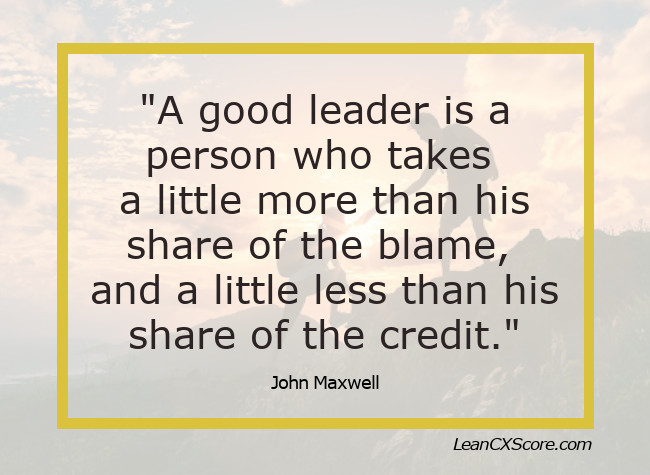
“A good leader is a person who takes a little more than his share of the blame, and a little less than his share of the credit.” – John Maxwell

Have you heard this leadership quote from John Maxwell?

John Maxwell is an American author, speaker, and pastor who has written many books, including “The 21 Irrefutable Laws of Leadership”, selling millions of copies around the world.

Leadership-Quote-John-Maxwell-Less-Credit

Often, Good Leadership is Quiet

Here’s an interesting fact – in Jim Collins’ book “Good to Great” he studied the best performing companies over a long period of time – spanning more than fifteen years. What he found at the top of every single outperforming company was a leader who wasn’t “showy” or “full of bravado”. Instead they were quiet, reserved, and disciplined. They knew what had to be done but they didn’t make a big song-and-dance about it. He called them Level Five leaders.

And most often – even though their quality of leadership was found at every outperforming company – they deferred the success and winnings of their company to the people and the teams within it.

These top level leaders took a little more than their share of the blame when things went wrong, and gave a lot more than their share of the credit when things went right.

John Maxwell has studied leadership for more than forty years, and he has found the same truths as Jim Collins. He has found that the really great leaders – ones that can also be measured in terms of an outstanding financial return for their company – took the blame so they could improve themselves and the process to make things better.

You see, when you pass the blame to someone else, you’re also giving your power away.

You’re saying “It’s their fault,” which may sound nice to you in the short-term, but in reality it also means you don’t have to change or improve, and you also don’t have the power to change or improve because it’s that other guy’s fault.

Taking the blame when things go wrong means you also take responsibility for the improvements, and it is that mindset that build the most top-level leaders and gave the most top-level returns.

– David McLachlan

Get the Leadership Card Deck or the Lean CX Score Book:

Leadership CardsView All The Leadership Cards (48)

- or - Have the Leadership Cards delivered for your next meeting


Lean CX ScoreGet "The Lean CX Score" now, and start creating disruptors in your industry that completely annihilate your competition.

Oh and good news!  You'll be improving the speed, morale and engagement of your teams at the same time.  Get the Lean CX Score now.

13 – Three Levels of Integration

– See All The PMBOK Lessons – 

Three Levels of IntegrationThree Parts To Integration

There are three parts to integration within project management, and integration is the first process group that you’ll come across in the PMBOK guide.

The project sponsor usually kicks off a project through a business need or a business charter and they are also usually the ones funding the project. You will need to understand the strategic objectives from them and then ensure alignment of your project to meet those project objectives.

It is continuous communication that you’ll need to go through with the project sponsor to make sure that you are always going to be on track to delivering that business value.

Underneath that we’ve got the project team and the team members, and all the different moving parts of a project. We need to work with that team to focus on what’s really essential. We’re integrating all the processes, all the knowledge and all of the people involved to make it happen.

When we’re integrating something, whether it’s the project management processes or the different knowledge areas of a project, or the teams that we were talking about before, there are three levels of integration that you’ll come across whether in everyday life or as a project manager.

As a project manager we’re using a process level of integration, such as the processes outlined in the project management body of knowledge (the PMBOK guide). Knowing when they overlap and knowing when to use some or to discard some is important.

Cognitive level of integration involves a deep understanding of all of the processes the skills and the tools to drive a project success.

Context level of integration is where we’re changing the way a process is used, given a different context, situation or scenario.

So we’ve got processes up the top, we understand them deeply in the middle with a cognitive level of integration, and lastly we know when to change them or when to modify them at the context level, because we know them so deeply and so well. And that is the ultimate aim for you as a project manager, and a person doing the PMP.

There are different levels of complexity with integration – you might have system behavior, the interdependencies of components and their systems and how they interact and are related. This can get quite complex. Human behavior is always complex as well, and if someone’s having a bad day they may act differently. All these things are diverse and individuals are very different and groups can have set ways of working that you need to be aware of when you are managing a project.

Lastly ambiguity and uncertainty of emerging issues. These things can come out of left field, and they do. You will come across this quite often – something will happen maybe it’s a regulatory change, maybe it is a business change, maybe it’s an organizational change but something will happen and you will need to manage the ambiguity that arises out of that when you’re going through your project.

– David McLachlan

– See All The PMBOK Lessons – 

Quote – The Function of Leadership is to Produce More Leaders

– See all the Leadership Quotes here –

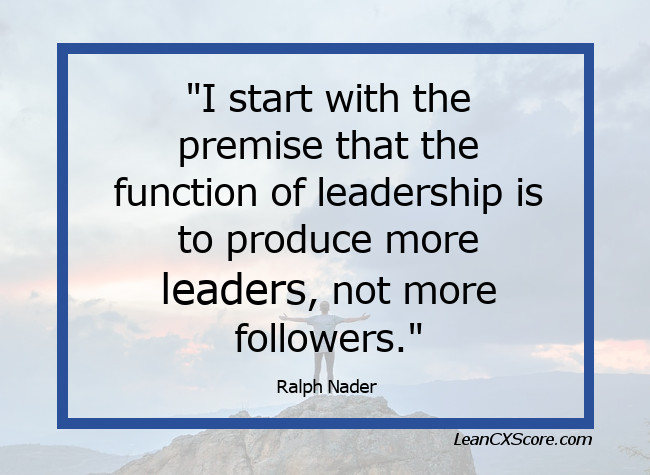
“I start with the premise that the function of leadership is to produce more leaders, not more followers.” – Ralph Nader 

Have you heard this leadership quote from Ralph Nader?

Ralph Nader is an American author, lawyer, and former candidate for President of the United States. His view on Leadership is sorely needed in today’s world, because when we build people up as true leaders, then not only is our job easier but the world becomes a nicer place to live.

Ralph-Nader-Quote_More-Leaders

How To Know When A Leader Has Done Their Job

It is easy to keep people down. It is easy to tell people they are no good, or that you are better than them, or that

What’s not easy is to give people a little bit of grace. To understand what they are going through, and that what they are going through may not be completely visible at first pass.

And then from giving people a bit of grace to building them up, not just to be good followers, but to be good leaders themselves.

Many dictators around the world have built countries of “followers”, where the people are afraid to speak up, and afraid to stand out. As a result, nothing of consequence ever gets done in those countries. It is the same in your company. Sure it might be OK for a while to have a large amount of followers, but when it comes time for something really important to be done, or if you can’t be there, or if you need to take on a different role yourself, you need people who are going to lead. Leaders take responsibility, instead of shirking it. They go the extra mile, instead of stopping a mile early.

And they lead in a way that will build more leaders again – by growing, building, sharing the “why” behind the daily activity and showing the progress that they’re making.

– David McLachlan

Get the Leadership Card Deck or the Lean CX Score Book:

Leadership CardsView All The Leadership Cards (48)

- or - Have the Leadership Cards delivered for your next meeting


Lean CX ScoreGet "The Lean CX Score" now, and start creating disruptors in your industry that completely annihilate your competition.

Oh and good news!  You'll be improving the speed, morale and engagement of your teams at the same time.  Get the Lean CX Score now.

Leadership Quote – Brian Tracy on Leading without a Title

– See all the Leadership Quotes here –

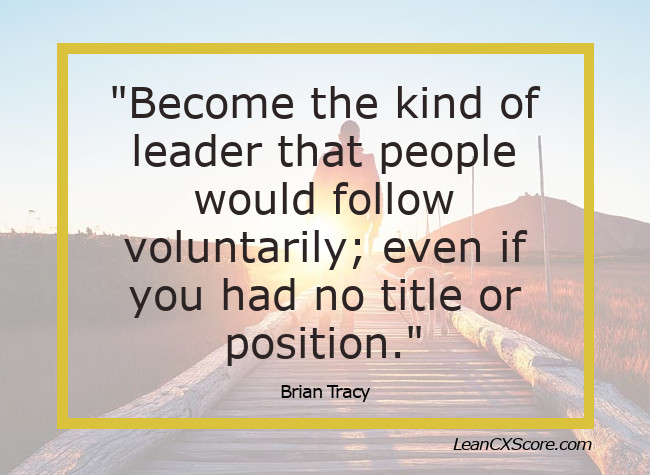
“Become the kind of leader that people would follow voluntarily; even if you had no title or position.” – Brian Tracy

Have you heard this leadership quote from Brian Tracy?

Brian Tracy was born on the 5th January 1944, and is the author of over eighty books that have been translated into dozens of languages around the world. He has been a highly sought after motivational speaker for more than 30 years.

Brian-Tracy-Quote-Leader-Follow-No-Title

Not Everybody can Have the Title, But Everybody Can Have the Quality of a Leader

It’s as simple as that. Leaders build people up. They help people grow. They have the humility to take the blame when things go wrong and let their team take the credit when things go right.

Good leaders also see a little bit further than most people. They have a vision, understand the “why” behind what their team is doing, and have an idea of what will happen in the future so they can respond correctly.

It’s not easy being a leader. But anyone can start building these qualities within themselves today, and it doesn’t cost anything to do so.

Global polling firm Gallup found that only one in 10 people possessed the inherent ability to be a good leader. In fact, most employees were unhappy with their boss, their manager, or their leader and the way they did things. And that means there is always room for one more good leader if you have the skills, care about your team and are willing to grow.

Why not let that leader be you?

So be the kind of person that people would follow, even if you do not have the title of “leader”. Because if you do, and enough people follow you, then soon enough the title will come.

– David McLachlan

Get the Leadership Card Deck or the Lean CX Score Book:

Leadership CardsView All The Leadership Cards (48)

- or - Have the Leadership Cards delivered for your next meeting


Lean CX ScoreGet "The Lean CX Score" now, and start creating disruptors in your industry that completely annihilate your competition.

Oh and good news!  You'll be improving the speed, morale and engagement of your teams at the same time.  Get the Lean CX Score now.

12 – Politics and Power and Getting Things Done

– See All The PMBOK Lessons – 

Types of Power

Politics and Power and Getting Things Done

In a project manager role you will experience politics and power, and you’ll need to understand both of those things in order to get things done in an organization.

“Leadership” and “management” involve getting things done, but to do that a project manager needs to understand how an organization works. What is the culture? And what are the unwritten laws of getting things done? That will give you a higher chance of success, and that’s where you need to have a hefty serve of emotional intelligence to understand the politics and the power sources, and how to use those to your advantage. You’ll need to influence and guide and help deliver that business value as a project manager.

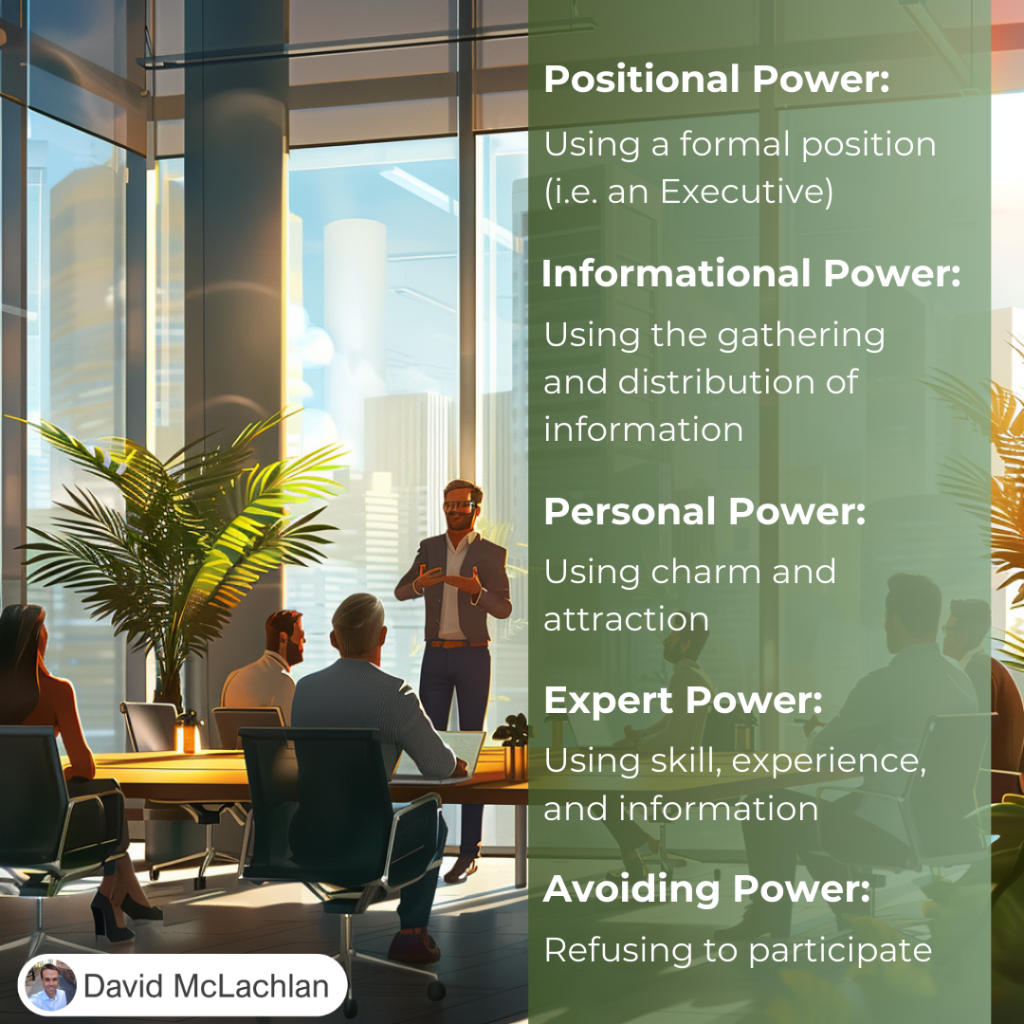
There’s a great list from the PMBOK guide on the types of power that you will come across.

  • You’ve got positional power, where you’re directly in the position of power as a manager or a leader.
  • Informational power, where you have information and you don’t need to share that with everyone – they need to come to you for that information.
  • Referent power, where you’re saying “The CEO asked me to do this, so everyone gather round and let’s get this done.” – we’re referring to someone else’s credibility.
  • Situational power, where maybe there’s a crisis involved and now all of a sudden we have more power because we need to really urgently get something done.
  • Personal power, using charm and attraction.
  • Relational power, where you are using your network of people
  • Expert power, where you have expertise in a certain area.
  • Rewards, where you can give rewards for certain things and that makes people want to do things for you.
  • Coercive power, where you might say “Something bad will happen if you don’t do this,” you’re coercing people into doing what you need.
  • Ingratiating power, where you’re using flattery – “Look how wonderful you’re doing, such a great job, you’re a wonderful person because you’re helping me out.”

All of these are valid, and you’ll find that when you’re aware of them you’ll see them more and more in your own workplace, and even in your day to day life. Within your family, within your friendship groups, it’s really great to be aware of.

And there are more.

  • You have pressure based power, limiting that freedom of choice.
  • Guilt based power, where maybe you did something for them and now you’re putting a bit of a guilt on them.
  • Persuasive power where you’re simply providing the right arguments, and lastly;
  • Avoiding power, where you’re simply refusing to participate.

These types of power will be on the PMP exam you’ll usually encounter them in some way shape or form simply because they’re part of everyday life and getting things done.

Types of Power

There are also different personalities that you’ll come across in your life as a project manager, and they are:

  • Authentic,
  • Courteous,
  • Creative,
  • Cultural where you’re measuring the sensitivity to other’s cultural values,
  • Emotional, being able to perceive other’s emotions quite easily,
  • Intellectual, which is just human intelligence and management practice
  • Political, understanding the political environment and how to make things happen,
  • Service-oriented where we’re serving others, maybe as a servant leader.
  • Social,
  • Systemic, where we’re understanding the need to build systems around things and ways of work and making it easier for people through processes as opposed to just forcing things through.

Those are the types of power and types of personalities you will find in your career and on the PMP Exam.

– David McLachlan

– See All The PMBOK Lessons –