All posts by David McLachlan

PMP Practice Exam Questions and Answers | 22

– See all the PMP Exam Questions – 

PMP Exam Question Session 22

In this series we will walk through five PMP Practice Exam Questions each day – a great way to set up your morning as you prepare to pass the PMP Exam. It is also useful for the CAPM exam, as the content is very similar.

We will also figure them out together, and you’ll see the thought process behind solving these PMP exam questions.

I hope you enjoy!

Question 1

You are arranging a third party to perform work for your project. You are creating a document outlining the details of the work to be completed and the time-frame it needs to be delivered in. This is called the procurement:

A)  Obtainment Of Work
B)  Recovery Of Work
C)  Statement of Work
D)  Executive Work

Question 2

What is the type of contract when an expert is hired to complete a particular portion of the project for $120 per hour, plus their materials?

A)  Fixed fee
B)  Time and materials
C)  Cost plus fixed fee
D)  Cost plus incentive fee

Question 3

You are a project manager working on a telecommunications project where a portion of the work has been completed by a vendor outside your project. What is it called when your team makes a review of the procurement process?

A)  Audits
B)  Inspection
C)  Quality Check
D)  Review

Question 4

You are starting a project with a project charter and the next major process is to identify all the relevant stakeholders for your project. Which one of the following is used to perform stakeholder analysis?

A)  Stakeholder Analysis Model
B)  Maslow’s Hierarchy of Needs
C)  Salience Model
D)  SWOT Analysis

Question 5

You are working as a project manager in the health sector where a stakeholder raises a proposal for modification to the scope of the project. What should you tell them to do?

A)  Raise an issue in the issue log
B)  Go head and change the scope themselves
C)  Raise a change request that will go through the CCB
D)  Raise their idea at the next retrospective
– See all the PMP Exam Questions – 

PMP Practice Exam Questions and Answers | 20

– See all the PMP Exam Questions – 

PMP Exam Question Session 20

In this series we will walk through five PMP Practice Exam Questions each day – a great way to set up your morning as you prepare to pass the PMP Exam. It is also useful for the CAPM exam, as the content is very similar.

We will also figure them out together, and you’ll see the thought process behind solving these PMP exam questions.

I hope you enjoy!

Question 1

You are analysing your project and have found there is a Cost Variance of -$40,866. What type of report is needed to report this to management?

A)  Progress report
B)  Exception report
C)  Forecasting report
D)  Trends report

Question 2

Delphi technique, Sensitivity analysis, and Monte Carlo Analysis are tools and techniques used as a part of which project task?

A)  Expert Judgement
B)  Reserve analysis
C)  Schedule Compression
D)  Quantitative Risk Assessment

Question 3

You are working in Risk Management and identifying the risks for a project. What document will be used to maintain and record information about risks identified and form appropriate responses?

A)  Risk Register
B)  Project Management Plan
C)  Tornado diagram
D)  Prompt lists

Question 4

You are working with the risk team in your project and are in the process of ranking risks for further analysis or action by assessing their probability of occurrence and impact. What is this called?

A)  Deep-dive Risk Analysis
B)  Subjective Risk Analysis
C)  Qualitative Risk Analysis
D)  Quantitative Risk Analysis

Question 5

You are wanting to brainstorm with your team to find and prepare a comprehensive list of risks in the project. Which of the following is not one of the types of information gathering techniques?

A)  Brainstorming
B)  Delphi technique
C)  Interviewing
D)  Sensitivity analysis

– See all the PMP Exam Questions – 

Leadership Quote – The Courage to Continue – Churchill

– See all the Leadership Quotes here –

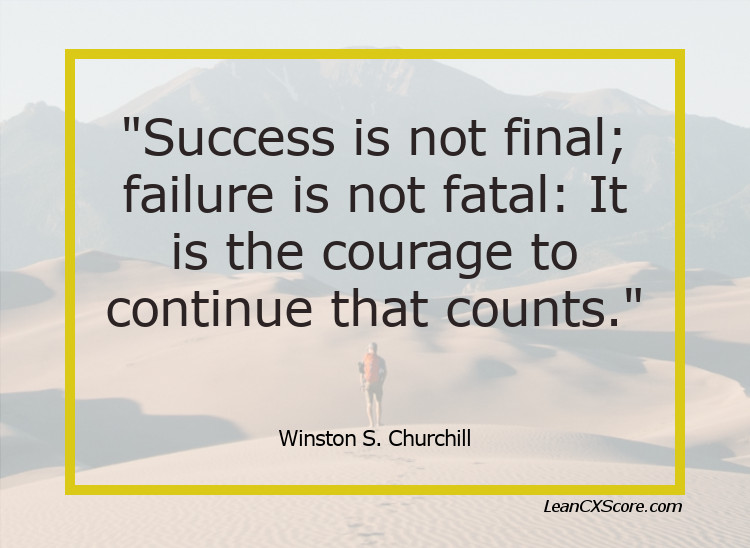
“Success is not final; failure is not fatal: It is the courage to continue that counts.” – Winston S. Churchill

Have you heard this leadership quote?

Winston Churchill is talking about the fact that when we win, or when we lose, it is often still not the end of the game. If we keep going, keep learning, and keep trying, we can turn our fortunes around.

Quote Churchill failure not fatal Courage to Continue

Never Give Up, Never Give Up, Never Give Up

Having the courage to continue is not always easy. Life gets in the way – things get busy and we get busy. And sometimes our own thoughts work against us – “I knew I couldn’t do it,” or “Why do these things always happen to me?”

Having the courage to continue means working through all of these things – that little voice saying you can’t do it, the market conditions changing, the failures you encounter both small and large. By working through them to the other side you are gaining something special. One is a new level of determination, a new level of grit.

Angela Duckworth and Carol Dweck both found that it wasn’t necessarily the students with the highest IQ that made the best grades in the end, it was the students with the highest level of stick-to-it-ive-ness, where they would keep going even when things got hard. They had the highest levels of grit.

Winston Churchill is also right. How many times have you seen the star student or the star football player from high school, now down on their luck, broke and in debt? Success is not final – you need a level of grit to keep going, even when you are not in your element.

And likewise, how many times have you heard of someone going from broke or homeless to leading a successful, stable life, or even becoming a millionaire? Their failure was not final either.

It was their courage to continue that counted.

– David McLachlan

Get the Leadership Card Deck or the Lean CX Score Book:

Leadership CardsView All The Leadership Cards (48)

- or - Have the Leadership Cards delivered for your next meeting


Lean CX ScoreGet "The Lean CX Score" now, and start creating disruptors in your industry that completely annihilate your competition.

Oh and good news!  You'll be improving the speed, morale and engagement of your teams at the same time.  Get the Lean CX Score now.

The Nominal Group Technique

– See All Project Management Key Concepts –

Nominal Group Technique - PMBOKThe Nominal Group Technique

You might need to use the nominal group technique as you’re gathering requirements in your project, and also arranging requirements and arranging solution ideas within your scope management process.

What is the nominal group technique? It’s basically a structured form of brainstorming which helps us gather ideas. It also helps us see what the most important ideas to work on, as it enhances brainstorming with an anonymous voting process used to rank the most useful ideas for further brainstorming or prioritization. Our most important ideas are the ones that receive the most votes during this anonymous voting process.

The nominal group technique consists of four steps. The first one is we pose a question or a problem to the group. For example “How do we solve this problem?” or “What are the requirements that you have out of this particular project or process?” Each person silently generates and writes down their own ideas. And this is a really important because it just stops one person or two people who everyone looks up to from being copied or followed. This is a way of getting around that so everyone gets a more even say, no one has influenced it in any way before they get to generate their own ideas.

So it’s a much more pure form of brainstorming. Now the moderator or the facilitator role that you’ll see come up in Agile a lot – and it’s a very important part of almost all of these processes – he or she will write down those ideas on a flip chart, on the wall, on a whiteboard or whatever until all of those ideas are recorded. Now then each idea is discussed until all group members have a clear understanding.

Some of the ideas might be the same or very similar, maybe a few relate to one particular idea. We can start to group the similar ones together. Now once we’ve got those groups then individuals vote privately to prioritize those ideas.

So you can either close your eyes and put your hand up, or you can just write down on a slip of paper and give it to the moderator or facilitator. Maybe this one gets four votes, this one gets two votes, this one gets five votes, then we might go with those ideas with the most votes.

It’s easy to do, if you just look at a scale of 1 to 5, one might be the lowest and five might be the highest priority that you could put during the voting process. You might do it in many rounds to reduce and focus in on ideas. So if you’ve got lots and lots then you can reduce them down. You’ve got 20, then you do another voting process and now you’ve just got one main one of the end after each round of votes are tallied and the highest-scoring ideas are selected.

And that is the nominal group technique.

– David McLachlan

– See All Project Management Key Concepts –

PMP Practice Exam Questions and Answers | 19

– See all the PMP Exam Questions – 

PMP Exam Practice Questions 19PMP Exam Question Session 19

In this series we will walk through five PMP Practice Exam Questions each day – a great way to set up your morning as you prepare to pass the PMP Exam. It is also useful for the CAPM exam, as the content is very similar.

We will also figure them out together, and you’ll see the thought process behind solving these PMP exam questions.

I hope you enjoy!

Question 1

A vendor is hired for your project and will charge you $30 per hour, plus materials. What is this type of contract called?

A)  Cost plus fixed fee
B)  Time and materials
C)  Task and materials
D)  Cost plus incentive fee

Question 2

Your project has had most of its products delivered by a third party. The project sponsor who will own these products in their functional area is not happy with the resulting products. The vendor believes they are suitable. What process will you go through to arrange a suitable outcome for both parties?

A)  Quality Administration
B)  Contract Administration
C)  Project Administration
D)  Claims Administration

Question 3

You are working within the procurement department of a company and a project has approached you for a template for formal documents they can use to collect information, quotes or proposals from potential vendors. What are these documents called?

A)  Bid Documents
B)  Vendor Documents
C)  Audit Documents
D)  Advertising Documents

Question 4

As a project manager you are aware that communication can become more complex, the more people there are to communicate to. How many different communication channels would there be with a project team of 19 people?

A)  380
B)  190
C)  171
D)  19

Question 5

You are working on a project with many different stakeholders and it is vital to communicate project updates early and often. What is the best type of communication method for passing information to stakeholders?

A)  Telephone
B)  Face to face
C)  Emails
D)  Formal report

– See all the PMP Exam Questions – 

PMP Practice Exam Questions and Answers | 21

– See all the PMP Exam Questions – 

PMP Exam Question Session 21

In this series we will walk through five PMP Practice Exam Questions each day – a great way to set up your morning as you prepare to pass the PMP Exam. It is also useful for the CAPM exam, as the content is very similar.

We will also figure them out together, and you’ll see the thought process behind solving these PMP exam questions.

I hope you enjoy!

Question 1

You are working as a project manager with a business analyst and a tester on your team. You need to rank the issues occurring during testing from the most occurring to the least occurring, to see where to focus on first. What will you use?

A)  Control chart
B)  Pareto Diagram
C)  Flow Chart
D)  Check Sheet

Question 2

You are working through the quality management process of a project in the finance sector, and need to select the most appropriate option from a variety of options. What technique will you use?

A)  Group activities
B)  Agreements
C)  Decision Making
D)  Meetings

Question 3

You are working with a project manager in the Quality area of a project, with the aim of improving the end to end life-cycle of the project’s development. You will need to identify the problem, discover the underlying causes that lead to it, and develop preventive actions. What is this called?

A)  Flow chart Analysis
B)  Root Cause Analysis
C)  Risk Cause Analysis
D)  Corrective Analysis

Question 4

What would be the total of the Cost Plus Fixed Fee (CPFF) type of contract with a target cost of $421,000 plus a fixed fee of $45,000, if the project actual spent costs at the end is $251,000?

A)  $45,000
B)  $421,000
C)  $296,000
D)  $121,000

Question 5

You are working with a third party vendor to deliver a part of your project, and needing to ensure they will deliver what you need and on time. Price has been agreed, but other things are still to be negotiated. Which of the following is one of the items that can be negotiated as part of a procurement contract?

A)  The type of software used
B)  Your bonus
C)  Size of the project
D)  Project Management process to be used

– See all the PMP Exam Questions – 

Project Management Key Concepts

Project management key concepts

Below you will find dozens of key concepts in project management, direct from the Project Management Body of Knowledge. No matter what your role or project methodology, you will come across these key concepts in your career, and understanding them will help you find success!

01 – Tools for Project Integration Management
02 – Tools for Project Scope Management
03 – Tools for Project Schedule Management
04 – Tools for Project Cost Management
05 – Project Quality Management
06 – Project Resource Management
07 – Project Risk Management
08 – Project Procurement Management
09 – Project Stakeholder Management

– David McLachlan

Leadership Quote – Learn from Failure and Make Mistakes – Watson

– See all the Leadership Quotes here –

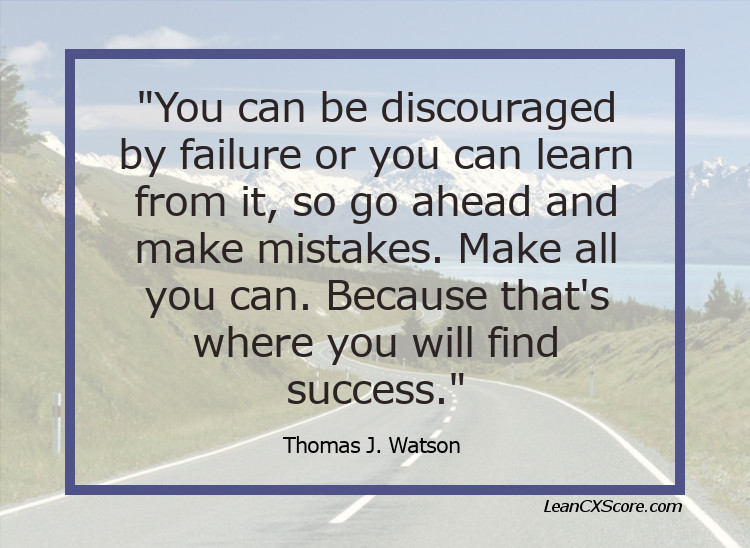
“You can be discouraged by failure or you can learn from it, so go ahead and make mistakes. Make all you can. Because that’s where you will find success.” – Thomas J. Watson

Have you heard this leadership quote?

Thomas J. Watson is saying there is a difference in the way you can react when you fail. You can be discouraged and give up. Or you can learn your lessons from the failure and use those to improve on your next try. When you keep trying in this way, finding success is just a matter of when.

Quote Watson Make Mistakes and Learn

The Definition of Insanity

They say the definition of insanity is doing the same thing over and over, but expecting a different result.

Likewise when we try something and fail, if we don’t change or grow from that failure then we are in that same definition of insanity. But failure gives us a unique gift. For those of us mature enough to see it, that gift is a lesson wrapped in a little bit of hurt. After all, not many people like to fail.

Seeing the good in failure and seeing the lessons in failure can be a tough thing to do. Our ego might be hurt – we might make excuses or find reasons for that failure that don’t belong to us. “It was their fault,” or “The market just isn’t right,” or “It just wasn’t the right time,” are all things that aren’t to do with us. And if they aren’t to do with us, then we can’t fix them.

The downfall with blaming others or our external situation when something goes wrong is that it also means we cannot control it. And if we cannot control it, we cannot improve it, we cannot make it better for next time. What Thomas J. Watson is saying in his quote is don’t be discouraged by failure, use it to learn. And when you learn and put those lessons into your next attempt, then it is only a matter of time before you win.

– David McLachlan

Get the Leadership Card Deck or the Lean CX Score Book:

Leadership CardsView All The Leadership Cards (48)

- or - Have the Leadership Cards delivered for your next meeting


Lean CX ScoreGet "The Lean CX Score" now, and start creating disruptors in your industry that completely annihilate your competition.

Oh and good news!  You'll be improving the speed, morale and engagement of your teams at the same time.  Get the Lean CX Score now.

The Requirements Management Plan (or Business Analysis Plan)

– See All Project Management Key Concepts –

The Requirements Management Plan - Project ManagementThe Requirements Management Plan

What is the requirements management plan? It’s a component of the project management plan, and it describes how project and product requirements will be analyzed, documented and managed.

Basically it’s the process that we’re going to go through to gather these requirements and then manage them and track them, to ensure that we’re delivering on those customer requirements right up to the end when we finish delivering the project.

With the rise of the business analyst role, almost every project will have a business analyst and many organizations will refer to this requirements management plan as the business analysis plan.

Because we’re describing the process of how we’re gathering these requirements and then tracking them there are a few different things that can go into our requirements management plan. Don’t forget with any plan we can make it small – it can be simple like just a couple of lines in an overall document, or if it’s a large project and there’s a lot of people involved and there’s a lot of stakeholders and it really needs to be spelled out, it could be a document of its own. And that could go into your project management plan. As long as it covers off these things in general usually you’re pretty safe.

Things required in a Requirements Management Plan

So how are we going to track and find these requirements? How are we going to report on them? How are we going to initiate changes, and how will those impacts be analyzed? How will the requirements be traced tracked and reported on, to make sure that we are delivering to our customer at the end and that they’re happy. What authorization levels are required to approve any changes? (This will tie in with our configuration management plan for any documents that will be baselined).

Requirements prioritization, how do we prioritize them? Are they based on business value? Who does that, who decides and the metrics that will be used for rationale? This helps get everyone on the same page. Are we going for speed in a process? Are we going for cost reduction? Whatever it is it’s good to write it down so that everyone is on the same page.

Lastly one of the most important things, the traceability structure. This reflects the requirement attributes captured on the requirements traceability matrix. In other words the traceability matrix is a separate document to this that will tie into it and show us how we’ve got our requirements and how they are actually related to the scope, and ultimately the items that we’re delivering. There needs to be a clear line, clearly shown, which is why it’s in a matrix format. You’ve got your requirements down the side and as it goes along it shows how they’re relating to the scope that you’re delivering. And that rounds out the details you will find in a Requirements Management Plan.

– David McLachlan

– See All Project Management Key Concepts –

PMP Practice Exam Questions and Answers | 18

– See all the PMP Exam Questions – 

PMP Practice Exam Questions 18PMP Exam Question Session 18

In this series we will walk through five PMP Practice Exam Questions each day – a great way to set up your morning as you prepare to pass the PMP Exam. It is also useful for the CAPM exam, as the content is very similar.

We will also figure them out together, and you’ll see the thought process behind solving these PMP exam questions.

I hope you enjoy!

Question 1

You would like to motivate and align your team towards the project goals using a team building activity. Which of the following is one of the types of Team Building Activities?

A)  Performing repetitive tasks
B)  Following the agenda
C)  Documenting meeting minutes
D)  Creating the WBS

Question 2

Interpersonal Skills have the power to directly or indirectly impact the outcome of a project. Which of the following is NOT one of the types of Interpersonal Skills a project manager might use?

A)  Leadership
B)  Creating a scatter plot
C)  Team building
D)  Motivation

Question 3

You are working on a project and need to create a document that has compiled information about project performance in a report format to enable decisions, actions and project communications?

A)  Work Performance Report
B)  Project Management Plan
C)  Agreements
D)  Verified deliverables

Question 4

Your project needs to hire resources from outside the organisation, and the vendor has provided a Cost Plus Fixed Fee (CPFF) type of contract with a target cost of $280,000 plus a fixed fee of $29,000. What is the total cost if the project costs at the end is $250,000?

A)  $309,000
B)  $280,000
C)  $279,000
D)  $149,000

Question 5

You are a project manager working in a company and you have been asked to compile the business case and benefits management plan. What are these types of documents called?

A)  Executive Documents
B)  Business Documents
C)  Project Documents
D)  Project Charter

– See all the PMP Exam Questions –