All posts by David McLachlan

The Project Management Information System

– See All Project Management Key Concepts –

4_Project Management Information System - PMBOKThe project management information system

The project management information system, or PMIS as you will see it referred to in the PMBOK guide, is the coherent organization of the information required for an organization to execute projects successfully. That of course is a bit of a mouthful, so what does that actually mean?

Typically it’s one or more software applications – so it’s not just one IT software application it’s a whole bunch of applications – and the process that’s associated with those software applications for collecting and using project information, most typically with the activities related to the project. It relates to who’s doing what, and when they are doing it. And that would relate to the schedule – when these activities are being done, and potentially to the scope as well. Scope is being ticked off as we’re going along on our project, and that will impact what activities are done, and the activities need to be assigned along a schedule so that we understand when these activities are going to be completed.

All of these things you can’t just rely on word of mouth for this to happen – you need to put them somewhere so that people can see them and understand what’s being done as part of your project. And that is where our PMIS comes in.

So it’s not just one IT system, it’s an entire system or approach including tools and processes. It’s the different cogs and they all intertwine and they all relate to each other, and they help move each other as part of the whole system. Your project measurement information system would include things like scheduling software tools, work authorization systems for work packages (i.e. who they’re being assigned to, who’s receiving them, are they able to work on them?), configuration management systems (i.e. the change process).

Are you changing the scope, who does that go to, does it go to the project sponsor? What’s the process there? And this IT system would facilitate that configuration management.

Document management systems, so where are all the documents being held? Information collection interfaces to other automated systems, so corporate knowledge bases, lessons learned or perhaps procurement systems that you might need if you’re hiring people or resources. Automated gathering and reporting on key performance indicators or KPIs can also be a part of this system, for example how is the project tracking?

You’ve probably used a project management information system or part of a project management information system in your life already. Some of these things will include a Kanban board, if you’ve used Atlassian JIRA or Trello, this is very simply a Kanban board where we’re moving tasks and activities across the board from “in progress” or the backlog through to “done”. And that’s how we’re tracking those activities, it’s very very simple. You might have an internal company SharePoint page, and that’s where you’re keeping all the documents for your project. Or you might have a Confluence page or something similar. The IT system itself doesn’t matter. But it does matter that you have something to hold the documents, for future projects to learn from and also for the governance around your project. This also helps the governing bodies (such as a project management office) see the activities, and that the proper governance has been checked off, that you’ve done the proper documents for procurement, for hiring people, or you’ve done the proper documents for making a change to the scope for example.

Lastly, resource calendars or an online project schedule. You might be able to see see Billy or Fiona or Helen for example, all these different people and you can see when they’re assigned to the activities and also when they are available to work on your project. That’s a very useful part of the information of your project, and that is an outline of the project management information system.

– David McLachlan

– See All Project Management Key Concepts –

Change Requests

– See All Project Management Key Concepts –

Change Request Project ManagementWhat is a change request?

A change request is a formal proposal to modify any document, any deliverable or any baselined item (that could include your project management plan, your scope statement for example). The most common of these documents are related to the Scope, Schedule or Cost of the project. For example, are we changing the the dollars involved? Are we changing the time involved? Or are we changing the Scope that we’re delivering in our project. All of these will need a formal change request once a document or an item is baselined.

Any project stakeholder may request a change. Change requests are processed for review and disposition through the change control process, and change requests can be initiated from inside or outside the project. They can be optional or they can be legally or contractually mandated. Perhaps a legal change has happened and that requires a change that needs to go through the formal change request process, so that we’re going getting the appropriate approvals to change either the scope, the schedule or the cost. We want everyone to be across this change, we don’t want to just be changing the schedule on an ad-hoc basis otherwise people are going to get upset. We do this often times when issues, gaps or problems are found while the project work is being performed. A change request can be submitted to modify things like our project policies or procedures – maybe we need to do things in a different way – the project or product scope as we said, the cost or the budget which we’ve touched on as well. There’s the schedule or the time, if something is going to be delivered in June but all of a sudden according to our analysis it’s going to be delivered in September and maybe that’s going to affect the cost because we need more resources, then people need to know about this through the appropriate methodologies and the appropriate process, which is this change management process.

The quality of the project or the project results – if that’s going to vary significantly then perhaps we need to raise a change request as well. Maybe something simply is not possible to do, or maybe we’ve found a better way to do something and we just need to to put that into our scope so that everybody is aware. For this reason, change requests might include:

  • Corrective action where we’re bringing a project back on track. For example we’re aligning the project activities to something that we’ve found.
  • Preventative action – maybe we’re preventing future performance from going off-track, for example we see the schedule coming up in September instead of June, and that’s something that we want to bring back on track. Maybe we want to crash the project resources, where you add a lot of resources and money and cost and that’s going to bring it back into June so that we can get it done. Maybe we need to fast-track the schedule, which is doing everything in parallel instead of doing everything one after the other, and that will get it all done in time.
  • Defect repair – as we’re going through our quality control, maybe we’re doing our test plan and testing the item and that comes up with a defect, but that actually changes the scope of the project. So it relates to scope again, we need to make a change and we need to make a formal change through our change management and change request system.

Of course we could have just general updates to our project, where maybe a customer has found that they don’t like something and we need to change that. Or maybe the situation has changed where they don’t need it until September and we can actually physically change that project schedule. All of this is completely up to you as the project manager, and usually you’ll be working with the project sponsor and the people involved who you’re delivering this project for, and the team that you’re delivering with.

The change management plan is what describes the process for these change requests. How do how do you raise a change request, for example? And what do you need to do? Who does it go to? Does it go to the project manager, then to the project sponsor? Does it need to go to a steering committee? What is the approval process of these change requests?

If we’re involving more money, and it needs to come from the project sponsor or a governing body then that needs to be approved by those people. This process can just be a few lines in your project management plan, noted as a change management process. Or it can be a complete document outlining the process. A lot of this depends a lot on the environmental factors – the enterprise environmental factors which you’ll see in almost every PMBOK guide process. That just relates to how a company works and how it operates on a day to day basis. All that will affect how you raise a change request, and what you put in your change management plan. And that is the process and the idea behind Change Requests.

– David McLachlan

– See All Project Management Key Concepts –

Leadership Quote – If It Scares You, it Might Be a Good Thing To Try

– See all the Leadership Quotes here –

“If it scares you, it might be a good thing to try.” – Seth Godin

Have you heard this leadership Quote?

Seth Godin is talking about doing the very thing that scares you, and there is a good reason behind it.

Seth Godin Quote If it scares you try

Too often we stop, when what we need to do is start.

We stop out of boredom perhaps, or we stop because it’s too hard. We stop because we can’t see the way forward, or we stop because someone (who doesn’t know any better) said we should.

But most often we stop out of fear – fear that we might look silly, fear that we’ll fail, a fear that someone might make a comment or tell us we’re not good at what we’re doing, and a fear that they’re right.

But what Seth Godin is saying is: Feel the fear and do it anyway, because on the other side of that fear is success.

If you stop every time you feared a negative comment or feared someone else would be better than you, or that you might fail, then you would never do anything of consequence. And here’s the thing – you WILL fail, I can almost guarantee it. I can say that because if you ever look at the lives of people who have made millions, if not billions of dollars, they have actually failed dozens of times.  Sometimes hundreds of times. But they worked through that failure and they mastered their fear to become a success.

To coin another Seth Godin term (Seth Godin fans will get this), they tamed their lizard-brain and they shipped it anyway.

What is it that you fear? Can you do it anyway and see what will happen? At worst you might learn something, at most you might bring about your dreams.

– David McLachlan

Get the Leadership Card Deck or the Lean CX Score Book:

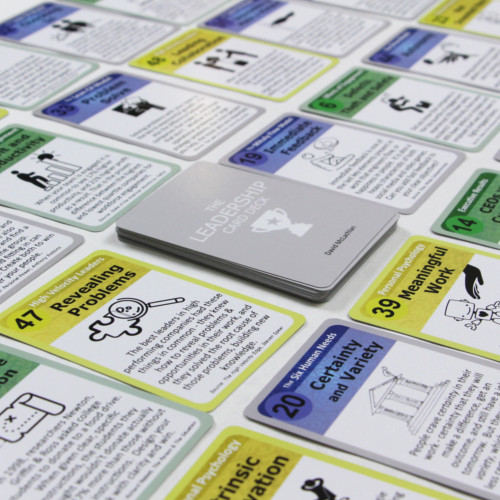
Leadership CardsView All The Leadership Cards (48)

- or - Have the Leadership Cards delivered for your next meeting


Lean CX ScoreGet "The Lean CX Score" now, and start creating disruptors in your industry that completely annihilate your competition.

Oh and good news!  You'll be improving the speed, morale and engagement of your teams at the same time.  Get the Lean CX Score now.

How to Create a Schedule Network Diagram in Excel

Creating a schedule network diagram 5How to Create a Schedule Network Diagram in Excel

A Schedule Network Diagram is a key part in your project Schedule planning, especially when trying to figure out the critical path and the “float” or wiggle room in your project.

Below is a nice way to create a dynamic Schedule Network Diagram in Excel that updates when you update the numbers but is also able to be moved around your worksheet.

Step 1

Click in the top left corner of your sheet to select all cells.  Then right click on the top row (for columns) and select column width. Set Column width to 3.

Right click on the left section and select “Row width”. Set that to 19. Now we have nice squares to work with.

Step 2

Use the border tool to create “Nine Square” boxes, then “Merge and center” the middle three boxes. That will be our description, while the others will be our early finish, duration, late finish, etc. Do this two across and as many as you like down (as many schedule boxes you will need).

Creating a schedule network diagram 1


Step 3

Next let’s freeze some cells, so we can always see our section with the boxes in it. Select column “I”, row “A”, and go to “View > Freeze Panes”. This will always show our activity boxes.

Creating a schedule network diagram 2

Step 4

Now we can select the first activity box. Select it and copy it (using Ctrl+C or right click > copy).

Next, Paste it into our worksheet area, but do it like this: Right click > “Other Paste Options” > Linked Picture.

Now, everything we change in our activity box will reflect on our worksheet schedule boxes. You can copy as many boxes as you like. If you double click on a picture box, it will take you to the activity box on the left to fill out.  Very handy!

Creating a schedule network diagram 3

Step 5

You can also link the boxes together with arrows. Go to “Insert > Shapes” and select an arrow of your choosing.

Change the colours to suit, and you now have your Schedule Network Diagram, created from scratch in Excel, and able to be dynamically updated!

Well done!

Creating a schedule network diagram 4

– David McLachlan

Baselined Documents

– See All Project Management Key Concepts –

Baselined Documents PMBOKBaselined Documents in Project Management

When we’re developing the project management plan a lot of the time we’re going to need to create baselines.

Baselines are one of the key concepts that is really important, because they are a point in time where data or information is locked in place, with any changes needing to go through a formal change or configuration management process to be reviewed, approved and accepted.

There are multiple documents that require baselining in your project management plan, and most of those will relate to the key constraints in your project such as:

  • Scope – the scope that you are going to deliver.
  • Time or the schedule – you might have your Gantt chart or the locked-in schedule, and you don’t really want that to change because you’re delivering something at the end and your customers are relying on that to be delivered.
  • Cost – if someone is sponsoring this project or paying for this project then of course they don’t want that cost to change, at least not without the proper approval process.

So what are these documents that we’re talking about? Well the need to be baselined fairly early on in your project, during the initiation and planning of your project.

First of all we’ve got the scope baseline. This is the approved version of a scope statement, a nice simple statement of what you are delivering to your customer. Then you’ve got the associated work breakdown structure or WBS and its associated WBS dictionary. That’s basically the scope broken down into smaller parts.

Then ultimately the activities that we’ll need to to deliver those parts – all of those parts of your scope – we want to lock that in so that we know that we’re going to deliver it on time, and we know if we’re not going to deliver it on time.

Then there is the schedule baseline, which is the approved version of the schedule model (that can be your Gantt or even just dates and activities depending on how you outline that in your project management plan) and can be used as a basis for comparison to the actual results so once it’s locked in. For example, how are we actually tracking over time? Are we on track, or we not going well? That’s what we really want to know.

Lastly we’ve got the cost baseline. This is the approved version of the time based project budget where we’ve got our activities, the things that need to be completed and we’ve got the cost associated with those activities. All of the schedule and the scope – if any of that changes then obviously that will have a big impact on the cost of the project as well, so all of these things are interrelated.

Before a baseline is actually defined, all of these documents can be updated as many times as necessary. You’ll find that right at the beginning of your project, during the project charter and maybe just before you’ve locked in your project management plan, no formal process is required at that time. But once that baseline is locked in then they can only be changed through the “perform integrated change control” process which we’ll probably notice is around 4.6 in the PMBOK guide. Any stakeholder can raise a change request, that’s how this is done. Anyone related to your project, whether it’s someone impacted by the project or whether it’s the sponsor who’s sponsoring the project, whether it’s the people doing the the work packages in the team of the project, they can raise a change request for that to be looked at which will go through the change control process. That change control process is usually outlined in your project management plan as the configuration management plan.

What Does a Configuration Management Plan Process look like?

It will be different for each organisation and even each team you work in. Maybe the process for you is raising a change request to the project manager, the project manager checks it out with a few different stakeholders or the required information, or maybe that’s someone in the project management team who then goes through to the sponsor or to the associated steering committee for example. Depending on how your project is outlined, which of course relates to the enterprise environmental factors which you’ll see come up a lot in the PMBOK guide. This is how the company operates, and every company is different. There will be similarities, there might be templates, there might be different politics or different parts of the company that need to be approached, or maybe different parts of the company that don’t talk to each other at all. You need to be aware of these enterprise environmental factors in how to get work done and that will impact the configuration management plan, which is how to make changes to your project and your project baselines once they are locked in. And that is project Baselines.

 – David McLachlan

– See All Project Management Key Concepts –

Leadership Quote – A Chance to Work with Pride – W. Edwards Deming

– See all the Leadership Quotes here –

“All anyone asks for is a chance to work with pride.” – W. Edwards Deming

Have you heard this leadership quote?

William Edwards Deming lived from 1900 to 1993 and was an American engineer, statistician, professor, author, lecturer, and management consultant. He is well known for his work on operations including statistical process control and the Plan-Do-check-Act (PDCA) cycle.

Deming Quote People Want to Work With Pride

Give Your People a Deeper Meaning

A chance to create something that one can be proud of is worth more to most people than a modest pay rise. Because creating something good, something meaningful meets some core emotional needs like belonging and achievement.

Abraham Maslow found it, in his “Theory of Human Motivation” – best known as Maslow’s Hierarchy of needs. While food and shelter were important, once they were met people really craved belonging, achievement, and ultimately a sense of purpose in their life.

What is the real goal of life?

Often people mistake the goal of life to be “retirement” – to just get through their working life and be done with it so they can finally, at the end of their life, do what they want. Sure it’s true that not everyone can do a job they love, and sometimes we have to have the discipline to work through difficult situations to get to greener pastures. But what they fail to realise is that when a person retires it is often only a few short years until they pass away. They die – and it’s not because they are too old necessarily – after all, people live to be 100 more and more – it’s because they have lost their sense of purpose.

Now they don’t have to get up everyday, because they aren’t forced to, and no matter how much they said they hated they job, and even meant it, that job was a sense of purpose and a reason to get out of the house every single day.

Be Intentional About Purpose

So don’t wait for retirement to realise this. Can you give your team a sense of purpose in the work they do, now? Can you make it meaningful, and tie it to something greater than themselves? If you do, you might just win their hearts and minds, and you might just see performance you have never seen before.

– David McLachlan

Get the Leadership Card Deck or the Lean CX Score Book:

Leadership CardsView All The Leadership Cards (48)

- or - Have the Leadership Cards delivered for your next meeting


Lean CX ScoreGet "The Lean CX Score" now, and start creating disruptors in your industry that completely annihilate your competition.

Oh and good news!  You'll be improving the speed, morale and engagement of your teams at the same time.  Get the Lean CX Score now.

PMP Exam Questions – Practice Session | 15

– See all the PMP Exam Questions – 

PMP Exam Question Practice 15PMP Exam Question Session 15

In this series we will walk through five PMP Practice Exam Questions each day – a great way to set up your morning as you prepare to pass the PMP Exam. It is also useful for the CAPM exam, as the content is very similar.

We will also figure them out together, and you’ll see the thought process behind solving these PMP exam questions.

I hope you enjoy!


Question 1

You are working through various options in your project and need to help stimulate your group towards innovation and ideas. Which of the following is a type of group creativity technique?

A)  Monte Carlo Analysis
B)  Regression analysis
C)  Brainstorming
D)  Root cause analysis

Question 2

You are working as a project manager, at the stage where you need to validate the scope and products you have created with the appropriate people. What is the output called that is produced by a project and approved by the end-user or customer?

A)  Accepted Products
B)  Accepted Deliverables
C)  Accepted Results
D)  Accepted Data

Question 3

You are working on your Project Management Plan and will need the opinion of an individual or a group who has a wide range of knowledge and experience in that specific field. What is this called?

A)  Expert Judgment
B)  Expert Findings
C)  Expert Comment
D)  Expert Decision

Question 4

You are developing a new product and decide to add three extra features that the customer did not ask for, to make the product extra special. You feel as though it will work better this way. What is this called?

A)  Scope Creep
B)  Customer first
C)  Verified Deliverables
D)  Gold Plating

Question 5

A project management plan is a formal approved document that defines how the project is planned, executed, monitored and controlled. Who is responsible for creating and updating the project management plan?

A)  The Program Manager
B)  The Project Manager
C)  The Project Sponsor
D)  The Project Team

– See all the PMP Exam Questions – 

Leadership Quote – Paint and that Voice Will Be Silenced – Van Gogh

– See all the Leadership Quotes here –

“If you hear a voice within you say ‘you cannot paint,’ then by all means paint and that voice will be silenced.” – Vincent Van Gogh

Have you heard this leadership quote?

It is talking about silencing your critics. And the biggest critic for most of us reading is not some terrible person out there in the world. Realise it or not, most often that biggest critic is ourselves.

Van Gogh Quote Paint and the Voice is Silenced

Vincent Van Gogh Was No Stranger to Misfortune

Vincent lived in the late 1800s and is well known for his paintings now, but was only an artist by trade for 10 years of his life. He also only sold one painting during his lifetime, while his popularity exploded in the century after his death.

He struggled for many years with mental illness, and would have had many encounters with that voice in one’s head saying that they cannot do it. Which gives even more weight to Vincent Van Gogh’s quote, as he knew well what to do to achieve greatness.

How To Silence Your Own Self-Criticism 

The best part about Van Gogh’s advice was that it wasn’t something airy-fairy or intangible. He says all you need to do is do it – to start, to begin, and to try. By doing the very thing you are afraid of, that criticism will melt away. Your mind won’t have time to be negative as it is now too busy figuring out how you are actually going to pull this off.

And whether we have put something off because off fear – fear of failure, or even fear that we might have some success – “and then what?” – we can get through it by taking a little action.

What can you start today? What can you take action on? Start small, it doesn’t have to be big. But every little bit will get you one step further toward your goal.

– David McLachlan

Get the Leadership Card Deck or the Lean CX Score Book:

Leadership CardsView All The Leadership Cards (48)

- or - Have the Leadership Cards delivered for your next meeting


Lean CX ScoreGet "The Lean CX Score" now, and start creating disruptors in your industry that completely annihilate your competition.

Oh and good news!  You'll be improving the speed, morale and engagement of your teams at the same time.  Get the Lean CX Score now.

PMP Exam Questions – Practice Session | 14

– See all the PMP Exam Questions – 

PMP Exam Question Practice 14PMP Exam Question Session 14

In this series we will walk through five PMP Practice Exam Questions each day – a great way to set up your morning as you prepare to pass the PMP Exam. It is also useful for the CAPM exam, as the content is very similar.

We will also figure them out together, and you’ll see the thought process behind solving these PMP exam questions.

I hope you enjoy!


Question 1

You are working on a project and have been asked to create a plan that shows the practices and procedures to be adopted for execution and monitoring and controlling the project. What will you create?

A)  Risk Management Plan
B)  Project Management Plan
C)  Sponsor Management Plan
D)  Benefits Measurement Plan

Question 2

You have recently discovered the importance of communication in your project after one of your directions was misunderstood. What is one of the most effective way to handle complex communications?

A)  Informal written communication
B)  Oral formal communication
C)  Formal written communication
D)  Oral informal communication

Question 3

You are working in the risk area of a project. The project work is half way complete and dozens of new risks have been found that could jeopardise your project. The risk plan is not yet complete. When should risk management planning have been completed?

A)  At the beginning of your project, during initiation and planning
B)  In the middle of your project, during execution
C)  When monitoring your project – you can analyse what isn’t created yet
D)  When the project is finalised – as you will know the risks that have occurred.

Question 4

You are a project manager needing to use a project tool and technique that will inspect, clean, transform and model large amounts of data to uncover the impact of certain project risks. What technique are you using?

A)  Meetings
B)  Assessment Analysis
C)  Information Technology
D)  Data Analysis

Question 5

You are working on Risk Planning in your project and have asked one of your team to find the established records of risk categories within the organisation for you to pick from and re-use. What project management tool and technique are these also called?

A) Prompt Lists
B)  Mitigation Lists
C)  Issue Lists
D)  Risks Lists

– See all the PMP Exam Questions – 

Leadership Quote – It Is Not Enough To Do Your Best – W. Edwards Deming

– See all the Leadership Quotes here –

“It is not enough to do your best; you must know what to do, and then do your best.” – W. Edwards Deming

Have you heard this leadership quote?

William Edwards Deming lived from 1900 to 1993 and was an American engineer, statistician, professor, author, lecturer, and management consultant.  Many in Japan believe that Japan rose to becoming one of the world’s largest economies through processes partially influenced by the ideas Deming taught.

Deming Quote Not Enough to Do Your Best

It is Not Enough To Be Motivated

If you are moving fast, make sure you are moving in the right direction. You might be travelling quickly but if you are on the wrong train, you will quickly end up in the wrong place.

What W. Edwards Deming is saying here is that if your team is doing their best, at least do them the kindness of ensuring that they first know what to do so they can do it well, but also why they are doing it so they can see the bigger picture.

Google Found The Same Thing

Nearly 80 years later, Google found the same thing in their project called “Aristotle”. In that project they studied more than 100 outperforming teams and found that clarity was one of the most common factors involved with a successful team. Clarity on what to do, clarity on why they were doing it. When a team had clarity then, and only then, could they work hard, travel quickly, and get to the place they wanted to go to – the result they wanted to achieve.

So give your team clarity on the work, ensure they know what to do – and ensure you know what to do too! Then when you work harder, you know you will be moving in the right direction.

– David McLachlan

Get the Leadership Card Deck or the Lean CX Score Book:

Leadership CardsView All The Leadership Cards (48)

- or - Have the Leadership Cards delivered for your next meeting


Lean CX ScoreGet "The Lean CX Score" now, and start creating disruptors in your industry that completely annihilate your competition.

Oh and good news!  You'll be improving the speed, morale and engagement of your teams at the same time.  Get the Lean CX Score now.