All The Leadership Quotes

Below are all the leadership quotes with pictures to date.  Scroll down and click on a picture quote to get the full size quote with more insight!

– Go to the bottom –

“Of all the things that can boost inner work life, the most important is making progress in meaningful work.”  – Teresa Amabile             Click here for the article

Meaningful Work

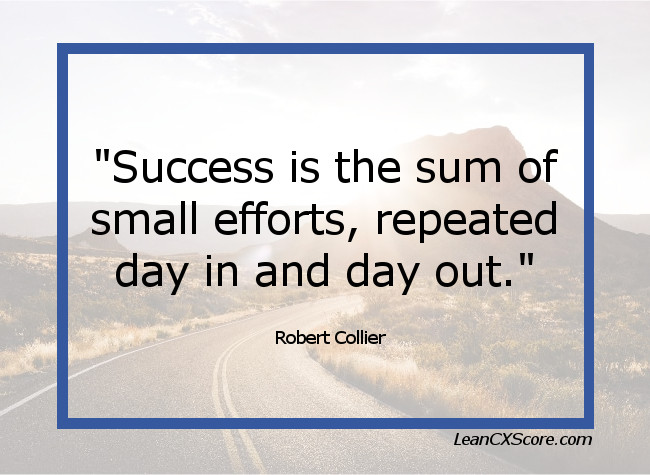
“Success is the sum of small efforts, repeated day in and day out.” – Robert Collier      Click here for the article

Small habits repeated day in

“A company can seize extra-ordinary opportunities only if it is very good at the ordinary operations.” – Marcel Telles                Click here for the article

Extraordinary business ordinary operations

“There is nothing so useless as doing efficiently that which should not be done at all.” – Peter Drucker               Click here for the article

Drucker on efficiency

“It’s not how much money we make that ultimately makes us happy between 9 and 5. It’s whether or not our work fulfils us.” – Malcolm Gladwell               Click here for the article

Fulfilling work quote

“Before you become a leader, success is all about growing yourself. After you become a leader, success is about growing others.” – Jack Welch               Click here for the article

Leadership Quote before you become a leader

“If you want to be happy, set a goal that commands your thoughts, liberates your energy, and inspires your hopes.” – Andrew Carnegie               Click here for the article

Leadership Quotes set a goal to be happy

“If you want to build a ship, don’t drum up the men to gather wood, divide the work, and give orders. Instead, teach them to yearn for the vast and endless sea.” – Antoine de Saint-Exupéry               Click here for the article

Leadership Quote Meaning Yearn for the sea

“A leader is best when people barely know he exists…when his work is done, his aim fulfilled, they will all say: We did it ourselves.” – Lao-Tzu               Click here for the article

Leadership quote lao tsu We Did It Ourselves

“Clarity and simplicity are the antidotes to complexity and uncertainty.” – General George Casey               Click here for the article

Leadership Quote Clarity and Simplicity

“Servant-leadership is all about making the goals clear and then rolling your sleeves up and doing whatever it takes to help people win. In that situation, they don’t work for you, you work for them.” – Ken Blanchard               Click here for the article

Leadership Quote Servant Leadership

“The challenge of leadership is to be strong, but not rude; be kind, but not weak; be bold, but not a bully; be thoughtful, but not lazy; be humble, but not timid; be proud, but not arrogant; have humor, but without folly.” – Jim Rohn               Click here for the article

Jim Rohn Quote Leadership

“Do not follow where the path may lead. Go instead where there is no path and leave a trail” – Ralph Waldo Emerson               Click here for the article

Leadership Quote Emerson do not go where the path may lead

“It is not the strongest nor the most intelligent of species that survives, but the one that is most adaptable to change.” – Charles Darwin               Click here for the article

Leadership Quote Charles Darwin It is not the strongest that survive

“Successful people ask better questions, and as a result, they get better answers.” – Anthony Robbins               Click here for the article

Leadership Quote Anthony Robbins Ask Better Questions

“We’ve had three big ideas at Amazon that we’ve stuck with for 18 years, and they’re the reason we’re successful: Put the customer first. Invent. And be patient.” – Jeff Bezos               Click here for the article

Leadership quote Jeff Bezos customer first

“Give me six hours to chop down a tree and I will spend the first four sharpening the axe.” – Abraham Lincoln                     Click here for the article

Quote-Abraham Lincoln-chop tree-sharpen axe

“Show me the incentive, and I will show you the outcome.” – Charlie Munger                              Click here for the article

Leadership Quote-Munger-Incentive-Outcome

“It is always the simple that produces the marvelous.” – Amelia Barr                                               Click here for the article

Leadership Quote-Amelia Barr-Simple-Marvelous

“Success is the result of nothing more than a few simple disciplines, practiced every day.” – Jim Rohn                  Click here for the article

Quote-Jim Rohn-discipline-every day

“It is vain to do more what can be done with less.” – William of Ockham                  Click here for the article

Quote-Occam-vain to do more-done with less

“A good leader is a person who takes a little more than his share of the blame, and a little less than his share of the credit.” – John Maxwell                  Click here for the article

Leadership-Quote-John-Maxwell-Less-Credit

“I start with the premise that the function of leadership is to produce more leaders, not more followers.” – Ralph Nader                  Click here for the article

Ralph-Nader-Quote_More-Leaders

“Become the kind of leader that people would follow voluntarily; even if you had no title or position.” – Brian Tracy                  Click here for the article

Brian-Tracy-Quote-Leader-Follow-No-Title

“Your most unhappy customers are your greatest source of learning.” – Bill Gates                 Click here for the article

Bill-Gates-Quote_Unhappy-Customers

“The moment one definitely commits oneself, then providence moves too.” – William H. Murray                 Click here for the article

William-Murray-Quote_Providence-Moves-Too

“If it scares you, it might be a good thing to try.” – Seth Godin          Click here for the article

Seth Godin Quote If it scares you try

“You don’t have to be great to start, but you have to start to be great.” – Zig Ziglar                    Click here for the article

Ziglar Quote You Have To Start To Be Great

“If you hear a voice within you say “you cannot paint,” then by all means paint and that voice will be silenced.” – Vincent Van Gogh                                Click here for the article

Van Gogh Quote Paint and the Voice is Silenced

“All anyone asks for is a chance to work with pride.” W. Edwards Deming                                      Click here for the article

Deming Quote People Want to Work With Pride

“It is not enough to do your best; you must know what to do, and then do your best.” – W. Edwards Deming                                Click here for the article

Deming Quote Not Enough to Do Your Best


– Go to the Top –

Get the Leadership Card Deck or the Lean CX Score Book:
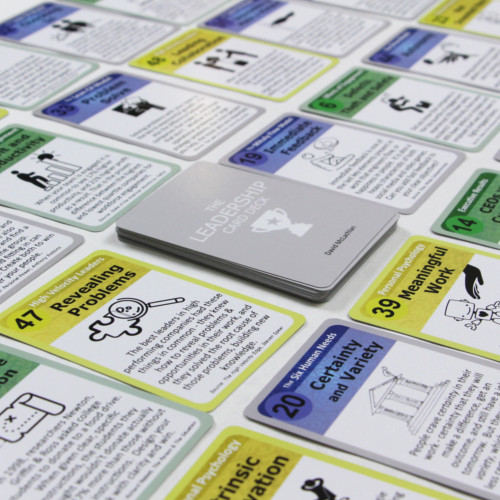
Leadership CardsView All The Leadership Cards (48)

- or - Have the Leadership Cards delivered for your next meeting

 

Lean CX ScoreGet "The Lean CX Score" now, and start creating disruptors in your industry that completely annihilate your competition.

Oh and good news!  You'll be improving the speed, morale and engagement of your teams at the same time.  Get the Lean CX Score now.


Leadership Quote – Extraordinary Opportunities by Marcel Telles

– See all the Leadership Quotes here –

Leadership Quote by Marcel Telles

“A company can seize extra-ordinary opportunities only if it is very good at the ordinary operations.”

Have you ever heard this quote? It is similar to the idea that “Luck” is the combination of preparedness and opportunity.

Extraordinary business ordinary operations

Getting The Fundamentals Right

Hall of fame basketball coach John Wooden famously had his team dribble basketballs up and down the court for hours at a time – a seemingly simple operation for highly paid and highly skilled sports people, isn’t it?

No.

You see these highly paid and highly skilled people are exactly that way because they have mastered the fundamentals – they have mastered the boring parts of their role. And they have mastered them because they do them day in, day out, training their muscle memory so they react in a split second, subconsciously, in the right way.  They knew every inch of the basketball court because they went up and down it thousands of times.

In fact the story goes when Larry Bird was acting in a commercial where he was asked to miss a shot, he made seven baskets in a row before one missed – his automatic reflexes just wouldn’t allow him to shoot a ball that missed.

It’s The Same With Operations

Good operations are the lifeblood of your business – after cashflow of course but operations is what drives cashflow. It’s the day in, day out things our people do that drive profit, customer retention, and growth.

Because of this here’s a key lesson in business – money hides most problems.

When a company is flush with money, for whatever reason (a stock IPO, new borrowing, maybe a good quarter) it naturally hides any problems with its operations and cashflow. Executives might say – “Cash is flowing, so why do we need to keep costs under control?  Why do we need to focus on our processes, our governance, our quality assurance, our… customers?”

But when the money disappears, most problems are revealed.  All of a sudden a company can’t make a payment or growth slips slightly and that reckless spending becomes the focus.  Warren Buffett famously said: “When the tide goes out, you can tell who has been swimming naked.” Which means the tide of money (and in some cases the markets and those who’ve borrowed).  When the tide goes out, those people are revealed.

Luck is Preparedness and Opportunity

Really good opportunities don’t come around every day, but they do eventually come around. If your normal, day to day operations are sloppy and your company takes over another company (or hires 300 more staff, or releases more key products etc) they are more likely to fall over, be managed badly, struggle with the change and eventually disappear.

But get the fundamentals right, like dribbling a basketball, and you can do the great things better, and for longer too.

– David McLachlan

Get the Leadership Card Deck or the Five Minute Lean Book:

Leadership CardsView All The Leadership Cards (48)

- or - Have the Leadership Cards delivered for your next meeting


Want to learn about Lean? Get the book "Five Minute Lean", by David McLachlan - a wonderful book that blends teaching of the tools, culture and philosophy of traditional Lean with a modern-day Lean parable. You can get the whole book on Amazon here and enjoy your own copy.

Leadership Quote – Success is the Sum of Small Efforts

– See all the Leadership Quotes here –

Success Quote by Robert Collier

“Success is the sum of small efforts, repeated day in and day out.”

Have you ever heard this quote?  Success requires constant, small improvements and effort, repeated over time.

It’s not enough to do something once.  Why?  Almost anyone could sell a product once.  They could work on their book once.  They could do a great job once.  But to do those things every day – even when they are boring, even when they don’t feel like it, even when you’d rather do something else – until they add up to something great is where the real magic is.

Small habits repeated day in

Why It’s Magic

It’s magic because most people won’t put in the effort, because putting in the effort is boring.

On the other hand, coming up with ideas, talking about “what could be” or what could have been, and shooting the breeze with your friends are enjoyable and easy things to do. It’s the execution that is hard. Putting in the effort every day to learn and grow, build something and get the outcome you want is hard, which is why so few people actually do it. And those who do it find that few actually follow through.

In fact, just writing about “following through” is easy to do as well!  Writing this one article is easy, but writing one every day for three years takes repeated effort!

Write Down Your Destination

How can we stay focused on the small efforts we need to do?  Write down your goals.  Yes, you’ve heard it all before. Everyone tells you to write down your goals. And sometimes it’s hard to come up with what your goals might be. How do you know it’s the right destination?  Sometimes you don’t, and you have to “iterate” towards your dreams.

You can put in the research at the beginning, you can work on it and get feedback from your results, and maybe your results aren’t what you wanted (or the daily process isn’t what you wanted). It’s then you can pivot and change your focus, maybe ever so slightly. One part of your product might resonate better with customers, or you may enjoy certain parts of a task more than others and want to focus your efforts there.  Sometimes you don’t know before you try.

Love the Process

This is also why the great business people around the world will tell you to “love the process”.  Warren Buffett says that he “loves the process more than the proceeds”, in other words he’s not doing it for the money.  The irony of this is that the money often comes anyway when you enjoy something so much that you are willing to work on it for 14 hours a day.

And that’s what Robert Collier is talking about when he says “The sum of small efforts, day in and day out.” Love the process, and those small 1% improvements will add up and compound on each other over time, and in 10 years you will look back and think “Wow, look how far I’ve come.”

– David McLachlan

Get the Leadership Card Deck or the Five Minute Lean Book:

Leadership CardsView All The Leadership Cards (48)

- or - Have the Leadership Cards delivered for your next meeting


Want to learn about Lean? Get the book "Five Minute Lean", by David McLachlan - a wonderful book that blends teaching of the tools, culture and philosophy of traditional Lean with a modern-day Lean parable. You can get the whole book on Amazon here and enjoy your own copy.

Retrospectives – The Agile Practice Guide

– Back to the Agile Practice Guide (all) –

The Core Agile Practices

There are certain core Agile practices, that when you practice them you will gain the benefit of Agile whether you call yourself an Agile team or not. In fact, many different organisations might be using many different Agile Framework names, but not practicing many or all of these practices behind the scenes.

Knowing the practices themselves will also help you get a deeper understanding of Agile as an approach. The Agile Practice Guide by the Project Management Institute and Agile Alliance has all of this information, and this one in particular is retrospectives.

Check out the video and article below!

Agile Retrospectives

In Agile development a retrospective is a meeting often held at the end of an iteration of around two weeks. As we’ve seen, iterations can be between two and four weeks, where we’re usually releasing an increment that a customer can see, feel and touch. We’re getting that early feedback on whether they’re happy with the product and happy with the requirements of that product.

At the end of that iteration, now we have a short meeting to discuss what was successful, what could be improved, and how to incorporate those improvements and retain those successes that we’ve had in future iterations. That means as we’re going along we’re improving and getting better. So we ask ourselves:

  • What worked well?
  • What didn’t work well?
  • What have I learned?
  • What still puzzles me?

By asking these questions and putting the feedback that we’re gathering back into our process, we are continually improving.

Continue reading Retrospectives – The Agile Practice Guide

Daily Stand Ups – The Agile Practice Guide

– Back to the Agile Practice Guide (all) –

Daily Stand-ups

There are certain core Agile practices that you may already be performing as a team – and if not they are very easy to start.  Direct from the Agile Practice Guide, and by the Project Management Institute and Agile Alliance, this is a guide to daily stand-ups as they relate to Agile and Agile project management.

Check out the video and article now!

What is a daily stand-up?

Daily stand-ups are short meetings to update the team on what we’ve done since the last meeting, and what we intend to do before the next meeting. The intention is also to help remove any blockers and make sure everything is flowing nicely. In that way a daily stand-up is a short meeting that’s used to micro commit to each other as the whole team. With the whole team approach we’ve got everyone involved in the one place – it’s a cross-functional team. Everyone necessary is in the one place to produce this product or complete this project, so when micro committing to each other and uncovering and removing blockers we’re raising them in this short meeting called the daily stand-up.

Continue reading Daily Stand Ups – The Agile Practice Guide

The Agile Practice Guide Video Course

The Agile Practice Guide Video Series

The Agile Practice Guide – Video and Audio Series

Have you ever wanted to learn about Agile, but did not know where to start?

Start here.

Directly from the Agile Practice Guide, which is a book designed to add Agile to the prestigious Project Management Professional (PMP) qualification by the Project Management Institute and Agile Alliance, this video and audio series takes you through the whole range of their Agile lessons.  From project life-cycles (why and when to use Agile), though to the common practices you will see, and the many different Agile and Lean Frameworks that have evolved over the past 30 years.

This free guide will help you get up to speed quickly, even on some of the rarer parts.

Check it out now!

Agile project lifecycles video  1. The different type of project life cycles – Waterfall, Iterative, Incremental, Agile (and Hybrid)

Project Lifecycles agile waterfall video  2. When to use Agile, Waterfall, Iterative or Incremental project approaches

Agile Manifesto and mindset video  3. The Agile Manifesto and Mindset

Agile 12 clarifying principles  4. The 12 Agile Clarifying Principles

The Agile Core Practices

Agile Whole Team Approach  5. The Whole Team Approach

Agile Early and Frequent Feedback  6. Early and Frequent Feedback

Agile daily standups video  7. The Daily Stand Up

Agile Retrospectives Video  8. Retrospectives

Agile Practice Guide Release and Iteration Planning  9. Release and Iteration Planning

Agile Practice Guide Collaborative User Story Creation  10. Collaborative User Story Creation

Agile Practice Guide Demonstrations and Reviews  11. Demonstrations and Reviews

Agile Practice Guide Continuous Integration  12. Continuous Integration

Agile servant leadership video  13. Servant Leadership

Agile and Lean Frameworks

Agile Scrum  14. Agile Frameworks – Scrum

Agile Kanban  15. Agile Frameworks – Kanban

XP Extreme Programming Agile  16. Agile Frameworks – XP, Extreme Programming

Agile_Practice_Guide_Feature_DrivenDevelopment  17. Agile Frameworks – Feature Driven Development

Agile_Practice_Guide_Crystal  18. Agile Frameworks – Crystal

Agile_Practice_Guide_Auxiliary_Methods  19. Auxiliary Agile Frameworks – DSDM, AUP, BDD

Agile_Practice_guide_Scalable_Agile_Methods  20. Scaling Frameworks – SoS, SAFe, LeSS, Enterprise Scrum, Disciplined Agile

Delivering_Agile  21. Agile Delivery – Team Charter, Burndown charts

Agile_Practice_Guide_Evolving_Organisation 22. Evolving the Organisation into Agile

I hope you enjoy!  – David McLachlan

Get the Leadership Card Deck or the Five Minute Lean Book:

Leadership CardsView All The Leadership Cards (48)

- or - Have the Leadership Cards delivered for your next meeting


Want to learn about Lean? Get the book "Five Minute Lean", by David McLachlan - a wonderful book that blends teaching of the tools, culture and philosophy of traditional Lean with a modern-day Lean parable. You can get the whole book on Amazon here and enjoy your own copy.

Early and Frequent Feedback – The Agile Practice Guide

– Back to the Agile Practice Guide (all) –

Core Agile Practices

There are certain core Agile practices that, when you do them with your team, they increase your team’s engagement and results. You also don’t need to call yourself “Agile” – if you are doing some or all of these Agile core practices then you could class yourself as an Agile team, and you will no doubt already know the benefits they bring.

This particular core practice is “Early and Frequent Feedback”.

Check out the video and article now!

Early and Frequent Feedback

When you’re working on an Agile project or delivering in an Agile way, your projects will usually have short iterations.  These short iterations are usually time-boxed pieces of work from two to four weeks, where you deliver something or showcase something for feedback. By releasing something in short cycles what we’re actually doing is enabling a project team to receive early and continuous feedback on the product’s quality throughout the development life cycle.

Continue reading Early and Frequent Feedback – The Agile Practice Guide

Meaningful Work – Quote by Teresa Amabile

– See all the Leadership Quotes here –

“Of all the things that can boost inner work life, the most important is making progress in meaningful work.”


In 2011, Teresa Amabile revealed some research she and her team had been working on that completely upended what was previously thought about leadership and engaging your employees.

It wasn’t fear-based, it wasn’t money-based, and it wasn’t necessarily touchy-feely “let’s hug it out”-based.

Meaningful Work

Source: Harvard Business Review – The Power of Small Wins

To find these new answers Teresa had 26 project teams across seven companies fill out diaries at the end of each work day.  The result was writings that revealed what made people the happiest in their work, and what made them want to continue working even when they didn’t have to – in other words, “Discretionary Effort”, the holy grail of any Employee Engagement initiative.

Continue reading Meaningful Work – Quote by Teresa Amabile

The Agile Whole Team Approach | Agile Practice Guide

– Back to the Agile Practice Guide (all) –

Agile Core Practices

Looking at the core Agile practices from the Agile Practice Guide is a great way to see if a team is really Agile, even when they may call themselves something different.  This is direct from the Project Management Institute and Agile Alliance.

Watch the video below to find out now!

The Whole Team Approach

The Whole Team Approach means involving everyone with the knowledge and the skills necessary to ensure project success. What that means is instead of having to gather different people from all around the organization or another area to actually work on your project in little bits and pieces, we’re including them all in the one, whole team. They’re one hundred percent dedicated to the project and can really deliver much more quickly.

The team should be relatively small, as successful teams have been observed with as few as three people and as many as nine people. The reason for that is when you’ve got only three people, the communication channels are much smaller and much easier. You can’t have a lot of side conversations or a lot of extra conversations on scope, and overall the communication is much simpler. When you’ve got twenty people for example or many different people you could have conversations in many different channels, and from many different people as well.  All of a sudden the communication becomes a lot more complex.

Continue reading The Agile Whole Team Approach | Agile Practice Guide

The Agile 12 Clarifying Principles

– Back to the Agile Practice Guide (all) –

The Agile 12 Clarifying Principles

These are the principles that dig deeper into the Agile Manifesto and mindset. Check out the video and article below to see if your team truly follows the Agile concepts in the way that is right for you.

We’ve already had a look at the Agile manifesto and mindset where we value the items on the left:

  • Individuals and interactions
  • Working software
  • Customer collaboration
  • Responding to change

…more than the items on the right, which are your typical linear methods or waterfall approach. Now we’re delving into it in a little bit more detail using the Agile 12 clarifying principles. When we’re delivering in an Agile way of course you know we’re using iterations where we’ve got time boxed work of between two to four weeks and we’re often delivering an increment to the customer, which is a “feature” that they can see, feel and touch, just to make sure that everything is on track, that they understand what’s being delivered and that the requirements are fit for purpose. So number one is:

1. Our highest priority is to satisfy the customers through early and continuous delivery of valuable software.

And that’s done through that iterative and incremental approach that we will be looking at in this series. You’ve got iterations of between two to four weeks where we’re putting all that feedback back into the product and we’re getting that feedback from the customer. And increments, where we’re delivering a feature so that the customer can just tell for themselves whether the requirements are fit for purpose.

Continue reading The Agile 12 Clarifying Principles