Tag Archives: pmi

Everything You Need to Know About AI in the PMBOK Guide 8th Edition

The PMBOK Guide 8th edition includes a new section on artificial intelligence in project management. If you are sitting the PMP after July 2026, here is what you need to know.

What Is Artificial Intelligence?

AI describes technologies that simulate human behavior, allowing machines to learn from experience, adapt to new situations and perform tasks without being directly programmed.

There are three layers that build on each other:

  1. Machine learning trains models using past data to predict outcomes. It typically requires smaller, structured and labelled data sets.
  2. Deep learning is an advanced form of machine learning that uses multi-layered neural networks to learn from large, unstructured data sets like images or text.
  3. Generative AI uses large language models to create new text, images, audio and video. This is the layer that produces tools like ChatGPT.

Free versions typically limit prompts and data use while paid versions offer greater privacy protection, which matters for organizations handling sensitive project information.

How AI Is Used in Project Management

The PMBOK Guide 8th edition organizes AI use into three categories:
Automation handles low-complexity, repetitive tasks such as generating status reports, tracking activities, sending reminders and producing meeting summaries with action items.

Assistance supports analysis and decision-making. Examples include predictive analytics for budget forecasting, early warning signals based on patterns from similar projects and multi-criteria decision analysis.

Augmentation enhances strategic thinking. This includes analyzing historical data for trends, running trade-off analysis across scope, schedule and cost, and optimizing project portfolios with AI as a brainstorming partner.

These three categories apply across governance, risk, stakeholder management and scheduling.

For risk, AI can automate mitigation responses, assess impact on scope and cost, and use pattern recognition to adjust return on investment projections. For stakeholders, sentiment analysis can assess the tone of communications and meeting transcripts. For scheduling, dynamic scheduling tools can optimize for the shortest timeline or most balanced resource allocation.

Ethical Considerations

The guide also addresses responsible AI use. Key concerns include bias in data, data privacy and security, transparency around how decisions are made, accountability when outputs are wrong, copyright, reliability and environmental sustainability given the computing resources AI requires. These are not just theoretical concerns and are worth understanding for the exam.

New Tools and Techniques

Four AI-related tools and techniques appear in the 8th edition:

Genetic algorithms use a process inspired by natural selection to find optimized solutions. Random paths are tested, the best performers advance to the next round and the process repeats until an optimal outcome is reached.

Branch and bound finds optimal solutions by progressively eliminating paths that do not meet the desired criteria, similar to pruning a decision tree until only the best path remains.

Augmented reality overlays digital information onto a real-world view, useful for design reviews and prototyping.

Virtual reality simulates walking through a three-dimensional model, particularly useful for reviewing building or infrastructure designs before construction begins.

AI in project management is still evolving but the fundamentals covered in the 8th edition give you a solid foundation for both the exam and the work itself.

– David McLachlan

You can see what people are saying about David McLachlan here: REVIEWS

Navigate to Free Project Management and Leadership Articles through the links on the right (or at the bottom if on Mobile) 
PMI PMP 35 PDUs CourseThe Ultimate PMP Project Management Prep Course (35 PDUs)
Agile Certified Practitioner (PMI-ACP 28 PDUs)The Complete PMI-ACP Course: (28 PDUs) 
PgMP Program Management CourseLearn Program Management – the PgMP Prep Course
Full PMP Exams to Pass on the First TryFour Full PMP Practice Exams (180 Qs each) to pass your PMP on the First Try!
Scrum Master Course PSMScrum Master Course (PSM)
Product Owner Course PSPOProduct Owner Course (PSPO)
Business Analyst CourseBusiness Analyst Course

Also available are my Project Management Templates – these don’t have a coupon code but they’re a great way to save 100s of hours when you’re first starting out:

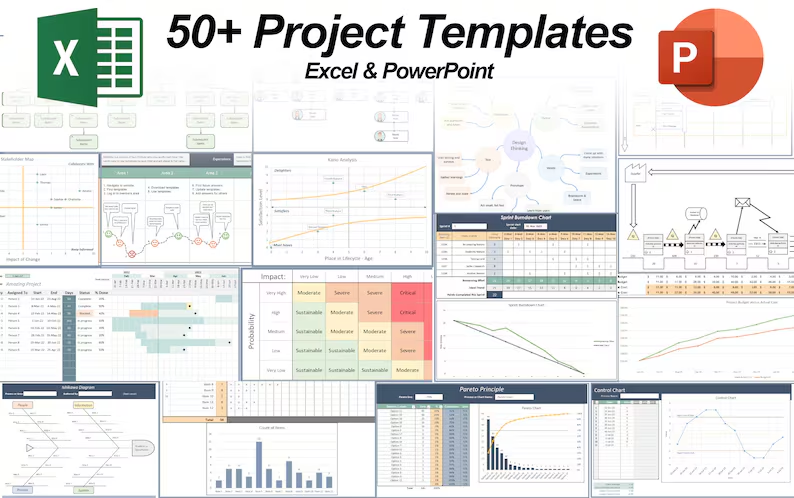
50 Project Management Templates Gantt Chart Risk Matrix and more Excel50+ Project Management Templates in Excel and PowerPoint (Gantt Chart, Risk Matrix and more!)
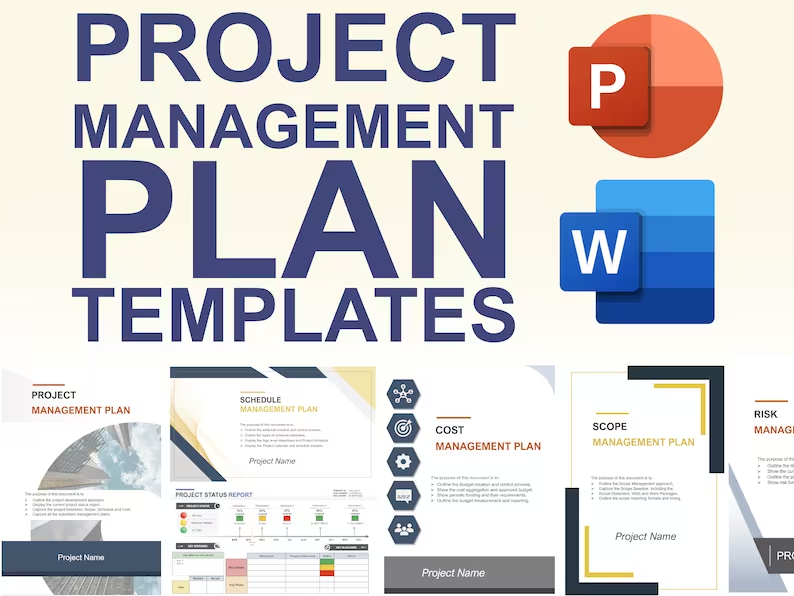
Project Management Plan TemplatesPre-made Project Management Plan Templates: Save 100 HOURS!


What’s NEW in the PMI-ACP Course – 28 PDUs

Agile Certified Practitioner ACP Kanban BoardExciting Updates to the Agile Certified Practitioner (ACP) Exam: What You Need to Know

There have been some significant changes to the Agile Certified Practitioner (ACP) certification from PMI, and I’ve already updated my ACP course to reflect all of those changes. I wanted to take a moment to give you a behind-the-scenes look at these updates, show you what’s new, and highlight all the amazing additions that match the updated exam content outline. If you’re planning to sit for the ACP exam, these updates are crucial for your preparation.

New Eligibility Requirements for the ACP Exam

First things first, the eligibility requirements for the ACP exam have changed. To be eligible for the exam, you need:

  • A secondary diploma (high school or equivalent).
  • 28 contact hours of agile education. My course covers these 28 hours, ensuring you meet this requirement. You can still use 21 hours until March 31, 2025, but with my course, you’re already set with the full 28 hours.
  • Two years of agile experience, or a current PMP.

I’ve also added content to my course to specifically cover the 28 contact hours, including agile frameworks, methodologies, and practices. This ensures you’ll be fully prepared for the new requirements.

What’s New in the Course?

I’ve worked hard to update the course and ensure it aligns with the new exam content. Here’s a breakdown of the major updates:

General Introduction to Agile

We begin with a general introduction to agile – covering the basics of agile practices, frameworks, and methodologies. This section sets the foundation for the course, ensuring you understand agile in a project context.

Updated Exam Content Outline

Next, we dive into the updated ACP exam content outline. I’ll guide you through the key concepts and principles you need to focus on, making sure you’re aware of everything that’s relevant for the new exam format.

Real Project Matched to the ACP Exam

One of the most exciting additions to the course is a fully-realized project that matches the new ACP exam content outline. In this section, we go step-by-step through the process of delivering a web app for a fitness company. It’s not just theoretical – this project provides real, practical insights, and every stage is directly tied to the ACP exam’s learning objectives.

Comprehensive Agile Frameworks

I’ve also included an in-depth exploration of all the key agile frameworks, including:

  • Scrum
  • Extreme Programming (XP)
  • Kanban
  • Feature-Driven Development (FDD)
  • Crystal
  • SAFe (Scaled Agile Framework)
  • Large Scale Scrum (LeSS)
  • …and much much more.

These frameworks are crucial to understanding agile at a deeper level, and we dive deep into each one to ensure you’re well-versed in how they work.

Agile and Executive Coaching

Another standout feature of this updated course is the inclusion of agile and executive coaching. Having worked as an agile coach myself, I’ve seen firsthand how organizations often struggle with agile transformation. In this section, I provide valuable insights on coaching executives and addressing common challenges within agile projects. This coaching information is something you won’t find in many other courses, and it’s sure to take your knowledge to the next level.

Agile Transformations: Changing Organizational Culture

Beyond just implementing agile within projects, we also cover agile transformations – how to change an entire organization’s culture to become agile. This part of the course provides high-level strategies and steps to guide organizations through the agile transformation process, making sure they’re set up for success long-term.

Quick Review of Key Agile Concepts

To help you quickly refresh your knowledge, I’ve included around 100 key agile concepts that provide a concise review at the end of the course. This is a great resource for last-minute revision before the exam.

Practice Tests to Test Your Knowledge

One of the most valuable additions is the inclusion of two full practice tests, each with 120 multiple-choice, scenario-based questions. These practice tests are designed to mimic the real ACP exam, giving you the opportunity to test your knowledge and assess your readiness. You’ll find these tests cover all the topics you’ll encounter in the actual exam, so they’re a fantastic tool to help you prepare.

Final Thoughts: Become a True Agile Practitioner

By the end of the course, not only will you be ready to sit for the ACP exam, but you’ll also have practical, real-world agile knowledge that will make you a true agile practitioner. This course is designed to ensure that you not only earn the certification but also apply agile effectively in real projects.

Additionally, you’ll receive a certificate of completion once you’ve finished the course, providing proof of your newly acquired skills.

If you’re ready to dive into agile, learn practical techniques, and prepare for the ACP exam, I highly recommend checking out my updated course. You won’t be disappointed with the content I’ve added, and it will set you on the right path to becoming an Agile Certified Practitioner.

David McLachlan on LinkedIn

See more Agile Certified Practitioner articles: 

You can see what people are saying about David McLachlan here: REVIEWS

Navigate to Free Project Management and Leadership Articles through the links on the right (or at the bottom if on Mobile) 
PMI PMP 35 PDUs CourseThe Ultimate PMP Project Management Prep Course (35 PDUs)
Agile Certified Practitioner (PMI-ACP 21 PDUs)The Complete Agile Course: PMI-ACP (21 PDUs), Coaching, Jira and MORE! 
50 Project Management Templates Gantt Chart Risk Matrix and more Excel50+ Project Management Templates in Excel and PowerPoint (Gantt Chart, Risk Matrix and more!)
Project Management Plan TemplatesPre-made Project Management Plan Template: Save 100 HOURS!


Retrospectives – The Agile Practice Guide

– Back to the Agile Practice Guide (all) –

The Core Agile Practices

There are certain core Agile practices, that when you practice them you will gain the benefit of Agile whether you call yourself an Agile team or not. In fact, many different organisations might be using many different Agile Framework names, but not practicing many or all of these practices behind the scenes.

Knowing the practices themselves will also help you get a deeper understanding of Agile as an approach. The Agile Practice Guide by the Project Management Institute and Agile Alliance has all of this information, and this one in particular is retrospectives.

Check out the video and article below!

Agile Retrospectives

In Agile development a retrospective is a meeting often held at the end of an iteration of around two weeks. As we’ve seen, iterations can be between two and four weeks, where we’re usually releasing an increment that a customer can see, feel and touch. We’re getting that early feedback on whether they’re happy with the product and happy with the requirements of that product.

At the end of that iteration, now we have a short meeting to discuss what was successful, what could be improved, and how to incorporate those improvements and retain those successes that we’ve had in future iterations. That means as we’re going along we’re improving and getting better. So we ask ourselves:

  • What worked well?
  • What didn’t work well?
  • What have I learned?
  • What still puzzles me?

By asking these questions and putting the feedback that we’re gathering back into our process, we are continually improving.

Continue reading Retrospectives – The Agile Practice Guide

The Agile Practice Guide Video Course

The Agile Practice Guide Video Series

The Agile Practice Guide – Video and Audio Series

Have you ever wanted to learn about Agile, but did not know where to start?

Start here.

Directly from the Agile Practice Guide, which is a book designed to add Agile to the prestigious Project Management Professional (PMP) qualification by the Project Management Institute and Agile Alliance, this video and audio series takes you through the whole range of their Agile lessons.  From project life-cycles (why and when to use Agile), though to the common practices you will see, and the many different Agile and Lean Frameworks that have evolved over the past 30 years.

This free guide will help you get up to speed quickly, even on some of the rarer parts.

Check it out now!

Agile project lifecycles video  1. The different type of project life cycles – Waterfall, Iterative, Incremental, Agile (and Hybrid)

Project Lifecycles agile waterfall video  2. When to use Agile, Waterfall, Iterative or Incremental project approaches

Agile Manifesto and mindset video  3. The Agile Manifesto and Mindset

Agile 12 clarifying principles  4. The 12 Agile Clarifying Principles

The Agile Core Practices

Agile Whole Team Approach  5. The Whole Team Approach

Agile Early and Frequent Feedback  6. Early and Frequent Feedback

Agile daily standups video  7. The Daily Stand Up

Agile Retrospectives Video  8. Retrospectives

Agile Practice Guide Release and Iteration Planning  9. Release and Iteration Planning

Agile Practice Guide Collaborative User Story Creation  10. Collaborative User Story Creation

Agile Practice Guide Demonstrations and Reviews  11. Demonstrations and Reviews

Agile Practice Guide Continuous Integration  12. Continuous Integration

Agile servant leadership video  13. Servant Leadership

Agile and Lean Frameworks

Agile Scrum  14. Agile Frameworks – Scrum

Agile Kanban  15. Agile Frameworks – Kanban

XP Extreme Programming Agile  16. Agile Frameworks – XP, Extreme Programming

Agile_Practice_Guide_Feature_DrivenDevelopment  17. Agile Frameworks – Feature Driven Development

Agile_Practice_Guide_Crystal  18. Agile Frameworks – Crystal

Agile_Practice_Guide_Auxiliary_Methods  19. Auxiliary Agile Frameworks – DSDM, AUP, BDD

Agile_Practice_guide_Scalable_Agile_Methods  20. Scaling Frameworks – SoS, SAFe, LeSS, Enterprise Scrum, Disciplined Agile

Delivering_Agile  21. Agile Delivery – Team Charter, Burndown charts

Agile_Practice_Guide_Evolving_Organisation 22. Evolving the Organisation into Agile

I hope you enjoy!  – David McLachlan

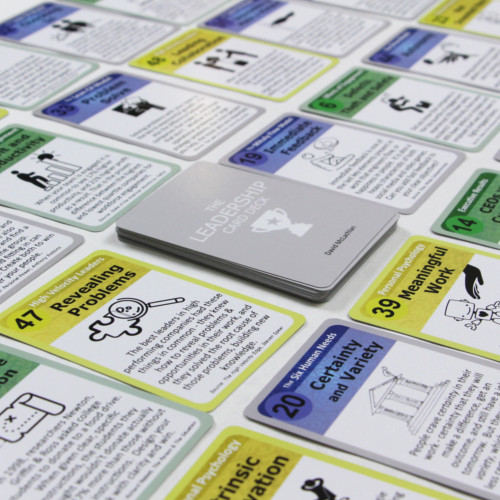
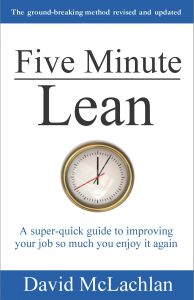
Get the Leadership Card Deck or the Five Minute Lean Book:

Leadership CardsView All The Leadership Cards (48)

- or - Have the Leadership Cards delivered for your next meeting


Want to learn about Lean? Get the book "Five Minute Lean", by David McLachlan - a wonderful book that blends teaching of the tools, culture and philosophy of traditional Lean with a modern-day Lean parable. You can get the whole book on Amazon here and enjoy your own copy.