Tag Archives: agile

Continuous Integration – The Agile Practice Guide

– Back to the Agile Practice Guide (all) –

The Agile Core Practices

There are certain core Agile practices within Agile that can be used regardless of whether you call yourself an Agile team or not.  Knowing these core practices is also a great way to get a deeper understanding of Agile as an approach.

One of the best places to update your skills in Agile is from the Agile Practice Guide, by the Project Management Institute and Agile Alliance. This one in particular is Continuous Integration and other execution practices.

Check it out!

Continuous Integration and other execution practices

As we’ve seen, Agile is the combination of an iterative approach – where we’re iterating and improving our product – and also an incremental approach where we’re delivering something at the end of those iterations.

Continue reading Continuous Integration – The Agile Practice Guide

Collaborative User Story Creation – The Agile Practice Guide

– Back to the Agile Practice Guide (all) –

The Agile Core Practices

There are certain core Agile practices you might be doing as a team – and not necessarily calling yourself Agile or using the framework names, but still working in an Agile way. Knowing these core practices is a great way to get a deeper understanding of Agile as an approach.

One of the best places to update your skills in Agile is from the Agile Practice Guide, by the Project Management Institute and Agile Alliance. This one in particular is collaborative user story creation.

Collaborative User Story Creation

With collaborative user story creation, it’s important because poor specifications are usually a major reason for project failure. We may have specified what the customer wants, and then when they actually get their hands on it they may actually have wanted something different. Or we may have misinterpreted what they wanted in the first place. Al of this results in them not really being happy with the end result. So poor specifications are often that major reason for project failure.

In Agile development, user stories are written with with a lot of the people involved, from the customers through to the people creating the product. We’ve got the developers who are developing our product, testers, business representatives or the product owner in the whole team approach. We have frequent informal reviews of the things that they’re creating just to make sure that they’re right, and everyone who needs to be is always involved.

Continue reading Collaborative User Story Creation – The Agile Practice Guide

Release and Iteration Planning – The Agile Practice Guide

– Back to the Agile Practice Guide (all) –

The Agile Practice Guide

There are certain Core Practices in Agile that are important to understand. If you’re performing some or all of these core practices then you’re likely getting the benefits of Agile whether you call yourself an Agile team or not.

One of the best ways to increase your Agile knowledge is through the Agile Practice Guide from the Project Management Institute and Agile Alliance.

Check out the video and article below!

Release and Iteration Planning

When we’re release and iteration planning for Agile life cycles, two kinds of planning occur. In release planning, our business representatives establish and prioritize user stories for the release. Our business representative is that Product Owner role, but could also be another person who represents the business or the customer themselves who you’re doing the work for.

Part of their role involves gathering the requirements, and they’re defined as the Product Owner role in the Whole Team Approach. We gather that whole team together remember for an Agile project. They will establish and prioritize user stories for a release, collaborate with the team, and they’ll refine larger user stories (big pieces of work) into a collection of smaller stories, features or items. So different people can work on different cards and all up it’ll be a part of this larger release.

This then results in backlog preparation.

The backlog is the ordered list of all of the work, presented in a story form for the team. That story is usually “As a [role]”, “I want [feature]”, “So I can do [requirement]”.

Continue reading Release and Iteration Planning – The Agile Practice Guide

Retrospectives – The Agile Practice Guide

– Back to the Agile Practice Guide (all) –

The Core Agile Practices

There are certain core Agile practices, that when you practice them you will gain the benefit of Agile whether you call yourself an Agile team or not. In fact, many different organisations might be using many different Agile Framework names, but not practicing many or all of these practices behind the scenes.

Knowing the practices themselves will also help you get a deeper understanding of Agile as an approach. The Agile Practice Guide by the Project Management Institute and Agile Alliance has all of this information, and this one in particular is retrospectives.

Check out the video and article below!

Agile Retrospectives

In Agile development a retrospective is a meeting often held at the end of an iteration of around two weeks. As we’ve seen, iterations can be between two and four weeks, where we’re usually releasing an increment that a customer can see, feel and touch. We’re getting that early feedback on whether they’re happy with the product and happy with the requirements of that product.

At the end of that iteration, now we have a short meeting to discuss what was successful, what could be improved, and how to incorporate those improvements and retain those successes that we’ve had in future iterations. That means as we’re going along we’re improving and getting better. So we ask ourselves:

  • What worked well?
  • What didn’t work well?
  • What have I learned?
  • What still puzzles me?

By asking these questions and putting the feedback that we’re gathering back into our process, we are continually improving.

Continue reading Retrospectives – The Agile Practice Guide

Daily Stand Ups – The Agile Practice Guide

– Back to the Agile Practice Guide (all) –

Daily Stand-ups

There are certain core Agile practices that you may already be performing as a team – and if not they are very easy to start.  Direct from the Agile Practice Guide, and by the Project Management Institute and Agile Alliance, this is a guide to daily stand-ups as they relate to Agile and Agile project management.

Check out the video and article now!

What is a daily stand-up?

Daily stand-ups are short meetings to update the team on what we’ve done since the last meeting, and what we intend to do before the next meeting. The intention is also to help remove any blockers and make sure everything is flowing nicely. In that way a daily stand-up is a short meeting that’s used to micro commit to each other as the whole team. With the whole team approach we’ve got everyone involved in the one place – it’s a cross-functional team. Everyone necessary is in the one place to produce this product or complete this project, so when micro committing to each other and uncovering and removing blockers we’re raising them in this short meeting called the daily stand-up.

Continue reading Daily Stand Ups – The Agile Practice Guide

The Agile Practice Guide Video Course

The Agile Practice Guide Video Series

The Agile Practice Guide – Video and Audio Series

Have you ever wanted to learn about Agile, but did not know where to start?

Start here.

Directly from the Agile Practice Guide, which is a book designed to add Agile to the prestigious Project Management Professional (PMP) qualification by the Project Management Institute and Agile Alliance, this video and audio series takes you through the whole range of their Agile lessons.  From project life-cycles (why and when to use Agile), though to the common practices you will see, and the many different Agile and Lean Frameworks that have evolved over the past 30 years.

This free guide will help you get up to speed quickly, even on some of the rarer parts.

Check it out now!

Agile project lifecycles video  1. The different type of project life cycles – Waterfall, Iterative, Incremental, Agile (and Hybrid)

Project Lifecycles agile waterfall video  2. When to use Agile, Waterfall, Iterative or Incremental project approaches

Agile Manifesto and mindset video  3. The Agile Manifesto and Mindset

Agile 12 clarifying principles  4. The 12 Agile Clarifying Principles

The Agile Core Practices

Agile Whole Team Approach  5. The Whole Team Approach

Agile Early and Frequent Feedback  6. Early and Frequent Feedback

Agile daily standups video  7. The Daily Stand Up

Agile Retrospectives Video  8. Retrospectives

Agile Practice Guide Release and Iteration Planning  9. Release and Iteration Planning

Agile Practice Guide Collaborative User Story Creation  10. Collaborative User Story Creation

Agile Practice Guide Demonstrations and Reviews  11. Demonstrations and Reviews

Agile Practice Guide Continuous Integration  12. Continuous Integration

Agile servant leadership video  13. Servant Leadership

Agile and Lean Frameworks

Agile Scrum  14. Agile Frameworks – Scrum

Agile Kanban  15. Agile Frameworks – Kanban

XP Extreme Programming Agile  16. Agile Frameworks – XP, Extreme Programming

Agile_Practice_Guide_Feature_DrivenDevelopment  17. Agile Frameworks – Feature Driven Development

Agile_Practice_Guide_Crystal  18. Agile Frameworks – Crystal

Agile_Practice_Guide_Auxiliary_Methods  19. Auxiliary Agile Frameworks – DSDM, AUP, BDD

Agile_Practice_guide_Scalable_Agile_Methods  20. Scaling Frameworks – SoS, SAFe, LeSS, Enterprise Scrum, Disciplined Agile

Delivering_Agile  21. Agile Delivery – Team Charter, Burndown charts

Agile_Practice_Guide_Evolving_Organisation 22. Evolving the Organisation into Agile

I hope you enjoy!  – David McLachlan

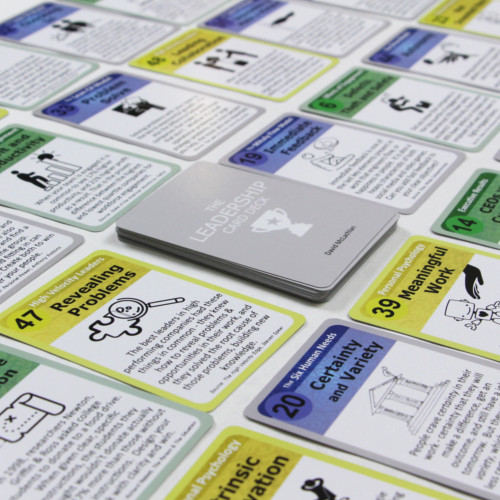
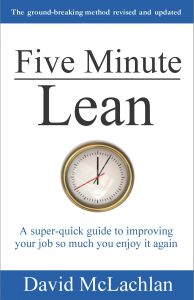
Get the Leadership Card Deck or the Five Minute Lean Book:

Leadership CardsView All The Leadership Cards (48)

- or - Have the Leadership Cards delivered for your next meeting


Want to learn about Lean? Get the book "Five Minute Lean", by David McLachlan - a wonderful book that blends teaching of the tools, culture and philosophy of traditional Lean with a modern-day Lean parable. You can get the whole book on Amazon here and enjoy your own copy.

Early and Frequent Feedback – The Agile Practice Guide

– Back to the Agile Practice Guide (all) –

Core Agile Practices

There are certain core Agile practices that, when you do them with your team, they increase your team’s engagement and results. You also don’t need to call yourself “Agile” – if you are doing some or all of these Agile core practices then you could class yourself as an Agile team, and you will no doubt already know the benefits they bring.

This particular core practice is “Early and Frequent Feedback”.

Check out the video and article now!

Early and Frequent Feedback

When you’re working on an Agile project or delivering in an Agile way, your projects will usually have short iterations.  These short iterations are usually time-boxed pieces of work from two to four weeks, where you deliver something or showcase something for feedback. By releasing something in short cycles what we’re actually doing is enabling a project team to receive early and continuous feedback on the product’s quality throughout the development life cycle.

Continue reading Early and Frequent Feedback – The Agile Practice Guide

The Agile Whole Team Approach | Agile Practice Guide

– Back to the Agile Practice Guide (all) –

Agile Core Practices

Looking at the core Agile practices from the Agile Practice Guide is a great way to see if a team is really Agile, even when they may call themselves something different.  This is direct from the Project Management Institute and Agile Alliance.

Watch the video below to find out now!

The Whole Team Approach

The Whole Team Approach means involving everyone with the knowledge and the skills necessary to ensure project success. What that means is instead of having to gather different people from all around the organization or another area to actually work on your project in little bits and pieces, we’re including them all in the one, whole team. They’re one hundred percent dedicated to the project and can really deliver much more quickly.

The team should be relatively small, as successful teams have been observed with as few as three people and as many as nine people. The reason for that is when you’ve got only three people, the communication channels are much smaller and much easier. You can’t have a lot of side conversations or a lot of extra conversations on scope, and overall the communication is much simpler. When you’ve got twenty people for example or many different people you could have conversations in many different channels, and from many different people as well.  All of a sudden the communication becomes a lot more complex.

Continue reading The Agile Whole Team Approach | Agile Practice Guide

The Agile 12 Clarifying Principles

– Back to the Agile Practice Guide (all) –

The Agile 12 Clarifying Principles

These are the principles that dig deeper into the Agile Manifesto and mindset. Check out the video and article below to see if your team truly follows the Agile concepts in the way that is right for you.

We’ve already had a look at the Agile manifesto and mindset where we value the items on the left:

  • Individuals and interactions
  • Working software
  • Customer collaboration
  • Responding to change

…more than the items on the right, which are your typical linear methods or waterfall approach. Now we’re delving into it in a little bit more detail using the Agile 12 clarifying principles. When we’re delivering in an Agile way of course you know we’re using iterations where we’ve got time boxed work of between two to four weeks and we’re often delivering an increment to the customer, which is a “feature” that they can see, feel and touch, just to make sure that everything is on track, that they understand what’s being delivered and that the requirements are fit for purpose. So number one is:

1. Our highest priority is to satisfy the customers through early and continuous delivery of valuable software.

And that’s done through that iterative and incremental approach that we will be looking at in this series. You’ve got iterations of between two to four weeks where we’re putting all that feedback back into the product and we’re getting that feedback from the customer. And increments, where we’re delivering a feature so that the customer can just tell for themselves whether the requirements are fit for purpose.

Continue reading The Agile 12 Clarifying Principles

The Agile Manifesto and Mindset

– Back to the Agile Practice Guide (all) –

The Agile Manifesto and Mindset

Do you know where Agile all began?  The manifesto behind one of the fastest growing project management and product development methodologies of the new millennium?

Check out the video and article below as we go through the Agile manifesto and mindset.

Where it all began.

In 2001 a group of individuals representing the most widely used lightweight software development methodologies agreed on a common set of values and principles which later became known as the Agile Manifesto.

The Agile Manifesto contains four statements of values, and this is where it all began. You’ll see that there’s many methodologies or many Agile practices that come out of Agile that you’ll learn about soon, but they all stem from these core principles and these core values that came about in 2001. The four Agile Values are:

We value individuals and interactions over processes and tools.

So while processes and tools are important we value individuals and interactions more than processes and tools, and you’ll see that in the practices of agile where we have daily stand-ups and we’re really interacting to remove blockers on a daily basis rather than letting them simmer. So this is where we’re interacting and we’ve got the whole team approach where everyone who’s needed to be in a project is actually within that team – you don’t have to go externally or find them in other departments, they’re all within the one team. You can talk to them quite quickly and immediately. Next we prefer:

Continue reading The Agile Manifesto and Mindset