Tag Archives: pmbok

PMP Exam Questions – Practice Session | 03

– See all the PMP Exam Questions – 

PMP Practice ExamPMP Exam Question Session 3

In this series we will walk through five PMP Practice Exam Questions each day – a great way to set up your morning as you prepare to pass the PMP Exam. It is also useful for the CAPM exam, as the content is very similar.

We will also figure them out together, and you’ll see the thought process behind solving these PMP exam questions.

I hope you enjoy!


Question 1

One or more deliverables are produced at the end of a project phase. Multiple phases make up a project life-cycle. What is the completion of a project phase also called?

A) Kill Points
B) Task Points
C) Feature Items
D) Release Items

Question 2

Every project has essential milestones and business goals to meet. A project is divided into parts, called:

A) Tasks
B) Work Breakdown Structure
C) Phases
D) Releases

Question 3

You are a project manager responsible for delivering a new mobile app. You are working on the project part-time, and must ask the functional manager for each of your decisions. What type of organizational structure are you working in?

A) Weak Matrix
B) Strong Matrix
C) Balanced Matrix
D) Project Management Office

Question 4

You are working on a global project in other country, where it is customary to honour the project manager of a successful project with gifts. The company you are working for has a policy to never accept gifts as it may be a conflict of interest. What should you do in this circumstance?

A) Accept the gift from the customer, it would be rude not to
B) Tell the customer you don’t accept gifts
C) Discuss the situation with your manager and agree what to do – you must be aware of social customs in other countries but your company’s rules take precedence over others.
D) Accept the gift from the customer and give it to somebody else

Question 5

A risk is an undetermined event or condition that can have a positive or negative effect on at least one project objective if it occurs. During which part of your project is the risk of the project failure highest?

A) The beginning, when initiating your project
B) The middle, when planning your project
C) The end, when closing your project
D) The middle, when executing your project

– See all the PMP Exam Questions – 

03 – Project Life Cycles and Phase Gates – PMP, CAPM and PMBOK Training

3_Project Lifecycles and Phase GatesProject Life Cycles and Phase Gates

In order to deliver projects and programs there are many different methods and what we call project life cycles, which are ways of working within a project that we can use to deliver these things.

Predictive Life Cycle

First of all we’ve got our Predictive life cycle, which is traditionally called waterfall, where we think about all the scope and the requirements upfront then we go away for a certain period of time and make it all happen within a project without necessarily getting too much feedback, and then we deliver in one big bang at the end. That’s our predictive lifecycle – we’re predicting all of the things upfront that a customer might want and that might happen in a project.

Iterative Life Cycle

We have our iterative life cycle and incremental life cycle, which actually combine to become Agile in the end. We’re iterating towards a final product but we’re gathering feedback and changing as we go, usually in two to four week cycles or iterations. We’re gathering that feedback, putting it back into our plan, then gathering that feedback again and putting it back into the plan again, but we’re still delivering in one big bang.

Incremental Life Cycle

Incremental is when we’re delivering increments that a customer can see, feel and touch. Based on that they’re actually using that feature in the real world, and then at the end they still get their full final product as well. We do this to get better and more feedback from our customer delivering those features to a customer as we’re going along.

Adaptive Life Cycles

Second to last is adaptive life cycles so these are our Agile agile life cycles and these are usually iterative and incremental. Detailed scope can be defined and approved before the start of each iteration of two to four weeks instead of doing the whole project in a predictive manner – we’re only looking at shorter life cycles. We we don’t need to predict the whole thing and we can change as we’re going along.

Hybrid Life Cycles

Hybrid is just a combination of either predictive or an agile life cycle or an adaptive life cycle where we might have all of our scope upfront but we’re using agile methodologies like Kanban to manage that scope and what should go from “in progress” or the “backlog” to “done”. Or we might be using scrum where we’re having daily stand-ups, just short sharp meetings that give us an update on where everything is up to. These are the combinations that you can have in your project life cycles.

Just as there are multiple different ways of managing a project there are different phase gates we can use as we’re going along. These can be matched up to any of those project life cycles where we’ve got iterations, and each of those iterations or a few different iterations could match up to be one of these phase gates at the end where we are delivering our feasibility study at the beginning for example to see if it’s worth kicking off a project, then we’re delivering our customer requirements (these are just ideas) you might have more phase gates or things that you need to deliver or features that you’d need to deliver as part of your project as you go along. Potentially we’re building all these things, testing them and transitioning them back to the business or back to the operations of the business.

Managing Life Cycles With Project Documents 

That phase gate is the end of a phase and a project’s performance is benchmarked to documents such as the project business case which is up here in the beginning documents. The Project Charter kicks off a project, the project management plan combines all the things like risk, scope, schedule, quality, communications, and stakeholders into one project management plan that you use to monitor and control and execute on the project as you’re going along.

Lastly how do we know that we we’ve met our requirements? It’s the benefits management plan. What are the benefits that we’re delivering and how do we know we’ve met them, or what are we aiming for once this project has been delivered. Is it an increase in customer revenue? Is it an increase in this particular product’s performance? We’re wanting to measure it.

– David McLachlan

02 – The Importance of Project Management – PMP, CAPM and PMBOK Training

2_Importance of Project ManagementThe Importance of Project Management

This article is about the importance of project management itself, and managing that project in a successful way from beginning to end.

There are benefits to having good project management – effective project management leads to meeting stakeholder objectives, increasing the chances of the project success, resolving problems and issues as they arise (which they always do), responding to risks that might arise, as well as optimizing the use of organizational resources so the people that you’re bringing on board to your project can be used in the absolute best way. Identifying failing projects and sometimes terminating them if you absolutely need to, and managing all of the constraints – money, scope, time frame – all of those need to be managed or shuffled around so you can still meet the project objectives.

Poor project management on the other hand is a different story. I’ve seen this many times and I’m sure you have to, because project management is quite difficult. That’s why it’s nice to have a framework to operate by. You could have missed deadlines where now all of a sudden your project is late. You could have cost overruns where now all of a sudden it’s going to cost two million dollars instead of 1 million dollars or fifty thousand dollars instead of twenty thousand dollars whatever it is.

You could have poor quality – so it’s not actually meeting what the customer wanted. You could be having to rework things to redo them over and over again and the customer is not happy about that. Expansion of scope, otherwise known as scope creep, where the things that the customer wants actually end up being more and more and more and they weren’t designed in the initial project for what we wanted to deliver.

Using a Proven Project Management Framework

There are lots of things that can happen if a project is not managed well, and even when it is managed well. These things can go wrong but that’s the benefit of having a framework to manage it by – you know you’re doing the absolute best you can to try and get these things on the left here (meeting those stakeholder needs, increasing the chances of success) rather than having missed deadlines or cost overruns.

Operations, Projects, Programs, Portfolios

There is a relationship here between three things and we’ve got basically at the very base level, at the operating level where things are done on a day to day basis we’ve got the operations of a business. And that’s where we’ve got shared resources and shared stakeholders, we’re going to have to use these resources and these people from within the organization to help us get the project done, and that’s an essential thing that we need to manage throughout the life of a project.

The next layer from there are our projects, and these are the things that are delivering change to our BAU or operations, but sometimes you want to have a really good overview of all of these multiple projects – there’s lots of projects happening and you need something to clearly define a bunch of those projects in one, and that’s where we come into a program.

Program managers might have a couple of projects, a handful maybe 10 maybe even 20 sometimes where they’ve got multiple projects all delivering the same strategic objective, they’re all delivering a similar thing but doing different things.

Lastly made up of programs and projects and operations are our portfolios. A portfolio manager will have multiple programs and then multiple projects under each of those programs and then lots and lots of BAU teams and operations within the operations side of the business.

– David McLachlan

PMP Exam Questions – Practice Session | 01

– See all the PMP Exam Questions – 

PMP Exam Question Session 1

In this series we will walk through five PMP Practice Exam Questions each day – a great way to set up your morning as you prepare to pass the PMP Exam. It is also useful for the CAPM exam, as the content is very similar.

We will also figure them out together, and you’ll see the thought process behind solving these PMP exam questions.

I hope you enjoy!

Question 1

You are asked to decide which project is a better investment. Project X takes 3 years to complete with a Net Present Value of $125,000 and Project Y takes 2 years to complete with a Net Present Value of $100,000. Which will you choose?

A) Both projects
B) Project X only
C) Either project
D) Project Y only

Question 2

You are a certified PMP working as a project manager in a company. One of your colleagues is planning to take the PMP exam too, and asks for your guidance on preparation. What should you do?

A) Give them a few instructions and let them work out the rest
B) Say you’re too busy to help them – after all, it’s true
C) Give them whatever guidance you can provide based on your experience
D) Tell them to go to the PMI website and find the information they want

Question 3

What is the Cost Performance Index of a project with a PV of $795,000, EV of $850,000, and AC of $950,000?

A) 1.12, you are over budget
B) 0.89, you are over budget
C) 2.05, you are under budget
D) 0.75, you are under budget

Question 4

Return on Investment (ROI) is the percentage return we get from investing in something. Your project cost the company $200,000 to complete. That project returns a benefit of $240,000. The Return on Investment (ROI) would be:

A) 20%
B) 24%
C) 240%
D) 16%

Question 5

The Benefit Cost Ratio is used to compare the benefits to the costs for a project. As a project manager working for your company which one of the following projects will you recommend based on the BCRs below?

A) Project X at 0.75
B) Project Y at 1.20
C) Project R at 1.85
D) Project W at 2.05

– See all the PMP Exam Questions – 

05 – Project Management Business Documents | PMBOK Course

Project Management Business Documents

There are many different business documents

There are many different business documents that you’ll need to help kick-off and then manage your project, and we call these Project Management Business Documents that we’re going to need in the managing of our project. There are two main business documents, which are the project business case, and the project benefits management plan. Ultimately the business case will help us kick off the project and start the project but the project management benefits plan will help us manage those benefits that we’re wanting to deliver and make sure that we are delivering on those benefits when the project is delivered. The pre-work we’re looking at is the needs assessment – for example what’s the need of this project? Why is it being kicked off? Why is it being initiated? That helps us and feeds into our business case.

Benefits Management Plan

The project business case also has the benefits management plan within that, so that we know what benefits we’re delivering. All these documents will feed into our project charter which ultimately is one of the first steps, or is the first step in initiating a project. From there the project charter will feed in with all of the information that we’ve gathered from our needs assessment, business case, the risks involved, the stakeholders as an early view of the stakeholders, and risks and scope and schedule that might be involved and all of that feeds into the project management plan on a larger scale where we’re using that now to manage our project on a daily basis.

Project Business Case

So let’s dive into the project business case. What is actually in it? There are a few things usually, and they include business needs – so a description of what is prompting the need for action. Maybe customers have fallen off over the last year and we’re wanting to get more customers, maybe there’s a lot of rework that’s happening in a certain area and we’re wanting to reduce that rework. Whatever the business need is, we’re wanting to include that in the project business case. It’s a feasibility study of why we’re initiating the project. We usually give an analysis of the situation, so what are the facts, what is currently happening, are we currently at 80% capacity but we need to be at a hundred percent capacity? Whatever it is put the raw data and that project management data and info into this analysis of the situation for your business case, and then based on that we’re wanting to give a recommendation.

What’s the need, what’s the current situation, and based on that what are we recommending that people do to make a change and deliver what we need to deliver for this project.

Lastly once we’ve done that of course we’re wanting to see how the benefits that we’re delivering will be measured. Will it be Bob over there in a certain department measuring this for the next two or three months to make sure that things are on track and that it’s actually delivering what we want to deliver? However we’re going to measure it we want to put that in the plan as well.

Project Benefits Management Plan

Which leads us into the project benefits management plan. How are we managing these benefits? We want to usually include what the target benefits are, is it increasing this or decreasing that, include it in the project benefits management plan. We want the time-frame for realizing those benefits – is it a year? Is it six months? Is it one month?

Next, who owns the benefits. This comes back to our BAU, our operations. What are the metrics that we’re measuring, what are the assumptions that we’re making when we’re here measuring these things? We just need to know what those assumptions are in case they end up being wrong, and then we can see why we didn’t meet the the target or maybe we did better than the target (or whatever it is).

Ultimately we want to see what risks there are to meeting those benefits as well and put those in the project benefits management plan.

How to Measure the Project Benefits

There are many different ways to measure these things and measure these benefits and some of these are called out in the project management body of knowledge. They are Net Present Value – you will need to know this for the exam usually they’re fairly straightforward to go into and often the way they’ll word it on the exam will be “you have a net present value of of this and a net present value of that, so which one should you actually choose?” And you choose the highest.

For your Return On Investment we just want the highest return on investment. Internal Rate of Return – we want the higher rate of return as well. The payback period we want a shorter payback period if possible, and the benefit to cost ratio we usually want a higher benefit to a lower cost if possible.

But all of those are just numbers and numerical objectives and financial objectives – usually we can also have things like meeting non-financial objectives, fulfilling contract terms or conditions, meeting governance or regulatory requirements, achieving stakeholder satisfaction, meeting organizational strategy or goals – all these things could be non-monetary benefits that we’re realizing at the end of the project and we can also include.

And those are the project management business documents as part of our foundational elements of project management.


The Agile Practice Guide Video Course

The Agile Practice Guide Video Series

The Agile Practice Guide – Video and Audio Series

Have you ever wanted to learn about Agile, but did not know where to start?

Start here.

Directly from the Agile Practice Guide, which is a book designed to add Agile to the prestigious Project Management Professional (PMP) qualification by the Project Management Institute and Agile Alliance, this video and audio series takes you through the whole range of their Agile lessons.  From project life-cycles (why and when to use Agile), though to the common practices you will see, and the many different Agile and Lean Frameworks that have evolved over the past 30 years.

This free guide will help you get up to speed quickly, even on some of the rarer parts.

Check it out now!

Agile project lifecycles video  1. The different type of project life cycles – Waterfall, Iterative, Incremental, Agile (and Hybrid)

Project Lifecycles agile waterfall video  2. When to use Agile, Waterfall, Iterative or Incremental project approaches

Agile Manifesto and mindset video  3. The Agile Manifesto and Mindset

Agile 12 clarifying principles  4. The 12 Agile Clarifying Principles

The Agile Core Practices

Agile Whole Team Approach  5. The Whole Team Approach

Agile Early and Frequent Feedback  6. Early and Frequent Feedback

Agile daily standups video  7. The Daily Stand Up

Agile Retrospectives Video  8. Retrospectives

Agile Practice Guide Release and Iteration Planning  9. Release and Iteration Planning

Agile Practice Guide Collaborative User Story Creation  10. Collaborative User Story Creation

Agile Practice Guide Demonstrations and Reviews  11. Demonstrations and Reviews

Agile Practice Guide Continuous Integration  12. Continuous Integration

Agile servant leadership video  13. Servant Leadership

Agile and Lean Frameworks

Agile Scrum  14. Agile Frameworks – Scrum

Agile Kanban  15. Agile Frameworks – Kanban

XP Extreme Programming Agile  16. Agile Frameworks – XP, Extreme Programming

Agile_Practice_Guide_Feature_DrivenDevelopment  17. Agile Frameworks – Feature Driven Development

Agile_Practice_Guide_Crystal  18. Agile Frameworks – Crystal

Agile_Practice_Guide_Auxiliary_Methods  19. Auxiliary Agile Frameworks – DSDM, AUP, BDD

Agile_Practice_guide_Scalable_Agile_Methods  20. Scaling Frameworks – SoS, SAFe, LeSS, Enterprise Scrum, Disciplined Agile

Delivering_Agile  21. Agile Delivery – Team Charter, Burndown charts

Agile_Practice_Guide_Evolving_Organisation 22. Evolving the Organisation into Agile

I hope you enjoy!  – David McLachlan

Get the Leadership Card Deck or the Five Minute Lean Book:

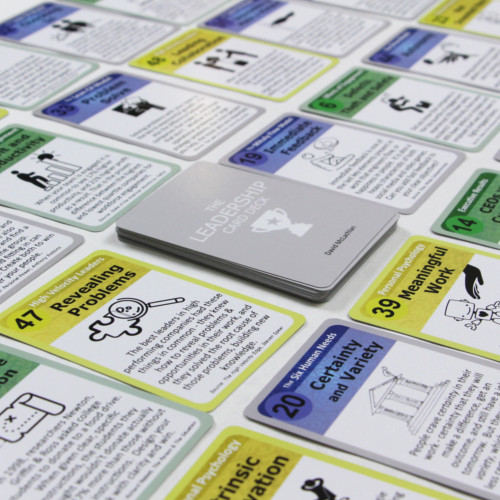
Leadership CardsView All The Leadership Cards (48)

- or - Have the Leadership Cards delivered for your next meeting


Want to learn about Lean? Get the book "Five Minute Lean", by David McLachlan - a wonderful book that blends teaching of the tools, culture and philosophy of traditional Lean with a modern-day Lean parable. You can get the whole book on Amazon here and enjoy your own copy.